









Register to get 1 free article
Reveal the article below by registering for our email newsletter.
Want unlimited access? View Plans
Already have an account? Sign in
If you’re purpose building a hospitality property, or gutting and converting another building, then your architect can focus on getting the room space perfect and maximising the value for your guests. When these approaches aren’t an option however, and you need to make the most of what you have already got, what should you be looking to do for your guests and how can you offer them the best experience, even in a restricted space or a higgledy, piggledy shaped room?
I will never forget visiting a 16th Century inn, where the room was a rustic country delight, full of gorgeous beams, original windows, traditional plasterboard and a warning to be careful on the stairs. It was idyllic, gorgeous, and a home away from home – or at least it should have been. In a bid to provide guests with all the mod cons, and meet every possible whim, the room had become an ode to the suggestion box and a poor application of common sense. There was excess furniture by the tonne, a lorry load of ornaments and knick-knacks, and an impractical layout which seemed to have developed over time rather than being a well thought out application. As denoted by the listing of the building, the light switch for the ceiling light was by the door, which involved a late-night dash out of bed. Not a problem, until you fumbled your way in the dark, stubbing your toe on the armchair which rested three inches from the bottom of the bed, and clunked your head on a low beam that loomed in the darkness. In terms of space, the bedroom was ample; in terms of layout, it was an unmitigated disaster.
When it comes to our inspectors, layout of the bedroom is as important as the quality, type, the amount of furniture and the detailed inspection of its cleanliness. Whenever we inspect a new property, our inspectors stay the night, and then every other year will also involve an overnight inspection. This means that there is no cursory glance, or a quick once over approving how nice the bed looks by the window. Our inspections are much more intimate, understanding how a bedroom works, whether it is suitable and accessible for a guest to use practically and whether it offers comfort as well as style. This will include simple things like identifying whether there is a mirror over a shelf, desk or table, whether there is a plug within easy reach of preferably the same mirror, whether you can open all the doors and drawers or whether they are restricted by other pieces of furniture.
The best advice we can give a hotelier is to stay in some, or preferably all, of the rooms at one point and see how simple or difficult it is to use the space. If you’re not confident that you can be objective, then encourage a friend to stay over and ask them to be brutally honest about the usability of the room. Thinking back to the 16th Century bedroom, and the adage less is more could not have been more apt; there was an armchair and a sofa. Removing the chair would have freed up much space, and relocating the bed into the centre of the wall to the left instead of ahead as you enter the room would also have overcome challenges with light penetration and given plenty of free floor space for the guest to move around. Not to mention removing the hazardous dash past the beam in the dark and putting the bed near enough to plug sockets to have bedside lamps. The owner could also have retained the knick-knacks which added to the historic atmosphere of the room, but moved them instead to a designated shelf on show but out of the way.
Our inspectors are always looking for the perfect blend of style and comfort, of practicality and frivolity, which ensures you know you are staying in a hotel, but that the stay is as enjoyable as possible. There are the must-haves and the nice-to-haves, with exhaustive attention given to the smallest of details, like the cleanliness of the radiator and the scuff marks on the skirting boards. They are not, however, just there to assess the decency of the room, but also to offer advice and guidance which supports the business too. This could be anything from suggesting the addition of pillow, mattress and duvet protectors to prolong the life of the bedding, or adjustments to the layout to reduce the likelihood of scuffs and damage.
Double Page Spread
In the spotlight: Dale Hill Hotel & Golf Club, Ticehurst, East Sussex
Dale Hill Hotel & Golf Club is a leading golf resort with a four-star hotel and two magnificent golf courses. The property is situated in over 350 acres of grounds, high on the Sussex Weald giving outstanding views of the surrounding area.
Dale Hill Hotel & Golf club scores 82% for its bedrooms and five out of five specifically for its space, comfort and ease of use. Many of the hotel’s spacious bedrooms are on the south side of the hotel, offering stunning views across the Golf Course. The layout of the rooms has been maximised to enable the guest to enjoy their surroundings, whilst meeting both the needs of the leisure and the business visitor. Some of the executive rooms have balconies for guests to enjoy and watch the world go by.
Guest high expectations of comfortable beds with deep mattresses and crisp linens, are easily met in each of the 35 rooms. Comfortable lounge seating and desk chairs are positioned well to ensure that the guest is able to use them to maximum effect.
General manager, Carl Rundgren takes an active role in the running of the hotel and is always keen to receive an honest appraisal of how the hotel is performing.
When asked what the best piece of advice one of the assessors had ever given him, Carl responded with: “In the hot summer months, we were advised to provide an extra flat sheet in the cupboards, and write a note to all guests inviting them to use this instead of the duvet. This piece of advice has been remarked on by a lot of our guests and has really helped us especially on very hot days. We do not have air conditioning, so this has really made a positive impact on our guests experience in the summer months.”
“We really value the feedback that we receive through the inspection. With the advent of review sites there is more feedback about how you are doing than ever before but an inspection does give you an in-depth independent summary of how well your staff are trained and how the actual experience is.”
He continues: “I am a perfectionist though, so I do take it to heart when things are not completely perfect when the assessors visit. But I do know that there are things in the hotel that we can always improve upon and that gives me direction when looking at further training or upgrades.”
In the spotlight: The 25 Boutique B&B, Torquay, Devon
The 25 is a luxury boutique B&B in Torquay, Devon. Owners Andy and Julian ran a successful country house hotel in North Wales for seven years prior to making the move down south. A major refurbishment programme in 2015, led to The 25 offering six very different rooms which vary both in size and amenities.
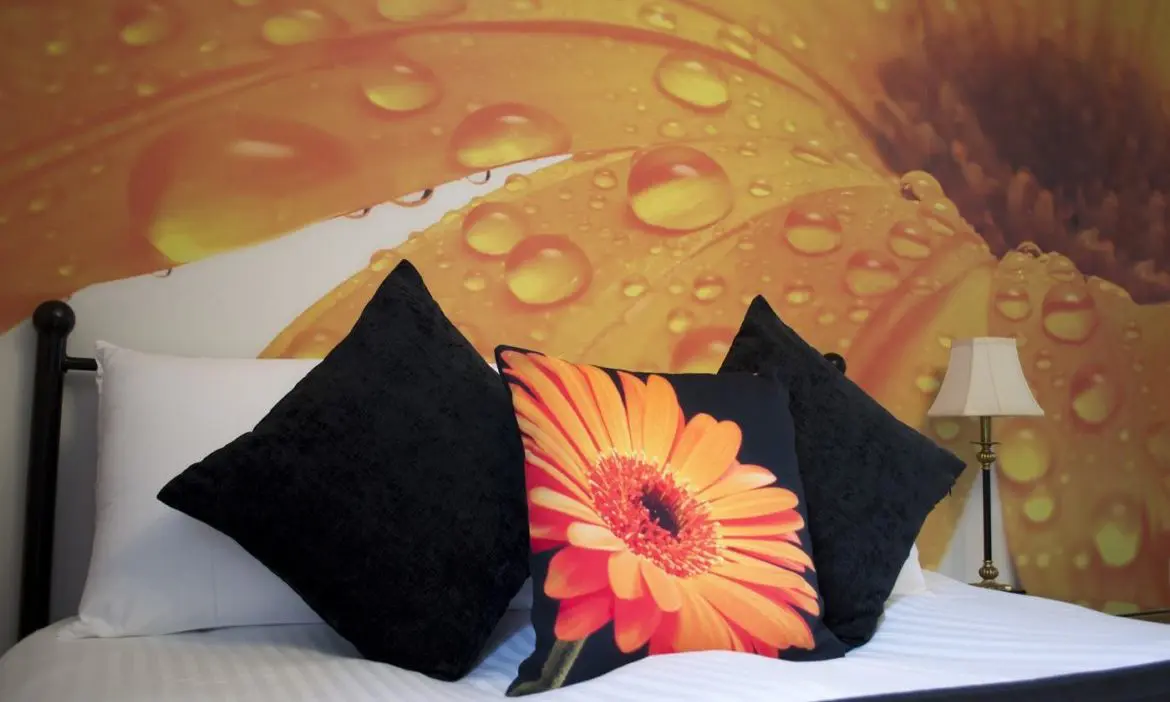
The five-star property is also the proud owner of a Gold Award and Breakfast Award, highlighting its commitment to always exceed guest expectations. Each of the bedrooms have individual colour themes and design elements with a uniformity of quality and flair. The excellent quality beds, deep supportive mattresses, Egyptian cotton white bedding with co-ordinated accent colours via the scatter cushions, throws and window dressings enhance the overall visual qualities of the room.
The bedrooms do vary in size and layout; nonetheless great attention to detail and thoughtful placement of the furniture allows for an excellent sense of space, ease of use and comfort to be realised.
Owner Andy shares some of his advice that he has learned over the years: “It can take a long time to design a room layout so that it works correctly for guests. It’s important to think about how they will use the room – can they see the TV from the bed as well as the seating area? Is there somewhere they can pop their mug of coffee next to where they are sitting. Is there adequate lighting in any area they might sit and is it appropriate – it may need to be very bright for putting on makeup or dimmable when watching a film.
“Space is often at a premium and what seems like a large room when empty and being newly plastered, soon becomes full when you add a super-king bed, chest of drawers, wardrobe, bedsides, seats and a coffee table. Remember that guests could be travelling around the UK and have several suitcases and bags which all take up room, particularly on their side and left open.
“Think carefully about things that might restrict your placing of furniture – where possible put radiators in ‘dead’ unusable space where no furniture can sit. You might consider re-hanging the door the other way to create a better flow into the room.
“We’d always advise measuring and marking out on the floor where all your furniture will go before you purchase anything. It’s a lot easier to visualise the space then. Try to put the time into the planning process and don’t rush it. Look at what other accommodation providers have done and even go and stay at some so you can spend time using someone else’s bedroom and see how well it works.
“Lastly, always get feedback. Whether it’s verbally or via a questionnaire in the bedroom, be sure to ask the guests how their experience was. They will soon let you know if there’s an issue. And most importantly, act on their feedback. Don’t wait for a bad review. Look at how you can change or adapt the room to improve it and thank the guest for their idea letting them know what you changed as a result.”
This feature first appeared in the September 2016 issue of Hotel Owner.