


































Register to get 3 free articles
Register to unlock the article and receive our free newsletter. Join 26,000 other hotel leaders and stay in the know.
Want unlimited access? View Plans
Already have an account? Sign in
The British Hospitality Association has responded to claims made about bacteria in burgers on a Channel 4 programme aired on Tuesday night.
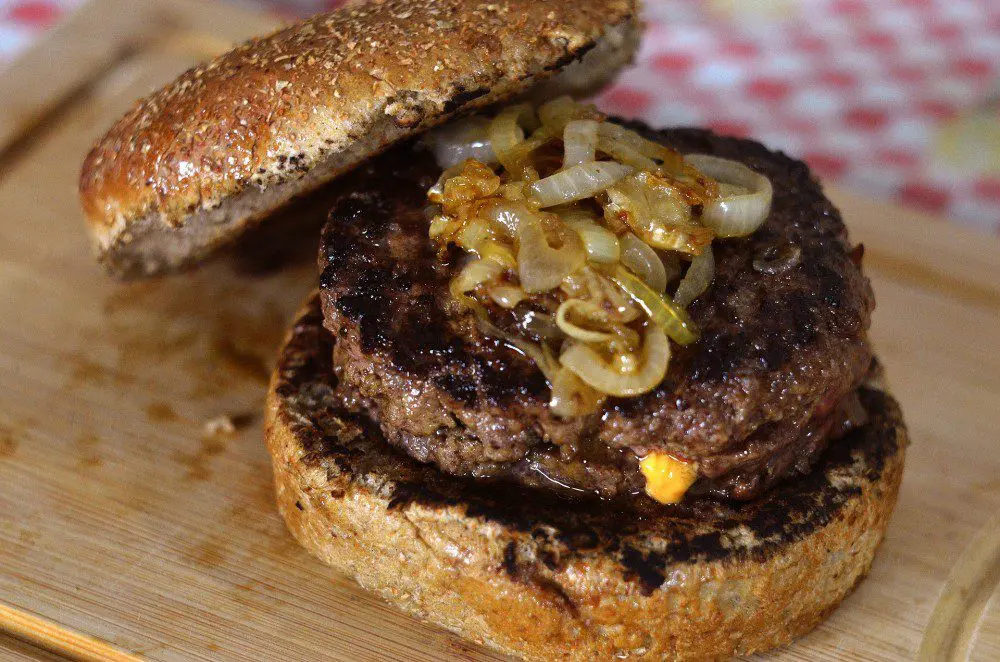
The BHA said it recognises that when cooking medium or medium-rare burgers in uncontrolled conditions, they may be unsafe. It said: “Unlike steak, if the inside of a burger is not cooked, it is often not safe to eat because when meat is minced, the outside surfaces are mixed up with bacteria inside and this means that bacteria, such as E. coli will be mixed all the way through the burger.”
However the trade body added that while it “believes wholeheartedly” that only safe food should be sold, in accordance with the law, “it is important not to dwell only on the colour of the burger, for colour is not a true indication of meat safety”.
Dr. Lisa Ackerley, food safety expert at the BHA, said: “There are a number of controls that businesses can use, and are using, to ensure that their burgers are safe. It would be unwise therefore to assume that all rare burgers are unsafe because this is not the case.
“Firstly, temperature and time controls, such as measuring the temperature at the centre of the burger, will provide a microbiologically safe product that may still be pink in the centre. This is in line with guidance from the Government’s Advisory Committee on Microbiological Safety of Food.[1]
This could mean cooking at:
- 75°C for 18 seconds or
- 70 °C for 2 minutes
- 65°C for 13.6 minutes
- 60 °C for 93 minutes
“Many large chains use methods such as sous vide cooking to pasteurize the burgers first prior to final cooking on a griddle. This will produce a juicy pink burger that is safe.”
Another example of control is where companies are using beef that has been treated on the outside before mincing using a number of different processes such as steam or lactic acid. Such beef may have been tested and declared E. coli free before being sent to outlets.
In September 2015, the Food Standards Agency (FSA) accepted at its board meeting that a number of control methods might be used to achieve safer medium rare or rare burgers.
Currently the FSA also wants businesses to display and advisory notice warning customers of the dangers of eating undercooked burgers if they are young, elderly, pregnant or otherwise vulnerable.
The BHA has contested this on the grounds that companies who have gone to such efforts as to ensure that their burgers are safe need not put such a notice up as “it is counter-intuitive”.