

















Register to get 3 free articles
Register to unlock the article and receive our free newsletter. Join 26,000 other hotel leaders and stay in the know.
Want unlimited access? View Plans
Already have an account? Sign in
Martin Montiello spent a part of his career working in presidential residences, serving kings, businessmen and celebrities. MICHAEL NORTHCOTT interviewed him to hear tales of keep schtum on classified information, and yielding to every bizarre request that might come from the banqueting table.
[divider style=”solid” top=”20″ bottom=”20″]
Tell us a little about your career from the start?
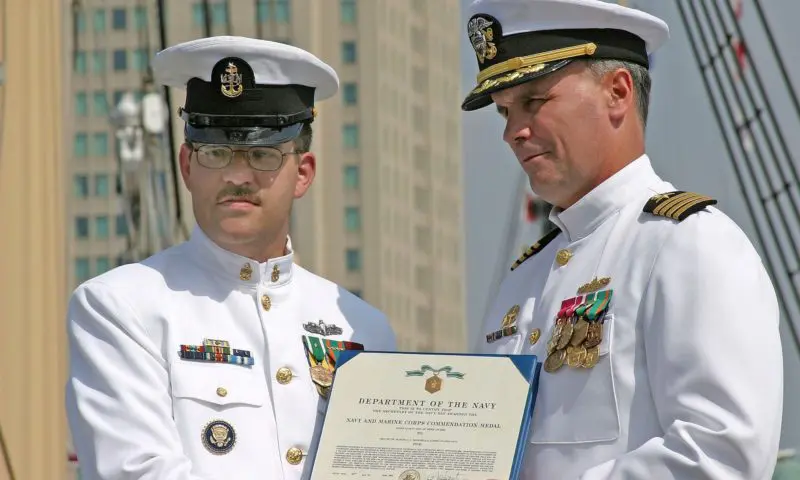
When I was 18 years old I joined the American navy. It was when I was in cookery school that the nuclear fleet came through with the submarines. They come through the cookery school and were recruiting, which is when I was chosen to become a nuclear submariner. You have to obtain a secret clearance which I completed, but being just 18 at the time I had no idea we had such an inordinate number of nuclear submariners that work in the White House. It wasn’t till ten years later I discovered this. The days were long, hard and gritty, working 18 hours a day, 126 hours a week because you’re living underwater and it’s all there is to do. Living on a submarine involves a lot of back breaking work and long hours. It’s created an incredible work ethic in me that I use as a hotelier. I’m able to draw upon the physiological reserve where many others would struggle. I lived in Europe for many years and a lot of laws were in place to stop people working more than 36 hours a week. In America it’s a little more animalistic.
After going in the United States Navy in 1983, I went onto join hotel management school in 1987. There I was the first boss of a 1500 room hotel in Florida called the Bay Shores Resort.
I was then recruited by the White House Military Office in 1992. I was 27 years old at the time and President HW Bush was in charge. It took a long time to gain my top secret clearance, because at that point you would actually be making sure his food was safe to eat. I started as a chef and quickly worked my way up to be Executive Chef to the President. After doing that for about a year, I was groomed to be a manager of the resort. The American President has about 16 privates homes at the Camp David resort, each of which are several thousand feet.
What is it like working in the American Military resort?
If you’re in the American Military you can be anything from the butler to the valet, you can be a manager of the resort but at 4pm put a white coat on and start cooking for dinner. We could be cooking dinner for 3, 30 or 100 people at a time, we had many dinners for 320 people. A lot of civilian managers and chefs will leave when they are done, but if you’re in the military like myself you often carry on and become a bartender at night. That’s what it was like on a day-to-day basis, encompassing all five trades; the valet, the housekeeper, the butler, the chef and the bartender.
When the President is not in America or at the Camp David Resort, we go back to doing drills for attacks and bomb blasts. For example if a nuclear launch from an enemy submarine was launched on the Eastern Seaboard we have just six minutes to react. We often used a fake President, First Lady and children to try and save them as quickly as possible. Coaches and referees time us, giving us small things that might trip us up. We tried to provide the best service possible. I don’t think any American service is going to be as nice or as famous as Buckingham Palace however, that is definitely top of the tops.
What happens if someone does something wrong in the Military?
If people do the wrong thing they are not seen again at work. They are cleared from military housing, the children are taken out of the school and everything is emptied, even the furniture, within one day. Sometimes the spouse is upset, and of course the kids are bewildered why a man in a black suit is taking them from their school and driving them away. We have people in the American military who take bribes, steal and do generally bad things. It’s not as bad as other sections of the human race but it still happens and I’ve seen it happen in the military first hand.
Did you have the chance to meet any famous people whilst working at Camp David?
Most of my time was spent at Camp David but I did go to the White House for special events and state dinners. I have been lucky enough to cook for some of the most famous people on Earth. One of the people that really shocked me was Steve Jobs. He was staying at the White House for the night, it actually features in the movie about his life. Others include actor Nicholas Cage, musician Jon Bon Jovi, famous author Joe Gargiolio, as well as NFL players. I’ve also cooked for Martin Scorsese, Harry Weinstein, Bernadette Peters and the Italian President Berlusconi.
How did you move onto owning your own hotels?
After serving a two-year tour with the military in America, I decided to leave. If you stay any longer than a three-year tour it severely damages your military career. I had offers to stay at the White House permanently, however I had to explain that hiding in the White House would destroy any kind of a career. I went on to live in Europe and Japan after that. I ran hotels just outside of Tokyo, a chalet for the United States and then for NATO in Brussels. I took everything I learned at the White House with me on the road.
Can you tell me a little about your own hotel?
I own a hotel – The Inn of the Patriots – which has a United States Presidential Culinary Museum inside. I decided I wanted to build the hotel as it was a bad time in our history. 2008 was tough with the economy and almost everyone I made a proposal to was not interested at the time. I decided to just build it myself instead in the middle of all the economic downturns. It has been a whirlwind success and featured in over 160 newspapers all over the world. Since opening in March 2008, the success is still continuing. Honestly, right now I’m figuring our how to expand to make it even larger. My background validates me being a curator because I actually did the job in the White House.
What can visitors find in the museum?
I wanted to showcase all of the 45 Presidents’ favourite foods. You can see them visually here in the museum and I tell a lot of jokes to tourists. Visitors love to see that Donald Trump’s favourite is the Keebler Vienna cookies with the little elf on the front of the package. They also like to know that Nixon eats his cottage cheese with ketchup poured all over it. People who visit get to see weird little things about how the Presidents behave and when you put it out there they find some of it quite hilarious. Of course, funny little incidents that have happened in the White House resonate very well with our visitors.
For example when King George VI was visiting America, Franklin Roosevelt served him a hot dog, he ate it so fast that people were shocked. He asked for another one, when people told him the hot dog was actually just for photographs for the New York Times he replied ‘no I would really like another one, they are really good.’ The King had a very successful visit and people started cheering and clapping. Queen Elizabeth’s mum wasn’t unsure how to eat a hot dog and didn’t want to shove it into her mouth. Instead she ate it with a knife and fork, like a civilised person. They tried to turn it into a smear campaign but the White House Press Secretary managed to stop that. We have the silver fork resting on a hot dog in the museum. Even President Obama didn’t know about that till he visited Buckingham Palace.
In the first instance, people think the Presidential Culinary Museum sounds stupid. People ask me what the fascination is with the museum, it’s just about what people eat? The museum is about culture and we’ve had tens of thousands of visitors. It’s been featured on Food TV Network Magazine, newspapers and we even had a major television series. The public loves to know what people are eating. It’s something we do three times a day, so why wouldn’t you like to talk about it?
What are your plans for the future?
I want to expand the existing hotel and maybe build it up to about 200 rooms. Our goal right now is to open the restaurant with a menu that consists of the favourite dish of every American President. No one has ever done that, making it a totally new concept.