



























Register to get 3 free articles
Register to unlock the article and receive our free newsletter. Join 26,000 other hotel leaders and stay in the know.
Want unlimited access? View Plans
Already have an account? Sign in
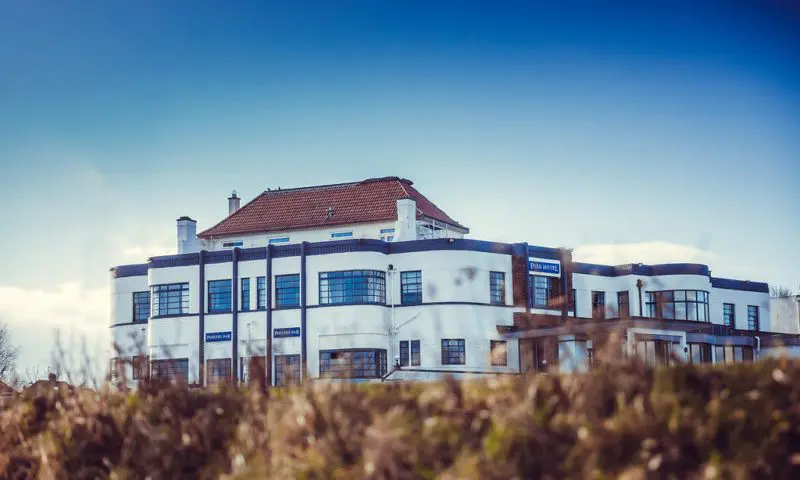
Champagne corks popped recently at Eastbourne’s Langham Hotel when proprietor, Neil Kirby, celebrated a remarkable fifty years in the hospitality industry.
Starting his career as a teenager in 1967, washing dishes in the basement of the Grosvenor House Hotel on Park Lane, Neil gradually rose through the ranks with his sights set on becoming a general manager. It was a goal that he not only achieved, but actually exceeded when he purchased the Langham in 2005 to become a hotel owner.
Never one to rest on his laurels, within eight years Neil Kirby and his wife Wendy had transformed the hotel and in 2013 the Langham was awarded an additional star to become Eastbourne’s first and only AA four-star hotel. The Kirbys continue to strive to make their hotel the best in town. Most of the 77 bedrooms have been fully refurbished to an extremely high standard; the reception and lounge were redecorated in January 2017, and plans are afoot to completely remodel the restaurant in 2019. Planning permission has also been obtained to build a 90-foot ballroom at the rear of the hotel.
Although Neil Kirby is always looking to the future, his fiftieth anniversary has provided an opportunity for reflection and time to contemplate how much hotels have changed since 1967.
The best suite at Grosvenor House was £19 a night when I first started work. Today it would cost you in the region of £5,500. In London you can pay up to £27,000 a night for a suite at the Lanesborough, so prices have certainly changed.
My first wage was £12 10s a week (£12.50) and when I moved on from washing up to become a valet, tips began to play a very important part to supplement my income. In those days you used to keep all your own tips, which made you very attentive towards the customer. Today there is often a 12.5% service charge automatically added to the bill and you have no idea if the staff actually receive it.
Recent news stories have revealed that sometimes they don’t. I am disgusted with hotel and restaurant owners who keep tips. That is tantamount to stealing from the staff. At the Langham I make sure all the tips are divided equally amongst the staff, from the chambermaid to the general manager, then it is fair. How can we expect young people to come into the industry if companies are stealing tips from staff to prop up their businesses?
I also get very annoyed that in some hotels, breakfast isn’t included in the price. You have to pay extra for that. And some hotels will charge you for Wi-Fi or room service. To charge people, say £15, to bring a tray to a room, and that’s not including the food that is on it, is daylight robbery. Then there are parking charges. You can pay £37 a night to park your car in some hotels in London.
I can understand why some proprietors do it. We have increased costs all the time, with a raise in the minimum wage, pension schemes, and higher costs of food and wine with suppliers blaming Brexit, but I think you have to be sensible with pricing for customers. If you offer value for money, customers will keep coming back and so you can recoup your expenses that way. It is better to have a full restaurant and all functions sold out because your pricing is reasonable, than overcharge and have your hotel half empty.
Of course, with increased costs, we all have fewer staff than 50 years ago. People now have to multi-task far more and teamwork is required. When I started work, everyone had their own particular job and they stayed with that small area.
Staff have changed too. Their attitude is not always as good as in the 1960s. There is less respect, they answer back, and timekeeping can be bad. But I believe that training is paramount. I tell my staff that the most important thing is a smile for the customer and we, as bosses, say thank you every day to our staff so that they feel appreciated. If the staff are happy, then you’re going to get the most out of them.
I like to bring young people into the industry and frequently have apprentices at the hotel. I also go to local schools to speak to students to motivate them. I have often employed chefs and receptionists who have initially been to the hotel on work experience from college. Only recently I had some young people on work experience and the very next day one of the boys wrote to me and asked me for a job! I liked his chutzpah, and maybe saw something of my younger self in him, so I gave him a job. I have had youngsters with Down’s Syndrome from the community visiting us on work experience and I now employ a guy in his thirties who is deaf. Nobody else would give him a job, but I didn’t see why deafness should have to be a barrier. Trainees are also given experience of other departments too, not just the department that they’re working in. It helps to know how the whole hotel works. It was how I learned and I like to pass that on to others.
Management has changed over the years as well. When I worked at Grosvenor House, the Forte family mixed with the customers, and guests liked to see Lord Forte walk through the hotel. Today, many hotel owners are anonymous and few walk the floor. I think that is a retrograde step. I walk 15,000 steps a day – I have a pedometer – and love to chat to the customers rather than sit in the office.
On a day-to-day basis I think it is very important for proprietors and managers to be seen by the customers and to talk to as many as possible. It makes them feel special and they will come back. I frequently, for example, go and have a cup of tea with the chambermaids. It makes them feel appreciated and they realise that they are an essential cog in the machine. Just because their work is behind the scenes doesn’t mean that they are any less important. The difference between being an employee and a hotel owner is enormous, but because I started at the bottom rung of the ladder, I feel that I have more empathy with the staff.
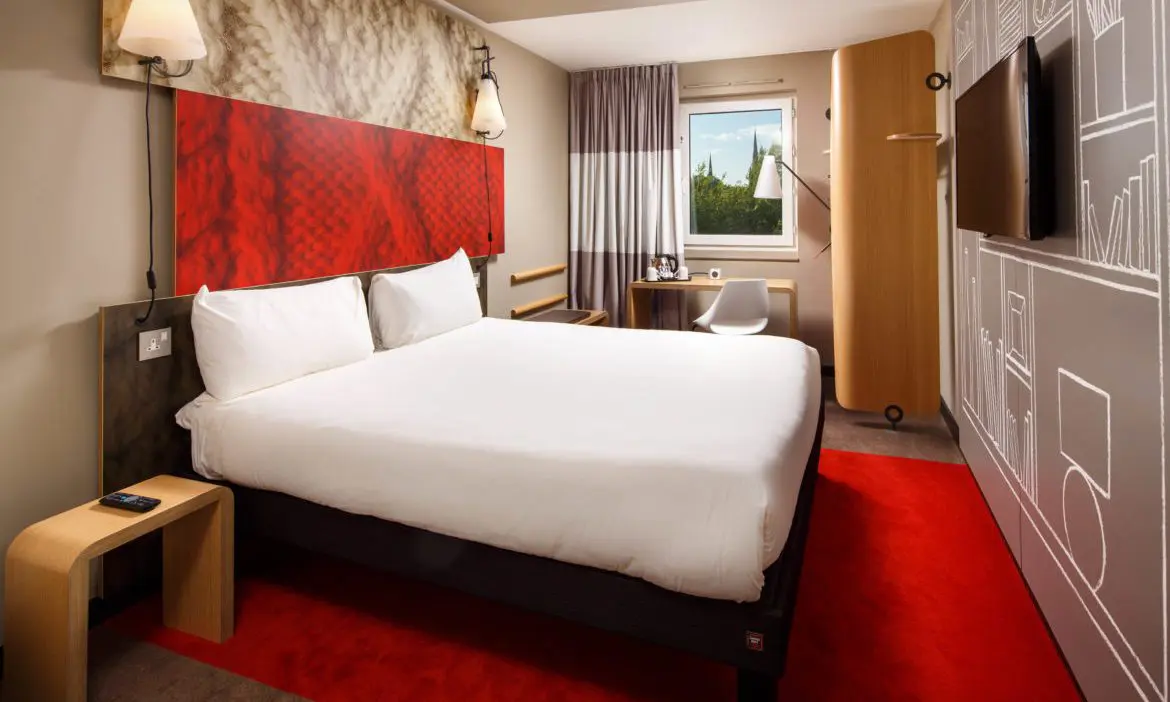
More and more hotel chains mean that a lot of modern hotels are a bit clinical and not as comfortable as they used to be. Beds can often be too hard and too low. Invariably they lack the personal touch. I was taught design by Olga Polizzi (Sir Rocco Forte’s sister and mother of TV’s Hotel Inspector Alex Polizzi) and when refurbishing a room I always think of the guests’ requirements. So, for example, I make sure that electric sockets are at a reasonable height. No more scrabbling behind a bed or chest of drawers to find one. Rooms now have phone chargers for mobiles. Controls for the showers are designed so that guests can adjust them before they get into the shower, then there’s no chance of getting scalded or an icy shock. When designing a room, I consider what would I want if I were a guest? I always ask customers if anything can be done to improve their room and then try and take their suggestions on board. You have to be very customer-focused.
I have to say that a change in guests over the past 50 years is that they have got bigger. A regular cost is replacing broken toilet seats because guests are too heavy. I’ve had wash basins wrenched off the wall when people have used them as leverage to get up from the toilet, and have even had to call the fire brigade to get guests out of the shower when they have become stuck. There is one advantage to the hotelier though. The larger guests tend to eat and drink a lot and so spend more money.
I think some guests can be less respectful too. They sometimes leave rooms in a terrible mess, and often bring their own drinks in to save money at the bar. Because of the culture we live in today, where people always want something for nothing, guests can be more demanding. As a sea front hotel in Eastbourne, we frequently have guests who will book a lower cost room at the back of the hotel but demand an upgrade to a sea view room on arrival without paying extra.
Guests probably complain more than they used to and will often air their views on TripAdvisor rather than comment in person while staying at the hotel. This is frustrating when a simple matter could so easily be resolved in person, but sites like TripAdvisor stop customers complaining face to face. Often the customer misses out that way, because a hotel might perhaps have offered them an upgrade or a complimentary dinner, depending upon their complaint, if they had simply spoken to staff at the time.
But there have been many positive changes over the last five decades. Customers have so much more choice now in food and beverage; a room can be booked instantly with a couple of clicks online with so many travel sites; modern technology has made life easier with accounts being computerised. It seems hard to believe that when I started work in 1967 everything was done by telephone and letter, or a telegram in an emergency. Even when we bought the Langham in 2005, the accounts were still done in pencil.
My scenario, going from washer-upper to hotel owner is unusual, but people could still follow my career path today and come through the ranks. Some people think that they have to work in the same area throughout their career, but there is nothing to prevent a change of direction. Experience is the key to success these days and so you need to move around. Some time working abroad can give you a better chance too and I really don’t think Brexit is going to make any difference to our industry from an employment point of view.
With Brexit, there is definitely an angle being missed. Often people will say that there won’t be enough staff in future, as so many employees come from Europe. But we live in an era where a number of manufacturing industries in this country are dying, putting thousands out of work. More and more robots are doing jobs that humans once did, such as packing orders; shops are introducing self-service tills that mean fewer staff are required; so many of us now buy online, which means shops close. The simple answer is that all these customer-focused workers could so easily be re-trained to work in the hospitality industry. It’s time we opened our eyes to the fact that there are a lot of workers available in this country. So, although there is a concern over Brexit, I really don’t think we need to worry about the future of our industry.
I am cutting down and now work 80 hours a week instead of 120, but I still love this industry after fifty years. My father worked until he was 92, so why shouldn’t I do the same?
In 2009, a book called Celebrity Hotel by Paul James was published, and it followed the life story of hotelier Neil Kirby. The name of the book comes from Kirby’s many encounters with celebrities in his run up to becoming an award winning hotelier. As stated in the blurb, he was “inspired by the Forte family; encouraged by Sir Jackie Stewart; enthused by Olga Polizzi”, who are among just some of the notable names who have lent a helping hand in shaping Kirby’s career. The book follows Kirby’s career, which is somewhat inspiring, as he determinedly excelled in the hotel industry to own the multi-million pound property he currently has his name to.
Starting his career as a washer-upper at Grosvenor House Hotel in 1967, Kirby worked his way up to where he is today, a hotel owner. Following a 28-year stint at the Grosvenor, Kirby is now celebrating his 50th anniversary in the hospitality business this year, as he now proudly runs the Langham Hotel in Eastbourne, Sussex. During his time there, the 65-year-old has transformed the hotel with the help of his wife Wendy, and it has now become the first and only AA four-star hotel in Eastbourne.
By Paul James. This article first appeared in the July 2017 issue of Hotel Owner