








Register to get 1 free article
Reveal the article below by registering for our email newsletter.
Want unlimited access? View Plans
Already have an account? Sign in
When implemented effectively, an on-premise laundry (OPL) can deliver great benefits for your business; including faster turnaround time and better quality laundry processes and be more cost effective than outsourcing. Yet some hoteliers see an OPL as being too difficult to bring in-house due to space and cost challenges.
Whether you’re a small B&B or a large hotel, it can be beneficial to review your laundry provisions occasionally to ensure they’re effective and enable staff to work productively, and ultimately, meet high guest expectations. If you’re looking to bring some or all on your laundry on-premise, here’s how to navigate some of the hurdles you may encounter:
Space
We know that space is a precious commodity in hotels, but that’s not to say that you can’t accommodate an OPL as well. The Professional Division of Miele interviewed 100 UK hotel workers, and whilst 67% identified lack of laundry space as an issue, an OPL does not always require as much space as you might anticipate.
Space restrictions can often be overcome by simply using spaces more creatively; do you have a cellar, unused cubby hole or even an unpopular guest room you could refurbish and use for a small towel laundry? Depending on the size of your hotel, it might not be necessary to use a whole room to accommodate your laundry operations.
Opt for a high load capacity to space ratio to optimise your space. Some commercial washing machines, such as Miele’s Little Giants, take up as little as 1m² and cater for loads up to 7kg – perfect for towel laundries. Alternatively, why not enlist the services of your local laundry equipment supplier? A Miele partner will be available to help with site surveys and layout suggestions.
Speed
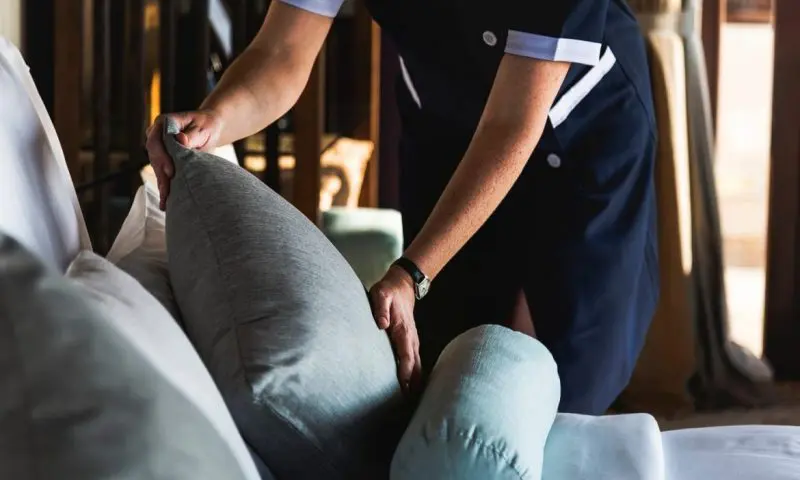
A fast and efficient laundry turnaround is key to ensuring clean bedding and towels are returned to guest rooms on time, every time. With outsourcing, you need to factor in the time it takes to launder items as well as collection and delivery times. In contrast, an OPL removes this waiting time and can help establish one slick internal process for staff to follow, from stripping the sheets to making a fresh bed before guests arrive.
Quality
An OPL can contribute to a high quality and improved quest experience, but the right appliances, aftercare and practices are key. Given that bedroom and linen cleanliness is such a big factor for hotel guests, it’s important to make sure items are laundered to a high standard. To do this, laundry processes for staff can be defined and quality control procedures can be introduced to ensure consistency across the board.
Your choice of equipment is key; commercial appliances are built to last and will often take better care of your quality fabrics to help them last. It’s also important to have a plan in place should your machines breakdown. Your supplier should offer a service contract or aftercare programme to ensure that everything runs smoothly once your new appliances are up and running.
Cost
With appliances, utility bills and staff required to run an OPL, it’s common for hoteliers to believe that outsourcing is the cheaper option. Whilst the initial outlay might seem a little daunting, investing in an OPL can reap the rewards in the long term and deliver better lifetime costs. Sustainability should be a key consideration to keep operational costs down; not only will energy-efficient appliances keep utility bills to a minimum, but if you opt for an appliance from the DEFRA Water Technology List, you may be able to claim back 100% of the cost at the time – however, this initiative is due to come to an end in April 2020, so if you’re considering new machines it might pay you to purchase sooner rather than later.
Regardless of your chosen provider, ensure you opt for a quality model that has been tested to last. Some may also offer leasing and finance options to keep the upfront cost down and spread the remainder to protect your cash flow.
By Sam Bailey, sales and marketing director at the Professional Division of Miele