





































Register to get 3 free articles
Register to unlock the article and receive our free newsletter. Join 26,000 other hotel leaders and stay in the know.
Want unlimited access? View Plans
Already have an account? Sign in
If you have shares in Ted Baker, you are probably not having a good morning. The price has tanked by almost 7% after news broke that the fashion brand has found a £58m black hole in its accounts.
There’s being a few hundred thousand or a few million short, but when your market capitalisation (i.e. the total value of your company) is £142m, suddenly sums of that order begin to look very scary.
The problem was found by auditors from Deloitte who were retained last month to investigate what had gone wrong after the company overestimated the value of its stock – products in storage that is, not traded stock.
An internal probe found that the stock value on 26 January last year was between £20-25m, but it would seem somebody is not very good at scanning barcodes, because this was half the actual figure.
More stock rather than less sitting in the warehouse is a bad thing, as it suggests that there is not enough “sell through” – for the uninitiated, that means the level of stock which is successfully sold to actual customers.
News like this always makes the vultures start circling, and Ted Baker’s lenders quickly became jittery – they asked their own advisors to review the business in anticipation of the firm suddenly needing to do a whip round for more funding. It is understandable, given today’s overstatement of the accounts amounts to more than the profit the firm generated in its last financial year, of £50.9m.
It is worth noting that the overstatement relates to a “non-cash item” from previous accounting periods, and the firm therefore has not published any new profit forecast for the current one, ending later this month. But it adds to a picture of a company in serious trouble, because the problems just keep on mounting.
- Last year, in March, founder Ray Kelvin resigned as chief executive after some employees alleged there were “forced hugs” taking place at work
- The company’s share price is worth a quarter of what it was at the start of 2019
- It issued four profit warnings last year, and announced an H1 loss of £23m in October, the first time it has lost in over 20 years
- It said November and Black Friday trading periods were “below expectations”
It’s almost painful to write.
Javid provokes American ire over digital tax plans
In recent years there has been a growing sense that the era of the monolithic tech giants is approaching its twilight years.
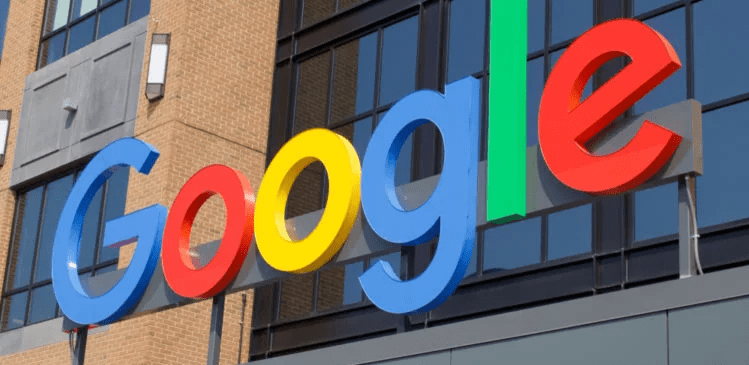
Being allowed to grow to unimaginable scale and power over a short period of time, firms like Google, Facebook and Amazon have enjoyed what I predict will come to be seen as a sort of early-Internet ‘wild west’ era, not unlike the great monopoly of Standard Oil in the early 20th Century. Spoiler: it was broken up.
It’s probably too early to make predictions about how breakups of these firms might look, not least because they will be able to make very persuasive arguments that the only way services like theirs can exist is due to a phenomenon called ‘network effects’.
This theory holds that in order, for instance, for Facebook to be useful as a social network, small numbers of people are no good: everyone needs to be on there for it to be good for anyone. Similarly with Google: it is the most popular search engine because it has the largest haul of daily data from which to learn about search habits, refine its algorithm, and deliver better search results.
But the first crack in the dam may be appearing, certainly in the more regulation-averse economies, as UK chancellor Sajid Javid has mooted a new digital tax designed to overcome the problem of multinationals incorporating shell companies in low-tax jurisdictions and funnelling all the profits through them.
The tax was due to be introduced in April, and while the Americans have pushed back hard, forcing Javid to “hold fire” on the plans, it is part of a wider discourse about reining in these mighty technology monsters and forcing them to pay taxes that everyone recognises as being fair. Stories constantly abound of one or other major corporation paying little or nothing in corporation tax in the UK and elsewhere, despite having sales running into the billions in those locations.
France has also delayed a new proposed tax under pressure from Washington, a clear indication that the Americans are very worried about the crown-jewels of their world-beating tech scene being fleeced by foreign governments. But the debate will not end because the Yanks get terse about it.
The OECD appears to be taking a lead by saying that a global harmonisation of policy will be required to reach a solution to what is really an unprecedented problem. The Secretary General Angel Gurria told the BBC that the alternative is a “cacophony and a mess” in which dozens of countries do their own thing, causing “tensions [to rise] all over the place”.
The UK was planning to apply a flat tax of 2% on UK revenues of major tech categories, like social media sites, search engines, and marketplace platforms such as Airbnb from April this year.
As activist clamour against the “one percent” grows, and as more and more power and wealth concentrates in the hands of a tiny number of successful business people, I reckon it’s only a matter of time before politicians promising to take a sledgehammer to their vice grip will be at the levers of power. Watch this space.