





























Register to get 3 free articles
Register to unlock the article and receive our free newsletter. Join 26,000 other hotel leaders and stay in the know.
Want unlimited access? View Plans
Already have an account? Sign in
I’m not sure any of us anticipated a 2020 quite like this one, and to say it’s had an impact is a little bit of an understatement. Yet we are where we are and at some point, things will start to improve – albeit on the Covid-19 front.
I’ve been asked by a number of hoteliers what they should be doing at the moment and aside from concentrating on the immediate – using Government support, deciding whether or not to open for key workers, going through the proper HR processes for staff – my advice is to look forward and to look forward quickly. What are you going to do when lockdown lifts and we can return to some degree of normalcy?
Looking through the advice, one thing that has struck me the most is that the speed change is causing people to focus almost exclusively on the here and now. “How do I manage the problem now?” “How do I survive now?” Yet there is very little advice or action looking forward. I appreciate there are likely many readers who are proactive, but there will be just as many who are overcome with the speed of change, the uncertainty, and the challenge, and who are therefore deliberately or inadvertently ignoring the future.
It’s understandable but dangerous, and proper planning now is what I believe makes the difference between folding, surviving and thriving in the future. I doubt when lockdown lifts that it will return to ‘business as normal’, not least because the lift is likely to happen in stages – limiting the type and size of businesses which open and possibly restricting their capacity too – but also because I think the guests that went into lockdown, will be different from the guests who emerge several weeks later.
Lockdown has its challenges, but we’re already seeing trends towards improved sense of community, a slower pace of life, self-entertainment and quality family time for example. All things that perhaps had dwindled somewhat before as society had become more connected and more fast-paced; the lockdown is serving as a ruthless reminder of the need and benefit of a slowdown. Add to that government advice not to book overseas travel for the remainder of the year, and I think the travel landscape will be a significantly altered one in the short- to mid-term; at least for leisure travel, if not business too.
My advice to hoteliers is to use this time wisely and identify how and why your business will change. Here’s five trends that I think will emerge and which I’d advise businesses to prepare to capitalise on:
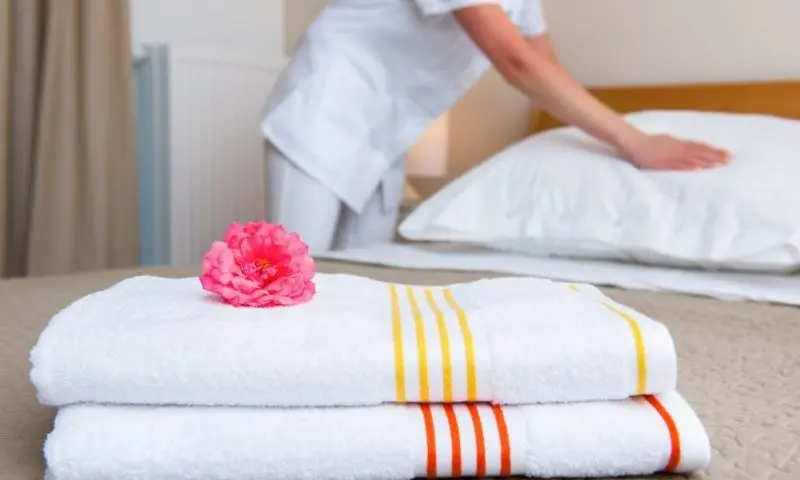
A focus on cleanliness, before the stay
Guests have never particularly focussed on cleanliness as part of the decision-making process. It has arguably been validated through reviews, but not used as a core reason to travel somewhere. I think this is somewhere that we will see a big step-change.
Before, guests assumed that somewhere was clean and in fact, the focus on cleanliness was only ‘skin-deep’. You never saw guests walking into kitchens, dusting surfaces, peering into store cupboards or swabbing to test levels of bacteria; their focus has always been on the visible and the obvious, and only in their line of sight.
Visible hair and dirt for example gains an instant negative review, but hygiene and bacteria are out of sight and out of mind. Don’t get me wrong, I am not expecting guests to start turning up in Hazmat suits, cotton swabbing surfaces and waiting patiently for their Petri dish to mature and confirm the safety of their stay. What I am expecting is that there will be greater awareness of bacteria and infection transfer, and guests will start to seek ways that they can measure and validate this risk and will place more emphasis on hotels to reassure them.
At the very least, you should be considering your cleaning routines – now is the time to upgrade them if they aren’t robust enough – and publishing their overview as one of the footnotes for your booking process. At best, hoteliers should be looking for external validation, and in fact independent assessment processes may well become mandatory; there are rumblings of it in parliament, along with the argument for licensing and regulation. What remains to be seen is whether this is local authority led (if the cost and process can be managed) or whether guests and government will lean more towards an independent mark of quality such as the Safe, Clean & Legal™ scheme that’s run by Quality in Tourism.
Maybe it will be either or both. If I was still running a hotel, I’d be making cleanliness and hygiene a top priority for review and transparency, and considering external verification urgently.
An emphasis on sustainability
Few will have missed the tangential updates relating to COVID-19, considering all the environmental benefits that are emerging from this harrowing human emergency. Wildlife numbers are up, roadkill is down, air pollution has significantly reduced (both through the reduction in flights and the reduction in cars) and emissions are exceedingly low compared with normal levels.
For once, people are hopeful we might exceed annual emission targets, and many are keen to promote this. What’s more, people are realising just what is possible without travel and available on their doorstep, and its arguably been long enough for them to make improved habits.
Pre-lockdown, we were already seeing global pressure for climate improvements, be that Greta Thunberg or Flygskam (flight shame) for example. The lockdown I believe will merely accelerate this – at least through the remainder of 2020 I expect – and I believe sustainable travel will become a far bigger market. This means people will seek to travel closer to home and focus more on the sustainability of these breaks.
Aside from market opportunity, there are additional benefits to being more sustainable including cost-savings and futureproofing. This is something that businesses can do themselves, but there are also a number of schemes that will help and support. REST from Quality in Tourism (www.restourism.com) is one which assesses environmental commitment but has the added advantage of also assessing your ethics and sense of community (another on-trend issue), meanwhile Green Tourism (www.green-tourism.com) and Green Globe (https://greenglobe.com/) both have a more specific environmental focus. Then there’s the more corporate scheme offered by B-Corp which is not hospitality specific, but extremely robust.
As a hotelier, I’d be using this time to review, research and make changes, and ensure that I am prepared and ready to communicate these new changes too.
Validation for community, responsibility and independence in business
Closely linked to both sustainability, and the emerging focus on community and the bigger picture, I think there will be more pressure on businesses to show that they are ‘well- rounded’ and go beyond just running a business, to be a business with purpose. There’s also been a renewed awareness and campaign to support local and independent businesses and there is an opportunity to claw back the market from the commercial operators.
In your place, I’d be reviewing not just what I do and how I operate as a business – the culture, the purpose and the delivery – but also on how I tell the story. You have time, so use it to tell other people how and what you do. If you’re not good at copywriting and storytelling yourself, don’t panic. Get someone to help you and as I mentioned, you might see benefit in undertaking an independent assessment like REST (www.restourism.com), which qualifies this commitment objectively and offers help and support to improve.
An opportunity for direct bookings
While many guests have benefitted over the years from booking through OTAs, there has been a rather big backlash about how these platforms have handled the Covid-19 pandemic. Different people have had different experiences, but many have found the ‘one-stop-shop’ experience of the OTAs somewhat lacking. Guests have been denied refunds because the OTA is a reseller not a provider, been pushed from one place to another and even been advised they can reschedule bookings only to find the hotel has a different policy.
It’s been a big blow for the reputation of OTAs and while I have no doubt that they will reclaim their top spot due to the convenience of their platforms, I think that there will be a short while that people will turn direct to businesses to make their bookings. You should be looking at how your system can handle direct bookings, whether your website is up-to-date
and ranking, how you can promote and direct people to book with you and whether you want to offer direct booking incentives.
You should also be looking at your process for encouraging people back to the hotel after the first visit to make it at least an annual habit. Capitalise on this as an opportunity to build your database and your direct bookings as fast as possible.
A demand for staycations and short-haul
I can’t be the only one itching to travel once the lockdown lifts and I’m pretty keen for a change from these four walls already.
However, the government is advising not to book overseas travel and there is certainly a greater distrust of foreign travel at the moment. Whether you agree with the stance or not, overseas will be more consistently considered high-risk, and there are too many horror stories of bookings being cancelled partway through and people having to repatriate themselves or wait weeks to be repatriated.
It will take a while for the travellers to forget and I anticipate we’ll see an acceleration in the spike around staycations, as well as inbound European travellers capitalising on short haul and changing their focus of travel for the next several months. This is perhaps the least likely to impact how you do business and how you market it, but it’s definitely still a trend to watch out for.
So there you have it. My top five anticipated trends for the rest of the year, once we’re through the worst of lockdown that is.
Angie is a former independent hotelier turned marketeer and supports hospitality and tourism businesses to maximise their potential. She runs apt marketing & pr and you can send her your questions to angie@aptmarketing.co.uk. She’ll be more than happy to help!