































Register to get 3 free articles
Register to unlock the article and receive our free newsletter. Join 26,000 other hotel leaders and stay in the know.
Want unlimited access? View Plans
Already have an account? Sign in
Consumer tastes develop over time and the way they make decisions changes easily. “The most successful hospitality companies are those constantly evolving to reach their target audience”, says hospitality site Revfine, and according to hospitality trend website SiteMinder, travellers are now more frequently looking for ‘cool’, ‘experiential’ hotel stays, in other words, any hotel provisioning a “novelty factor.”
Trends are influenced and structured by “greater societal movements”, which is why it is paramount that hoteliers “shift away from the traditional and embrace the radical” if they want to uphold a strong business.
Yet not all trends are novel and they do not necessarily supplant existing habits, but instead may add to them. In 2008, SiteMinder said Airbnb disrupted the travel sector, however it did not cause hotels to fail, rather contributed to an expansion in the industry. The website reckons that “can only be a good thing”. Similarly, trends vary depending on the age of the intended market. According to SiteMinder’s trends survey for 2022, as Airbnb is a relatively new phenomenon, young people can be “expected” to interact with it more regularly, while “older generations” favour the more traditional “hotels and car rentals” stereotype. In today’s climate, young travellers have become a great consideration for hoteliers.
“What I’ve seen over time is that ‘budget travel’ has become a lot more popular than it’s ever been before”, says Shakila Ahmed, communications director at Travelodge, where she has worked for 15 years. She says she has witnessed many changes over that time but this is the principal trend.
Behind Travelodge’s new design
Pre-pandemic, the hotel group studied the landscape of consumer trends in the sector and noticed a distinct category of guest: the business traveller staying for “two-to-three weekdays” in a more economically-priced hotel. After discovering this new trend, the group launched the UK’s first budget premium economy room in 2017, “where you pay that little bit extra for those ‘creature comforts’,” says Ahmed.
“We looked at what other things we could bring into the hotel to make the travellers stay more enjoyable and more comfortable” but the group maintained it is still “very much” a budget principle.
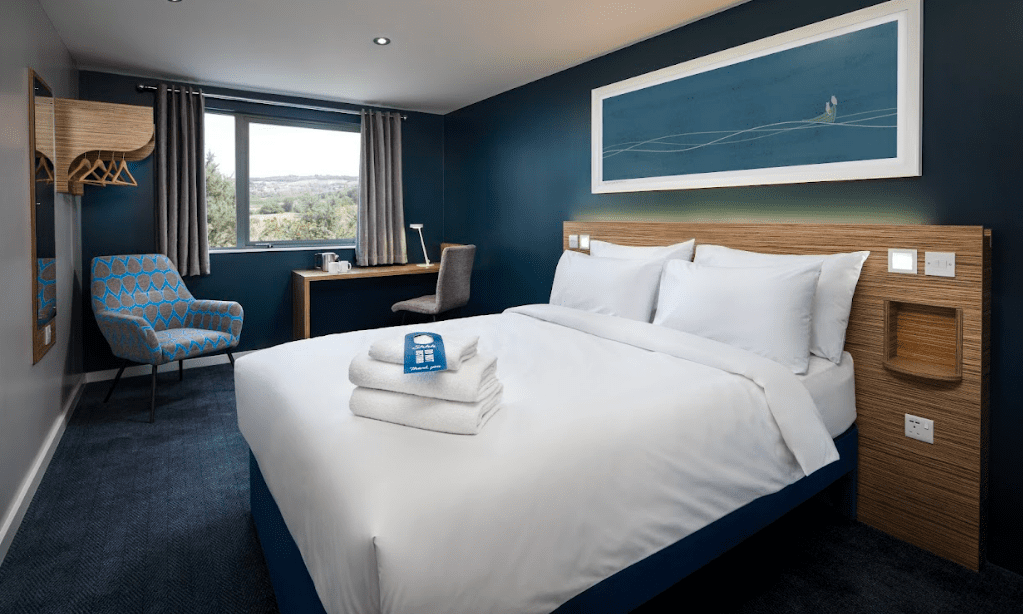
In the years following, Travelodge continued to assess consumer trends to prepare for further changes in traveller preferences and initiated its largest ever study, polling five thousand participants. The feedback from the survey guided the brand to build ‘budget-luxe’ – Travelodge’s latest hotel design. “We are more clever and smart, using design to be able to immerse those little extras that they want when they’re staying away,” says Ahmed. The group’s principle of being a low cost operator still sits at the heart of its business, she says, and all it is doing is “moving with the consumer trends that consumers want nowadays”.
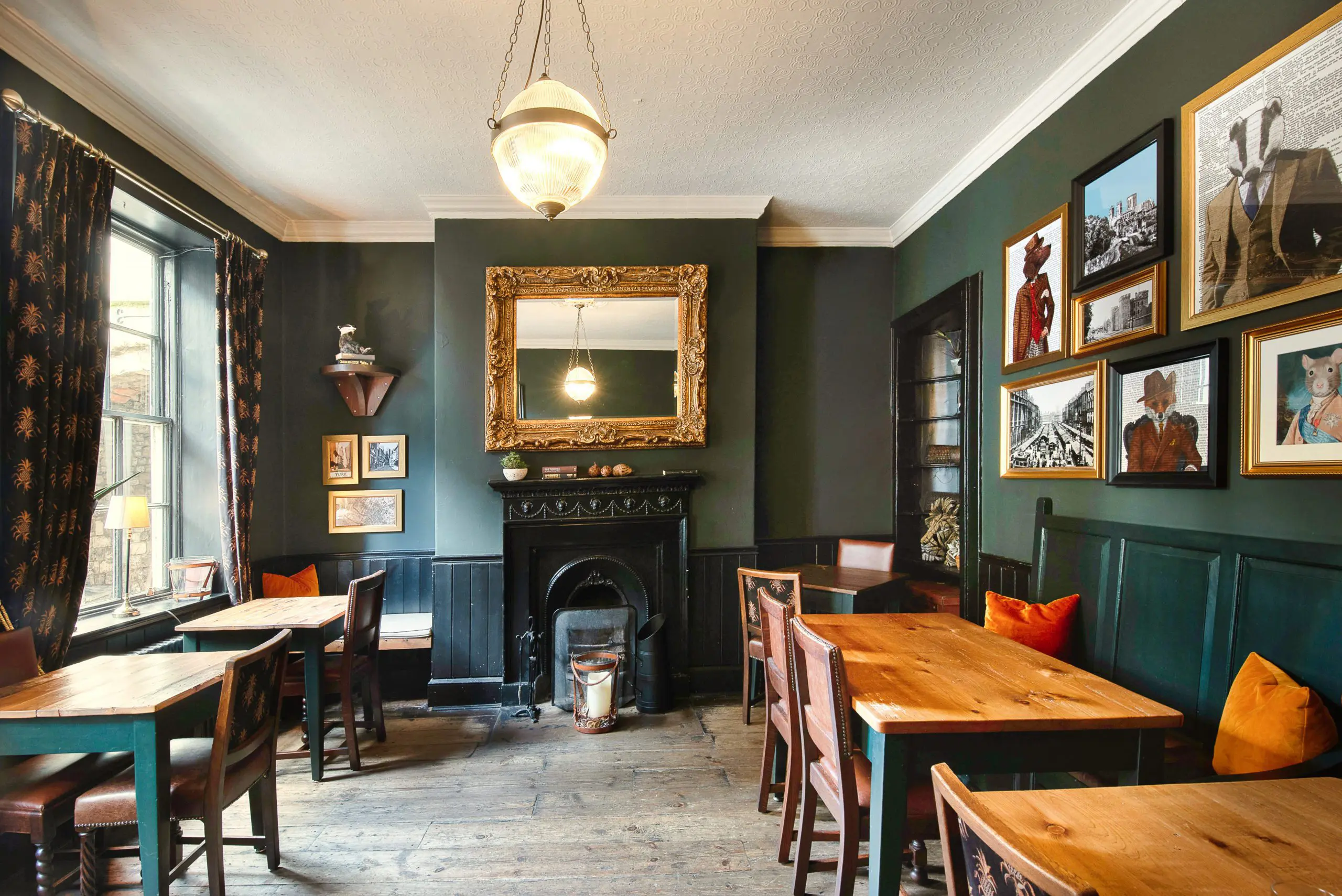
So what is ‘budget-luxe’ design and who is it intended for? As a budget operator, Ahmed explains: “It’s about asking what ‘little touches’ we can add that will secure that home-from-home feel, but not impact on the actual room rate.
“We’re seeing many business travellers meeting in hotels where they can work, socialise and meet up with clients – and that’s where budget-luxe comes in.” The rooms have been designed to create a ‘three dimensional’ effect; one side of the wall is dark navy blue to make the traveller feel “cosy” and the other is more light to allow for working and getting ready, “so you stay in one room but that one room has cleverly been created to give you two very clear spaces”.
It is well understood that co-working spaces have gained popularity since the pandemic, yet this is set to expand even further. According to Hospitality Insight, the number of co-working spaces worldwide is projected to reach 40,000 in 2024, double what it was in 2020. Since Covid-19, some large hotel franchises such as Marriott, Hilton, Hyatt and Accor managed to at least retain some of their occupancy by repurposing parts of their premises to target remote and hybrid workers. From workspaces and increased amenities to new schemes such as day passes and free provisions for accumulated credit, these groups adapted and took key learnings from one another.
“People still want value,” says Ahmed, “and especially in the current climate where every penny is counting, everyone’s been hit by additional costs within their wallets and purses.”
Analysis platform Global Data (GD) has reported that price is the most important factor to 47% of consumers when selecting accommodation. Its consumer survey in the first quarter of 2021 also found that travellers are more price sensitive than before the pandemic, which is “unsurprising” given that 87% of global respondents expressed that they were concerned about their personal financial position. “Britain is now a nation of budget travellers, with more of us choosing to stay in budget hotels than any other hotel type,” said Craig Bonnar, Travelodge chief executive, on the announcement of its new budget-luxe design. After the Spring Statement announced last month (23 March 2022) this may be set to continue.
Added pressures
Buying and selling specialist Christie and Co said the industry was “deeply shocked and disappointed” with the chancellor’s deficient hospitality industry-specific support in his statement. There were “high hopes” to freeze VAT at 12.5%, yet the chancellor chose to “‘essentially” ignore the unprecedented cost and inflationary pressures that the sector is experiencing.
“The impact on our industry is likely to be immense, and many owners who are still feeling the effects of the pandemic may be unable to survive,” said Carine Bonnejean, managing director of hotels at Christie and Co in its response to the 2022 Spring Statement.
Furthermore, in a study cited by website Food Navigator, assessing the price sensitivity of consumers and retail products, respondents appeared to be more sensitive to premium products. Nearly half of consumers (48%) said they would switch to a cheaper brand with 26% changing to an own-label product. As people have less discretionary income, they may look for luxury stays on a budget.
Responding to altitudes
Travelodge says its redesign delivers for more than just the business traveller by dividing its cafe and bar space into different sections: If guests want to have a drink they can relax in the “comfy area”; if they want to work, Travelodge provides high benches to do so; if they are socialising and meeting with friends, it provides “different zones and types of seating” to suit the style of the occasion. “A bar cafe is still a bar cafe, it’s how you design it,” says Ahmed.
Although both ‘budget’ and ‘luxury’ are independent and successful trends in their own right, it is rare that they are used in the same sentence, let alone the same title. In 2011, hospitality consulting brand Horwath HTL – in its future of luxury travel report – defined ‘luxury’ based on ‘high price’ but also referred to a redefinition of “ultra-luxury.” At the opposite end of the spectrum, design specialist RMJM suggested there is still a misconception of ‘budget hotels’ and discovered a “strong” positive relationship reflected between ‘overall satisfaction’ and the respondent’s ‘loyalty’ to a brand.
PwC Consumer Intelligence research found that guests esteemed room value “above all else” when it came to hotels. Value in this instance does not simply mean ‘value-for-money’ but any additions that provide a “unique and memorable experience,” or alternatively described, luxury.
“Luxury, it seems, can be a small thing such as creating a meaningful experience or showing you care. But large or small, it should create an emotional connection with people, the product and the brand,” said Chris Fradin, Europe vice president for the Forbes Travel Guide.
The new budget-luxe design by Travelodge caters to more than the business traveller; it aims to combine two wholly independent markets. While it is likely the introduction of budget-focused hotels helped diminish, at least to some extent, preconceptions about ‘budget’ and ‘luxury’, Travelodge’s new design intends to showcase their combined capabilities.
“It’s just about tapping into the consumer trends and observing what consumers want nowadays,” says Ahmed. As the cost of living crisis hits wallets, it may be that we see a widening market for budget-luxe surface sooner rather than later.