























Register to get 3 free articles
Register to unlock the article and receive our free newsletter. Join 26,000 other hotel leaders and stay in the know.
Want unlimited access? View Plans
Already have an account? Sign in
Only a cursory visit to the website of the Galgorm Resort & Spa in County Antrim, Ireland shows you the scale of the property and the scope of the work that has been carried out on it in recent years.
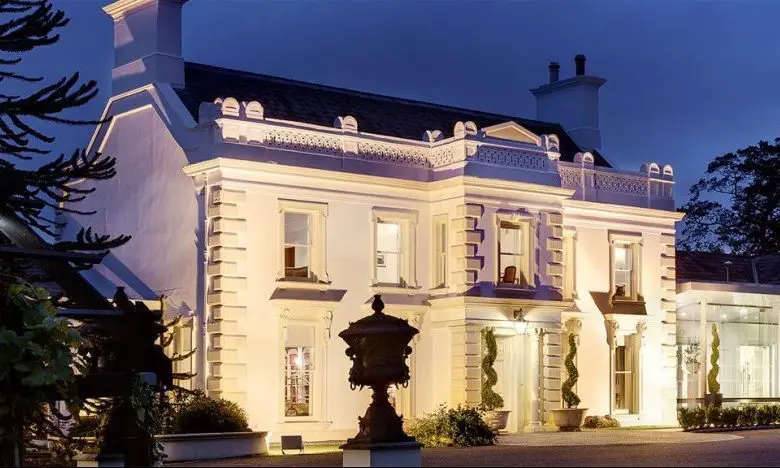
The homepage launches with an atmospheric image of an old country house, lit by floodlights against a dusky sky. But a few pictures along in the scroller, and there is an artist’s impression of a series of buildings, domes and glass walkways that are vaguely reminiscent of the Eden Project. Perhaps this is an exaggeration, but it is true to say that the images paint a picture of a rather unique hotel.
Speaking with Paul Smythe, the managing director, one gets the feeling the project will never quite be regarded as ‘finished’. “I have worked for the company for 25 years,” says Smythe, “and have been on lots of different sites. It was in 2005-2006 that the development of this particular resort was brought forward. We wanted to develop different types of audience. The development opened in stages, and I joined in the latter stages of the initial development getting underway.”
Smythe explains the sheer cost and scale of the investment in just a few sentences that would make you think it only took a week. In fact, it has taken around a decade, if you include all of the different facets of the work. “The last major refurbishment was back in 2005-6, and during that time we went from a 23-bedroom hotel with a restaurant, bar and function suite, to adding 51 bedrooms, a 35,000 sq ft spa with nine treatment rooms, outside hot tubs, indoor thermal pool, five relax-cabins, an ice fountain and so on. It was very high end and it was a great deal. This was a huge transformation during that time period.
PROJECT BRIEF:
48 new rooms and extension to spaBUDGET:
£30m since 2005. Current job £10m.MANAGING DIRECTOR:
Paul SmytheLOCATION:
County Antrim, Ireland
“Then we worked on the new rooms, and we have established ourselves as a shining light in Northern Ireland with accommodation. The timing was important – we actually managed to ride the recession from 2006 whilst continually increasing sales, occupancy, RevPAR, as well as some major development taking place.”
The original development cost around £11m, but since then the management has overseen the refurbishment of the function suites at a cost of £3m, and a new F&B offering with Italian restaurant and walled garden, which cost another £2m. A further £750,000 was spent on a new conservatory. Smythe says this is part of a strategy to “develop infrastructure” for the business to provide real draw to the local area and increasingly to international visitors in the coming years.
“We’re running at just a little over 90% occupancy, which is a strong position to move on from,” he says. “We’re looking at trying to attract a more international guest – at the moment a large portion of our current guests are Irish, and a little bit of GB, but we feel the developments of recent years will help to put us on the international map.”
THE CHALLENGES
It is not just the scale of the work that was a challenge with this project, but also the change in management culture and retaining talent that was necessary to run a hotel which has grown so substantially. After all a 74-bedroom hotel is a very different beast from a 23-bedroom one, which is where Galgorm started.
According to Smythe: “Leading the team and the staff was one of toughest things. The building itself was a beautiful development but it was about trying to find expertise where we haven’t had it before. Spa consultants and experts were essential because that was a huge leap. We needed more experience in bedrooms because of the increased number. In F&B we had good experience from our various hotels in Belfast, so we were more confident in that area. In fact the spa was the main challenge. It was about establishing work formats that are manageable by the therapists, it’s about looking at the guest journey and making sure the experience is smooth and professional.”
How did the hotel survive tough recessionary years with such heavy investment at the front end? “It was about not reducing rates although it is tempting in those economic circumstances. We had to make sure we did not fall into that trap, by keeping the rates solid but offering superb value for money. Value adding, putting more into the experience, but never moving the rates. We’re well ahead of the industry average because we stuck to our guns in this regard.”
MAINTAINING GUEST SATISFACTION
The unfortunate situation with large scale development is that often, guests and customers will suffer, and cannot always be relied upon to be philosophical about the notion of their stay being affected by improvements that they may not personally ever see. “The existing development means that on certain mornings, there is a 9am start with the contractors,” explains Smythe. “This gives a little bit of grace in that it is not a 7am start. However during the initial work in January, the development had a lot of excavation required, so the guys did occasionally have to come on site at 8am, and there have been mornings where regulations have been bent a little. We have to simply deal calmly with the onsite contractors on a daily basis and deal with any issues as they arise.
“To keep the guests happy during all of this the trick is to keep guests informed about what’s going on during the booking confirmation process. They are not turning up to be surprised by it. Also, it’s about being open to guests when they do say ‘look there was a lorry outside my window at 8am which woke me up’. Our duty managers will sit with them and try to make it right with some vouchers or special offers to compensate. We want customers to feel that we care, because we do.”
This article first appeared in the April 2015 issue of Hotel Owner