
























Register to get 3 free articles
Register to unlock the article and receive our free newsletter. Join 26,000 other hotel leaders and stay in the know.
Want unlimited access? View Plans
Already have an account? Sign in
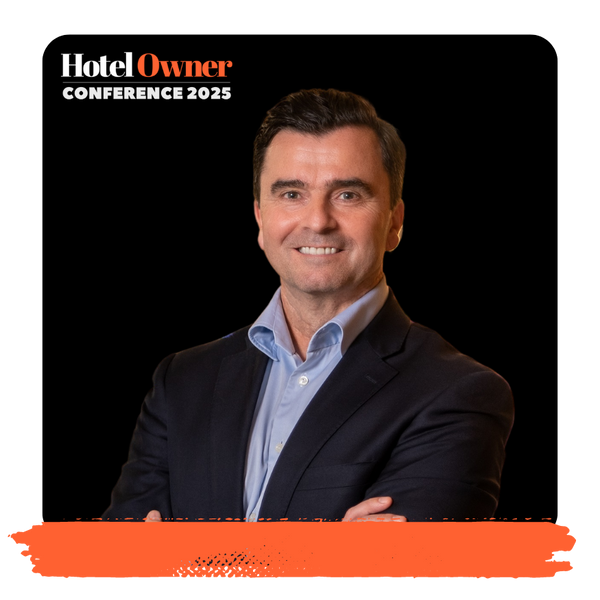
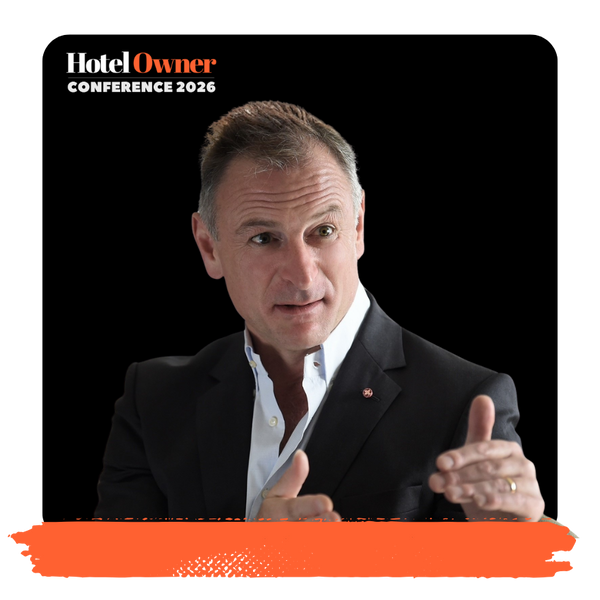
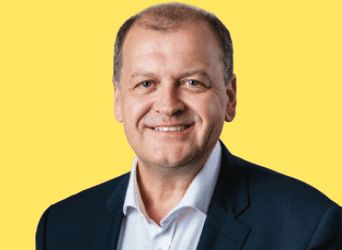
When Peter Zielke, COO of hostel group Safestay, looks back on the past 18 months, he sees more than a successful set of financial results. He sees a turning point not just for his company but for the hostel industry at large. Safestay has reported record full-year performance, and according to Zielke, the results are the product of both long-term strategic planning and a sharp responsiveness to what today’s travellers really want.
“We had a great year in 2024,” Zielke reflects. “And we were very pleased with the results. I think it is fair to say that the success was, um, the seed was planted back in 23 when, when we decided to, to create our own, um, strategy for growth, our own growth platform to focus on, on brand and enhancement on, on, on technology and systems, but also a more customer centric approach.”
That strategy is now paying dividends, with Safestay strengthening its foothold across Europe and doubling down on initiatives that expand its appeal well beyond the stereotypical image of a backpacker’s bunk.
The ancillary revenue revolution
Accommodation may remain the core of Safestay’s business, but the group has been particularly effective at unlocking new revenue streams. “The ancillaries, food and beverage sales, luggage storage, tool sales, all these elements were really, really pleasing,” Zielke explains. “So that segment alone, we increased our non accommodation revenue by 26% in 2024. So that was a real success story for us.”
Some of these revenue sources might surprise even seasoned hoteliers. One of Zielke’s personal favourites is luggage storage. “It’s, we did build extra luggage storage space we always had but it was always on the sideline. And you may nerd yourself. You know when you travel and you have a late flight, you want to make the best of, of of the day in town. So you want to leave. You have to somewhere to leave your bags. So there was an opportunity to do that. And what we, um, very effectively did also offer that to non-residents. So then people who are not residents with us can knock on the door or just walk in and, and can book, um, a luggage or a piece of luggage with us. So identifying this opportunity, you know, generated a huge, um, revenue stream for us.”
Investments in upgraded laundry facilities have also paid off. “We invested heavily in new washing machines, um, hospitals. Um, again, you know, it’s an important element and we have it in all our hospitals, the washer dryer and all that. We invested heavily in new machinery there to to provide that service, having new machinery, um, all with credit cards and as you go, etc.. Um, that paid off very, very good.”
Food and beverage has been another growth pillar, though Safestay has taken a focused approach. Zielke explains: “We look at the offering we have and and in some cases we had probably in two, uh, the segment was too large. So concentrating on the core products, um, and selling those was hugely successful.”
It’s a reminder that often the smartest strategies aren’t about radical innovation but careful attention to the everyday needs of travellers.
Technology as a growth driver
Another cornerstone of Safestay’s recent performance has been technology. Zielke and his team have rolled out an AI-driven yield management system that he describes as “an amazing system called Price Point, which checks in all our operating properties every bed or dorm or room type every two minutes based on demand, on changes to prices increases by £10 or €10 or euro €10, but €1 up, $0.10 down. And all AI driven, of course, always under the watchful eye from our head of commercial.”
The agility this provides cannot be overstated. “If Taylor Swift comes back to the UK, we are well prepared to to react very quickly, um, into this surge,” Zielke notes, only half-joking.
But beyond the technology itself, Safestay has reshaped its commercial organisation. “Combined with that we opened. Um, essentially we call it the commercial hub, essential one stop shop with all commercial functions that’s based in Warsaw,” he says. Bringing marketing, sales, HR and yield management together under one roof has strengthened Safestay’s ability to respond to market shifts in real time.
Growth through acquisitions
Safestay’s ambitions extend beyond operational refinements. The group has been rapidly expanding its footprint. “The board made the strategic decision to double our the size of our operation within the next, uh, next years. Um, and we are determined to do that,” Zielke explains.
New acquisitions in Edinburgh, Córdoba, and Brighton highlight the company’s focus on prime locations. “Location is absolutely key. For example, our property in, in Brussels. I mean, it’s two minutes from the ground. Plus you can’t be more central. The same or Barcelona. Paseo de Gracia, a hotel right next to the Gaudi building. You can’t be more central and this sets us apart,” he says.
This emphasis on centrality isn’t just branding—it saves guests time and money. “We’re dealing with competitors as well who are a mile out of the city centre, etc. the cost for the metro bus, etc. they save with us to to stay in the city centre and walk to the sightseeing sites as well. So this is the logic behind that and it works extremely well.”
Who is today’s hostel guest?
Perhaps the most striking theme in Zielke’s reflections is how diverse hostel guests have become. “The typical, um, stereotype hostel guest, the backpacker, you know, in front of a can use them. Um, you know, it’s still our strongest segment. Of course it is. But we’re seeing we’re seeing a lot more families, um, staying with us, but also business traveler.”
Families, in particular, are embracing the hostel model. “It is fun, you know, and take a family, the parents and two children having a four bedroom dorm en suite. I mean, it’s fun for the kids sleeping upstairs and then climbing up and down and annoying the parents, no doubt. Um, about that. So it is an experience in itself and it’s a fraction of the cost the family would probably need to pay in a hotel in a similar location.”
Business travellers, too, are part of the picture. Zielke describes a scene from Safestay’s London Elephant and Castle property: “This morning at breakfast. Um, at 7 to 7:00. Um, when you look around the breakfast room and you see the people who are there, laptops everywhere in business, people, you know, like me sitting there getting ready for the day, catching up with their emails, I guess, or whatever, having a cup of coffee and then, um, off they go.”
The age profile of hostel guests is also shifting. “The age group, um, which was associated with hostels um before is blurred a little bit more as we go forward. So the people my age, um, and I can see in the hostels more and more so, which is great.”
Breaking down misconceptions
For many, the word “hostel” still evokes memories of creaky bunk beds and shared showers. Zielke is quick to dispel this outdated image. “You know, that we are wooden bunk beds which are creaking all the time and you have to queue for 20 minutes for a shower or God knows what it is. Um, so so this is far from the truth these days. It’s, um, white linen, duvets, pillows, you know, quite often ensuite accommodation in the dorms, um, etc. so it’s very, very different.”
Changing perceptions, however, is not straightforward. “To convince, um, um, those who who kind of done their hustling when they were in their 20s, let’s say, and now moved into, um, in to or gone older and then stayed in hotels, etc.. Yeah. Look, I mean, we on purpose changed our name from safety hostels to safety hostels and hotels. We have hotels, you know, we have hotel accommodation.”
Marketing plays a central role in this effort. “We’re trying to to speak to people through our Instagram and through our website, through our Facebook etc.. So we’re using all these channels to I don’t want to use the word educate, but I just use it for, for, for those purposes to, to to educate the people. There is more that you don’t have to share the room with Peter or with whoever. Do you know? Know. And there are private rooms.”
The Social Soul of Hostels
Despite all the changes, Zielke believes the essence of hostelling remains: creating human connections. He recounts a moment in Barcelona that left an impression. “It was the first person in the lounge space for breakfast, had a coffee, and so it was completely empty. So I grab the coffee and sit down and ask you to play on your phone and all that, and then another person walks in and you have to picture that. A big bar lounge area empty. So this person did grab a coffee as well and sit on my table. They said, oh, hi, how are you? And I said, well, what’s happening here? And this person who could sit, he couldn’t have said anywhere else. And we started this great conversation.”
For Zielke, that moment captured the unique value of hostels. “This is what hostels are all about, to connect people, to talk. We’re living in a digital world and it won’t go away. Um, and then our customers are totally digital, digitally focused or knowledgeable, but they definitely crave for this personal interaction. And we provide that. We provide the experience far more than hotels can ever do.”
The evolution of hostels and their guests
Zielke is confident that hostels will continue to evolve alongside their guests. “I think hospitals will become more than just an accommodation provider,” he predicts. “People looking for this one stop shop to get also travel advice. Um, and and getting a one stop shop to to find partners. Um offered by the hostel for tours, for museums, etc. and all that.”
Digital nomads are a particular focus. “We talked about our Naples property earlier. We will have dedicated areas for digital nomads so that they can also work in a quiet corner and do their thing. We see this a great demand in our Lisbon property, for example.”
Solo travellers are also shaping the future. “People are quite happy to to explore cities on their own and find new connections, new friends…Again, gostels are designed for that experience to bring people together.”
Conclusion
Safestay’s record year speaks not just to one company’s strategy but to the evolution of hostels in the 21st century. No longer the preserve of backpackers on a shoestring, hostels are becoming multi-generational, multifunctional spaces that combine affordability with community.
Sceptics may question whether the old stereotypes can ever be fully erased, or whether the blending of hostels and hotels risks diluting the very spirit that makes them unique. But for Zielke, the trajectory is clear. With record results, a sharper brand, and a growing footprint across Europe, Safestay is betting that the hostel of the future looks very different from the one many remember.