

















Register to get 3 free articles
Register to unlock the article and receive our free newsletter. Join 26,000 other hotel leaders and stay in the know.
Want unlimited access? View Plans
Already have an account? Sign in
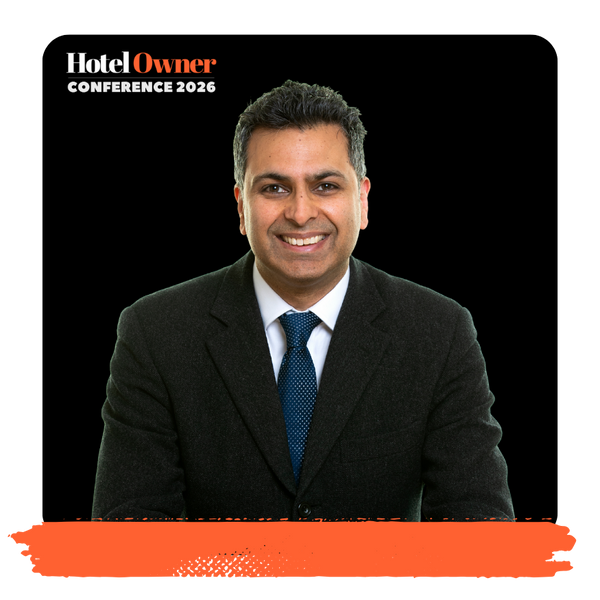
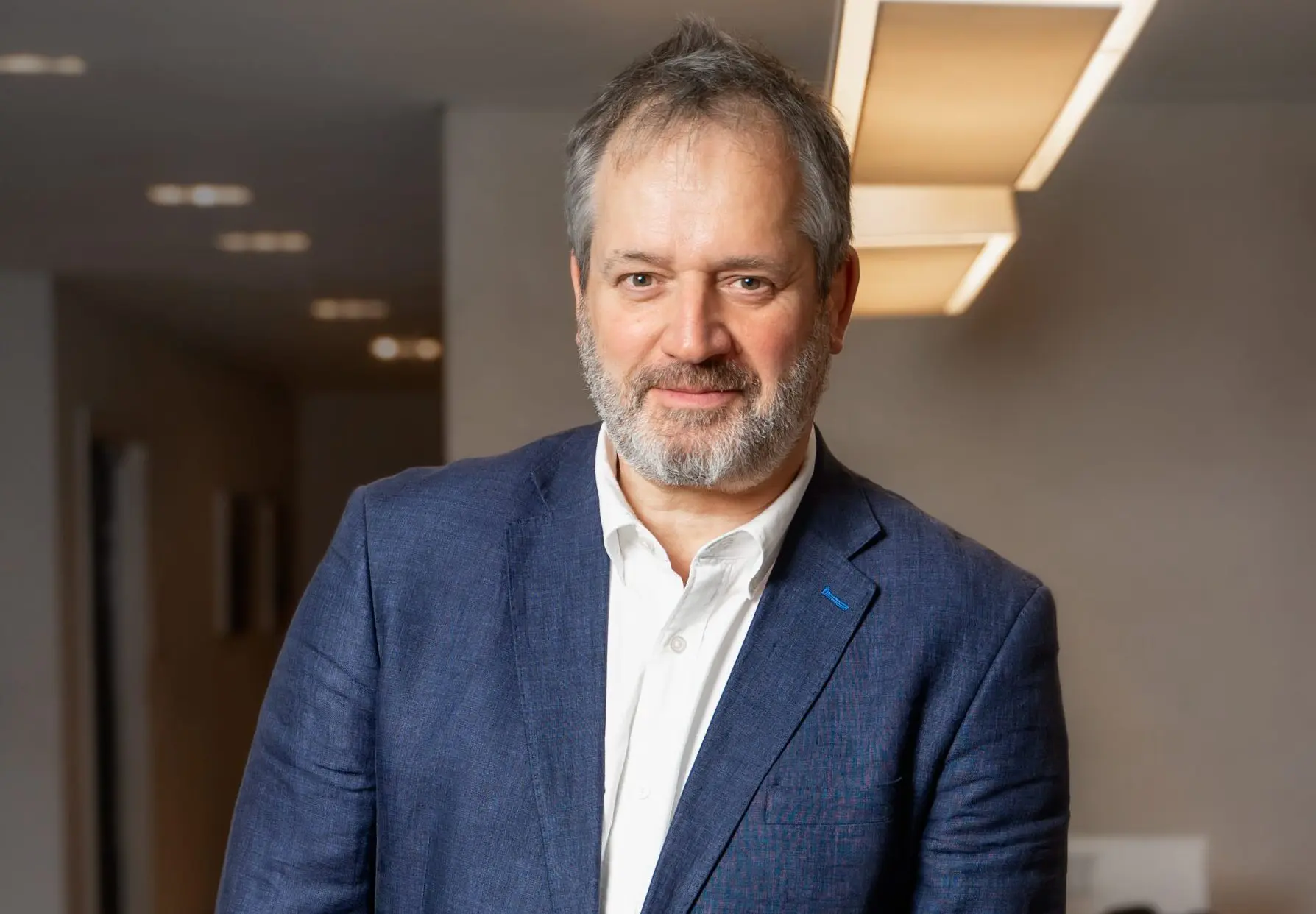
For David Orr, CEO of Resident Hotels, hospitality was never a straight-line calling. “I was brought up in the west coast of Scotland in Oban, which is a very seasonal tourist town,” he recalls. “Whilst I actually went to university and did politics and then went to university again and did, uh, effectively got into commercial property, ultimately I ended up getting into, um, the hotels sector. But probably the origins of it were way, way back.”
That early exposure to Scotland’s tourism rhythms would later shape his approach to hotels not as industrial assets but as living, breathing spaces. “It’s interesting you call it an industry because I would probably say I think it’s a sector,” he says. “When someone says industry, it suggests a very binary kind of relationship between, you know, people who engage with it. And I think it never is.” For Orr, hospitality is rooted in human exchange. “Those kind of interpersonal, um, sliding doors moments in life — new people met, new experiences had — that was really energising.”
From property to people
Orr’s entry into hospitality came through the architectural back door. After the property crash of 1989, he found himself working on “recovery work as part of what I was doing at the same time,” helping banks and institutions navigate distressed assets. “People were very exposed in property at that time. There was a lot of problems, a lot of bankruptcies.” Yet from crisis came opportunity. “By about 1995, as the general, if you like, property and general economy was recovering quite well, we thought we would try and do a start up.”
That start-up became Mint Hotels, which he co-founded with his father and Don MacDonald. “It really was out of a sense that there was an opportunity that there had been a lot of trauma in the sector, but there was an opportunity that was more about brighter horizons.”
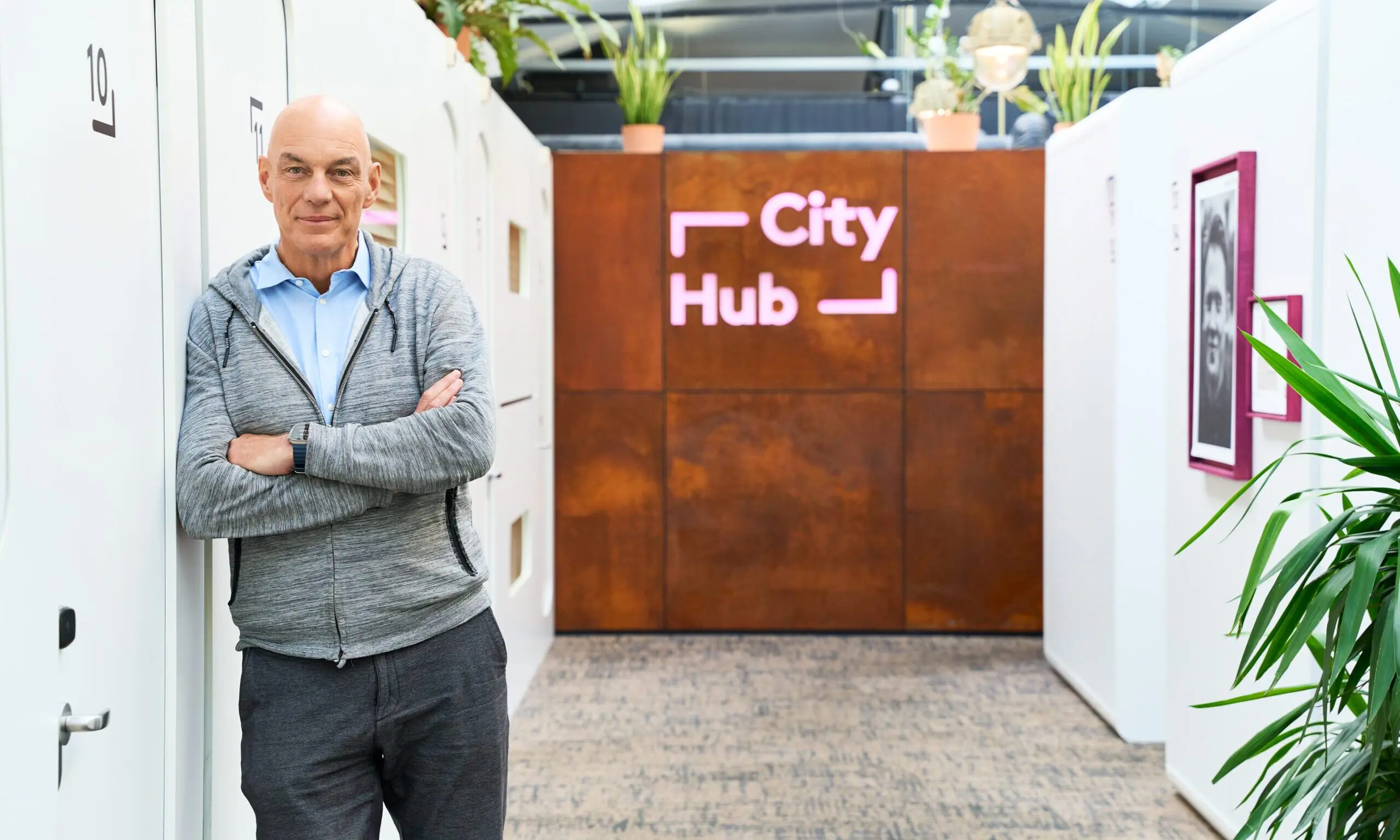
Design was central from the beginning. “We always wanted to create something that would stand out,” he explains. “My personal experience had been a lot around spatial design… so we kind of started with the bits, uh, the physical.” Orr spent years “in a workshop pretty much over two to three years… creating spaces, which became bedrooms, which became mockups, which became, if we like, the physical DNA of the City Inn model.”
When the time came to lead operations, the decision surprised even him. “A very, very good guy… completely took me by surprise by suggesting that his conclusion to the banks and my father and his business partner was that the person who should be running this business is actually David, which I didn’t expect.”
The step from property to operations might have seemed natural, but it was a philosophical leap. “Whilst operations and property do get separated, fundamentally they work far, far better when they’re all together.” His vision was to craft an organisation built on culture, not hierarchy. “I was going around everybody else’s hotels dismantling them to try and work out how to build them from scratch,” he remembers. “I thought, well, we can do something completely new culturally. So it was a kind of huge opportunity to do that.”
The human blueprint
Orr speaks of hotels the way a conductor might describe an orchestra. “Thinking about space and how people respond to space — and I mean space, not size — thinking that natural light is hugely important,” he says. “Literally every single room had full height windows. That sounds like something physical and everything else, but there’s a lot of thought behind all of that. There’s a lot of understanding of how people feel in spaces.”
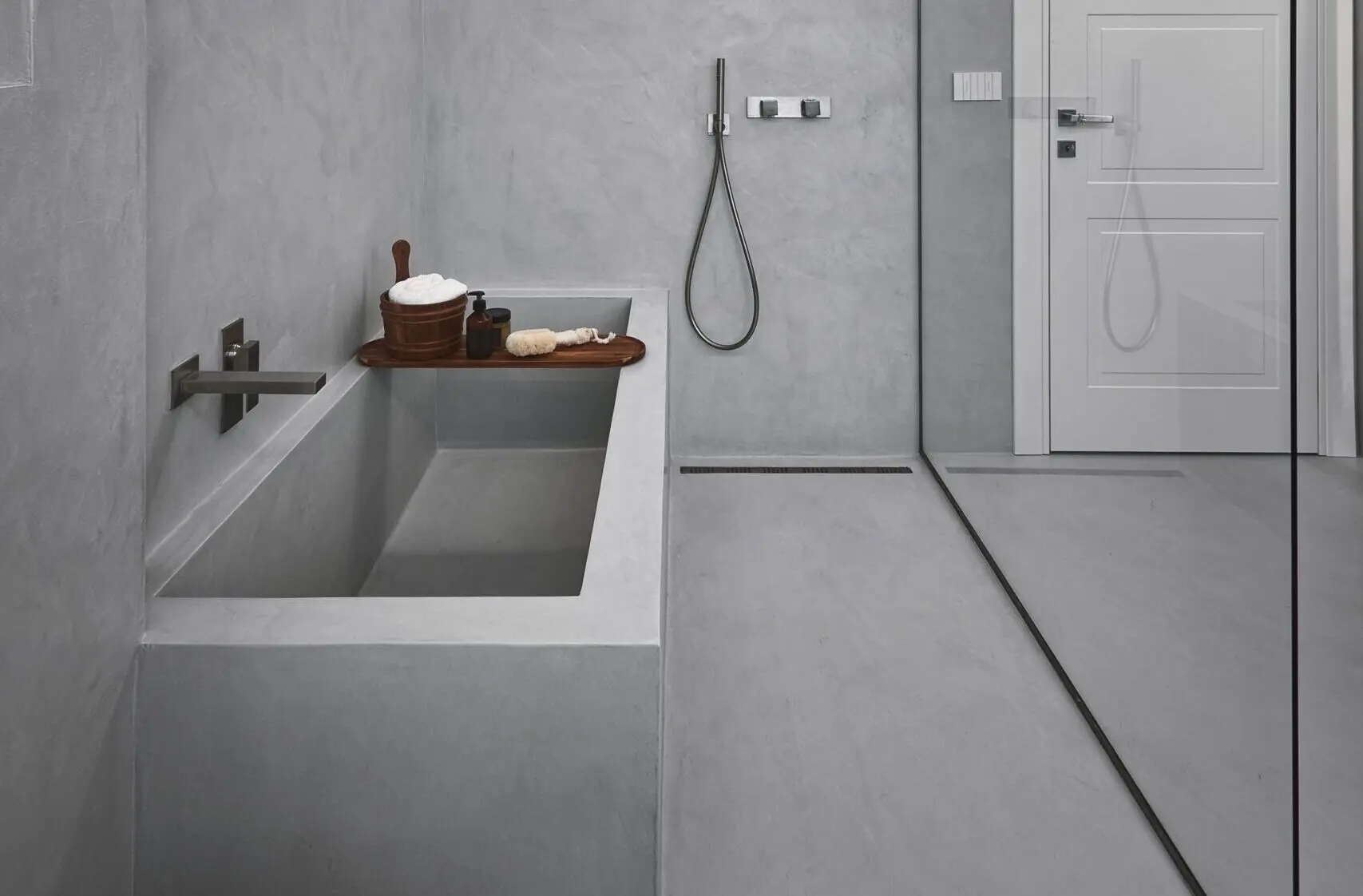
His fascination extends to the smallest sensory details. “I found it personally just as exciting to understand the water flow of a shower and the temperature consistency of a shower as the acoustic performance of a room.” Each consideration feeds a broader goal: “Humans will go through these places and be absolutely loving it.”
But Orr is quick to remind that comfort is not one-size-fits-all. “Everyone’s different,” he says. “Some things will just not matter to some, whereas they’ll be enormously triggering for others.” His emphasis on empathy — both as design principle and leadership value — runs through every decision. “Hospitality has been somewhat maybe not littered, but it has got an awful lot of, um, personal ego in it,” he reflects. “I think that actually the success… is very much because it’s not about that. The brand in itself is the vector for the fulfillment for the guest and the teams.”
Reimagining the resident
When Orr took the helm at Resident Hotels, he inherited a strong platform — and a family-owned company with deep philanthropic roots. “I was very lucky to join up with a very well regarded, reputable family business,” he says. “I inherited a very, very good legacy… immensely grateful for the opportunity and very well aware and conscious of the effort and dedication that had come in before I got involved.”
His remit has been to carry that legacy forward through thoughtful expansion. “We rebranded — the hotel brand is The Resident, the operating company is called Resident Hotels,” he explains. “But as you alluded to, we have also got another brand within the portfolio, which is Four Points Flex by Sheraton. So we are now, if you like, creating, managing, curating two different brands under the one operating company.”
The company’s newest property, The Resident Edinburgh, is a source of personal pride. “It’s called The Resident Edinburgh, and in a sort of a way, it’s been the culmination of many years of trying to sort of produce something that really brought together all of the strands of the legacy that I inherited.” Orr’s affection for his native city is palpable. “Edinburgh is a wonderful, wonderful city. It has so many attributes… it really does deserve to be where it is recognised now to be, I think, in the kind of European league of major capital cities.”
Designing for the lived experience
The Edinburgh project exemplifies Orr’s insistence that guest experience must begin long before check-in. “Clearly what we set out to do is to give the guests an experience that, from their perspective, really is fulfilling,” he says. “One of the aspects, for example, was that you could walk to a lot of the parts of the city, excluding the castle, without going up a hill… that’s the lived experience of the guest.”
He believes the finest hotels function as cultural connectors. “We really enjoy being knowledgeable and engaged with all of the partner businesses or neighbouring businesses, whether they’re cafés and bars and restaurants or whether they’re art galleries or whatever it is,” he explains. “There’s a real excitement about being able to help people find what they would find interesting in the city.”
This philosophy extends across the company’s growing portfolio. “Within our management of their new Four Points Flex by Sheraton brand [we aim] to be an absolute exemplar,” Orr says. “We’re not trying to change their brand… but what we want to do is to make it to be the best version of what it could possibly be.”
A strategic step into mid-scale
One of Orr’s most significant recent moves has been Resident Hotels’ entry into the mid-scale segment through the acquisition and conversion of the Sleeperz brand. “The Resident is not suited to being in multiple locations spread throughout the UK,” he explains. “Whereas a mid-scale brand that has got superpowers… is.”
Diversification, he argues, is both strategic and human. “Having a mix within the portfolio of, if you like, upper upscale and mid scale… means we ought to be spread at risk,” he says. “People don’t necessarily just flit between brands all the time, [but] there’s a huge amount of occasion related choices that people will make.”
It’s a perspective shaped by pragmatism as much as optimism. “We’ve got really good teams, we’ve got an HQ set up with fantastic tech stack and great data,” he notes. “So there’s multiple ways in where we think, well, we can actually bring quite a lot as an operator to these two brands.”
Empathy as strategy
When asked what sets his leadership apart, Orr consistently returns to one theme: empathy. “The biggest challenge is being able to get across why reputation is so important and why it really matters that you’ve got guests and teams that need to be set up to succeed themselves,” he says. “Winning isn’t about destroying everybody else. It’s about fulfilling for you, for fulfilling for virtually everybody else.”
For him, culture must combine ambition with understanding. “The culture has to be, frankly, loaded up with a bit of empathy as well as ambition. I don’t think the two are mutually exclusive.”
He sees Resident Hotels’ high retention rate as proof that empathy and performance can coexist. “It is tough, but it is hopefully setting people up to succeed, knowing that there is a place where their career will be genuinely appreciated,” he says. “It’s a kind of mutual respect between the guest and teams, and that has to come from all aspects of leadership within the business.”
A sector built on trust
Orr views the hospitality sector as uniquely resilient. “Life is challenging. You know, we’re lucky,” he says. “It’s really, really good if there is a trust-based aspect to the relationships that you have with all stakeholders. That’s the foundation of resilience.”
That trust, he argues, is earned daily. “Someone who’s staying in your hotels — literally, you are responsible when they’re fast asleep for the safety, security, whatever,” he reflects. “It gets called service and everything else, but it’s an enormous amount of trust.”
Reputation, then, becomes both compass and currency. “Reputation can reach into the future,” he says. “We nurture the reputation, respect the reputation, and trust it to be walked. Whatever’s coming down at you, hopefully you can deal with it.”
Looking ahead
Resident Hotels is preparing for further growth, including new ventures in Manchester. “Undoubtedly we would like to do more of both of these brands,” Orr says. “We’ve got a wonderful board, really brilliant chair, and great relationships with ownership, great relationships with funding. So there’s a really good moment now because it’s not like you did it ten years ago or anything else. It’s actually all just there. You can go and see it.”
Yet for all the talk of expansion, Orr’s vision remains deeply personal. “We are basically a, not just a receiving theatre. We are a producing theatre,” he says. “The people at the centre of the stage are the people who are in the team and the people who are the guest, not the theatre itself.”
That conviction — that hospitality is a stage for empathy, not ego — may be Orr’s defining contribution to the sector. “If you know, the best way of having that culture is to be very open and engaged and recognise that you will see things every day that are different,” he reflects. In other words, keep the doors open — to ideas, to people, to possibility. After all, as David Orr puts it: “As long as you’ve got a pulse, you’re a part of the game.”