















Register to get 1 free article
Reveal the article below by registering for our email newsletter.
Want unlimited access? View Plans
Already have an account? Sign in
Remember at school when teachers used to explain how one million was an essentially incomprehensibly large number? I recall one of mine showing the number represented on a huge rolled out piece of paper as wide and long as a carpet, with precisely one million individual dots.
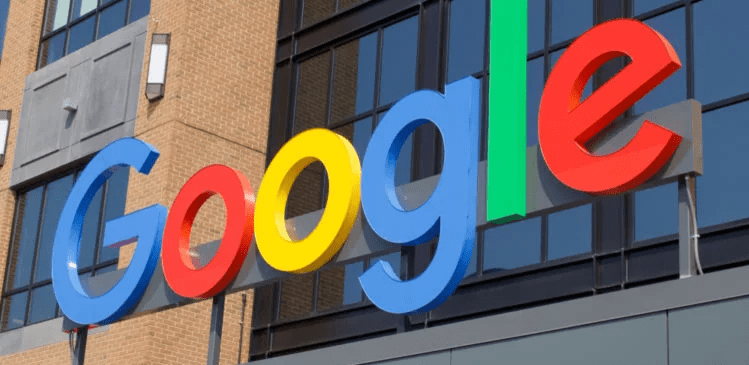
I was about 10, but it was fascinating even then and I still remember it vividly. OK, times that by a million. And then imagine they are US dollars. That is how valuable Google’s parent company Alphabet has just become, joining Microsoft, Apple and Amazon in an elite club of American mega-corporations.
The valuation occurs due to its share price, which currently stands at $1,450.16 per share – add them all up, and you get $1trn, which is about £776bn.
To understand the scale of its growth and success, it is worth noting that when it first floated on the stock market in 2004, about seven years after its launch, Google shares could be picked up for about $85 each, a valuation therefore of $23bn. Google is one of the “Faang” stocks, which stands for Facebook, Apple, Amazon, Netflix, Google” – all American, all tech companies.
Google of course made its name in the search market, which has made it the main gateway to the internet for two decades. It has competitors, but seriously, who uses Bing? And think of all the competition it has successfully slayed along the way – AltaVista, Lycos, Ask Jeeves. even Yahoo! Began life as a search engine, and while it still exists generating $1.33bn a year in revenue, nobody knows what it does.
While it may not feel like it today, we are still living in the infant years of the internet, and the dominance of these companies may one day come to be seen as a Wild West era. Look at any other industry that birthed huge monopolies in the last 130 years, and the regulator eventually weighed in to do some breaking up eventually. John Rockefeller, were he still alive, would warn the magnates – a Standard Oil-style breakup is surely just around the corner.
The Chinese juggernaut shows signs of fatigue
One of the greatest and most powerful engines of global growth over the last 25 years has been China, invariably growing at between 5-10% a year on average, and now sporting an emergent middle class of unimaginable demographic size. That makes it both a huge producer and a huge buyer of goods.
But a conflagration of factors mean that this decades-long GDP party may be nearing an end, or at least a world-dampening pause. It has just posted the weakest economic growth for almost 30 years, which is virtually the entire period of unprecedentedly rapid growth.
Its growth rate is still not to be sniffed at: in the final three months of last year the rate was mighty 6%, which is a level that western leaders dare not dream of, but with such a massive economy, a downtick of just 1-2% is enough to cause choppy waters for everyone else.
However, most investors think that the tariff war with the United States is a significant factor in the slowing growth rate, and now that President Trump has signed a new deal with the Chinese to press pause and prevent further escalation, China’s production may get back to faster growth.