



















Register to get free articles
Want unlimited access? View Plans
Already have an account? Sign in
As restaurants and hotels navigate the post-lockdown industry landscape, there is no doubt the pandemic has changed – or accelerated pre-existing changes – the sector for good. Customers’ tastes and desires have been permanently shifted, creating a new set of creative challenges for designers to align the interior and exterior of hospitality and tourism venues to the evolving landscape.
We spoke to Aylott and Von Tromp, an interior design studio, and Tonik Associates, a design company, to take a look into the trends which will dominate the future in the hospitality and hotel industry.
Multi-purposing
The pandemic has enforced a breakdown in the gap between work and leisure, as workers around the world have shifted from conducting business in an office to their homes. For hospitality venues and hotels the opportunities presented by a blending of business and leisure is one which has been a key consideration for designers and architects in the past 18 months, and will continue to grow in significance as we enter 2022 and beyond.
Gary Marshall, founder of Tonik, notes that the repurposing of space to ensure it can serve customers seeking both leisure and business requirements presents a unique challenge for designers: “Considerations that we need to be looking at are acoustics in particular. We know that these are affected by the types of materials used on walls, floors, and ceilings. Those need to be softened so they can absorb the typical noises that come from a bar.”
Alongside the repurposing of public space to suit new customer demands, flexibility is also a consideration when it comes to the private sphere, such as hotel rooms. Marshall says that “When we were looking at designing hotel suites, for example, some of the ones we designed have got meeting spaces in them”.
James Von Tromp, co-founder of Aylott and Von Tromp, says hotels are considering how to repurpose their space to appeal to those looking for a blend of work and leisure, as they “saw that there was this kind of merging into this retreat aspect of hospitality, and they want a piece of the pie”.
As well as flexibility, for designers this means increased privatisation and personalisation of space, to encourage guests and customers to look for “mid to long stays as well as short stay”.
“We’re looking for the people that want to be there for Friday, Saturday, Sunday night, but also the people that want to be there for a Monday, Tuesday, Wednesday and actually want to work and connect with people” Von Tromp adds.
Escape to nature
Restrictions on indoor socialising, a sharpened emphasis on sustainability and eco-friendly travel and consumption, and an increased focus on work-life balance have all led to a reconnection to nature and the environment.
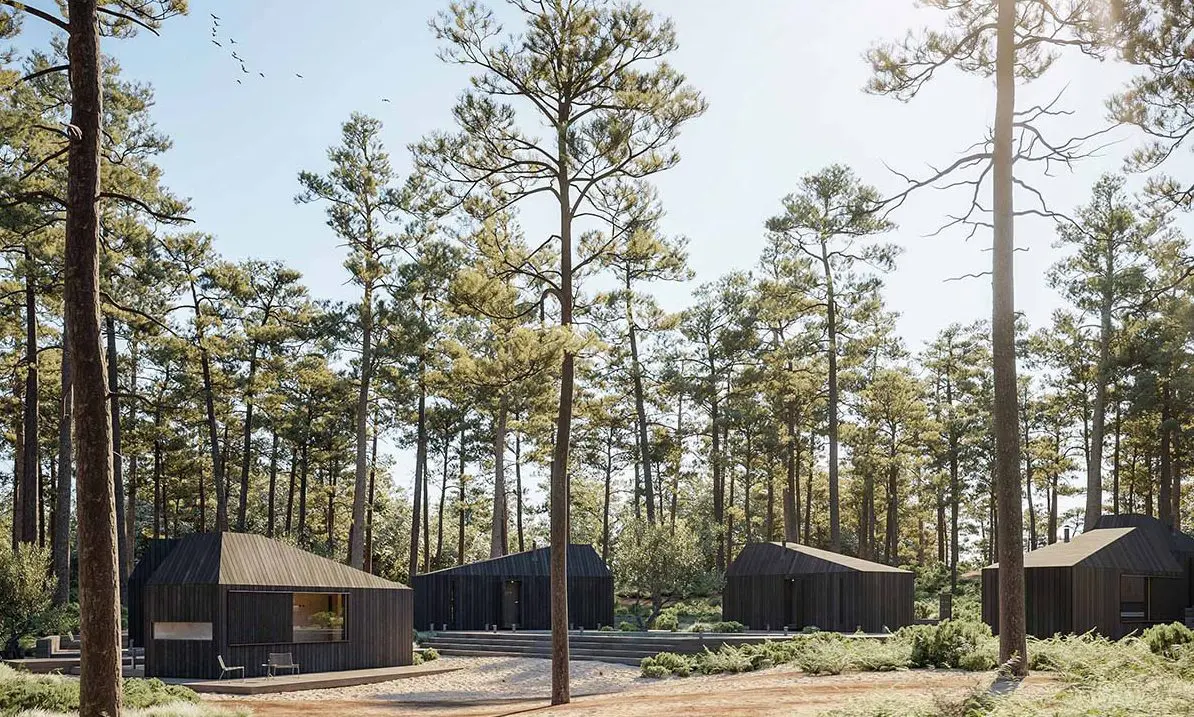
Von Tromp highlights nature as a key aesthetic trend which we will see more of in the future, as designers look to minimalist and botanical Nordic design principles. This is a trend reflected in their Hytte modular hotel and retreat project.
“Travellers will continue to seek escapism and comfort that retains a raw feeling, capturing the emotive sense of camping in the wild and being close to nature. To reinforce a sense of escapism, a minimalist Nordic aesthetic is captured in every Hytte construction, with each one blending seamlessly into its natural surroundings and offering an immediate connection to nature through the use of oversized picture windows and skylights to create carefully placed vistas,” he says.
As well as focusing on nature, the challenge presented to designers is to create an atmosphere of seclusion and serenity. For Aylott and Van Tromp, modular design achieves this, “delivering both off-the-shelf designs and bespoke co-branded cabins for hoteliers and leisure operators alike”
“People are trying to get away from people. They don’t want to feel like they’re on top of each other like sardines in a can.”
Brand narrative
Perhaps the “single most important trend” as we look to 2022 is brand narrative. Aligning a hospitality venue or hotel with a compelling story is the key to creating a community, and inspiring multiple and repeat customers,” says Von tromp.
For designers, creating a style which fits into the overarching narrative and value-set of the company represents its primary objective.
Von Tromp, from a background in marketing, notes that he has seen this trend rapidly take hold over the recent past, says: “We’ve been massive advocates of bringing a really strong brand narrative to any design that’s been done in the hotel. It gives a hotel an identity and therefore it can live on.”
He adds: “When we arrived into the hospitality industry, we noticed that there wasn’t a huge emphasis on it. It was more about how does this space looks? Does it look cool? And that’s great. but that’s very fleeting. Something can look cool for, let’s say two years while that trend is around, but then when that trend is over what do you have left?”
By integrating a hotel’s design with the history of its location, a focus on locally sourced material to weave a sense of community into its tapestry, or creating a shared set of sensibilities and values with its customers, hospitality and tourism venues will see its own narrative reflected back by their customers.
Marshall agrees that weaving a narrative into the design of a venue goes a long way to ensuring longevity and loyalty from customers: “Creating a compelling story that’s relevant to your guests and relevant to your customer, and one they can see and want to be part of that community. They’ll want to come to you and they’ll come and say again and again, because you are matching their values.”