























Register to get 3 free articles
Register to unlock the article and receive our free newsletter. Join 26,000 other hotel leaders and stay in the know.
Want unlimited access? View Plans
Already have an account? Sign in
A decision whether to invest in expensive technology is among the trickiest most hoteliers will face. On one side will be members of the team who say a new piece of kit is vital for the business, aided and abetted by a persuasive salesperson, and on the other side perhaps a finance director who can only think in terms of directly attributable ROI.
Sometimes it’s a no brainer; the boiler has packed up and needs replacing or certain rooms need air conditioning because guests keep complaining of intolerable heat in summer. Often the decision can be justified on aesthetic grounds, such as the installation of better lighting. But the really big ones, like a complete kitchen re-fit, may have been put off for months or years because of the sheer cost involved.
A particularly controversial one can be the adoption of a new property management system (PMS). Lots of our member hoteliers in Pride of Britain have taken the plunge in recent years, in some cases spending over £25,000 to replace a system that, on the face of it, was still working. Cue the finance director who asks what extra revenue will result from this large outlay. It’s an impossible question to answer in those terms.
You would not ask how many room nights were achieved by planting those beautiful trees at the end of the garden or by hanging those amazing pictures in the sitting room. You did it because you knew it would enhance your customers’ experience so they are more likely to return. In the same way, stripping out inefficiency also improves a guest’s experience because things happen faster and more smoothly if the front office has up to date systems; the email confirmation is right first time; the bill is correct; the booking process is hassle free. One slip in any part of this process can be seriously annoying for the customer and could put them off returning or even lead to a failed booking. An effective PMS is also a vital marketing tool as it needs to integrate seamlessly with all the booking channels you use.
So far I have only mentioned the technology behind the scenes. In my opinion that is where it belongs. Wherever I have come across attempts to push gadgetry in front of the customer it has done more harm than good. Think of the tablets used to control lights, TV and heating. For every guest willing and able to master the device there will be another who finds the whole thing frustrating and just wants a simple switch like they have at home. Even shower controls can prove challenging for the mildly myopic if there aren’t clear on/off and hot/cold markers.
I think a good analogy is how cars have developed, at every new stage in the evolution of cars the driver has less to worry about and the technology is hidden out of sight. Thus the gears change by themselves, the lights come on when it’s dark and the satnav speaks calm instructions. Most of us have no clue what is under the bonnet beyond the windscreen washer and perhaps the oil dipstick. And if you stretch the comparison to apply to our lifestyles generally, staying in a hotel is the equivalent of being chauffeur driven so one is troubled by even less engagement with the bothersome business of working the controls.
This year I’ve attended a handful of conferences where this topic has been covered. Invariably the speakers have focussed on mobile phones and the part they play, or could yet play, in delivering a better experience for our customers. It is true that smart phone usage is pretty much universal and there is almost no end to the possibilities of harnessing apps and data to stay ahead of one’s competition.
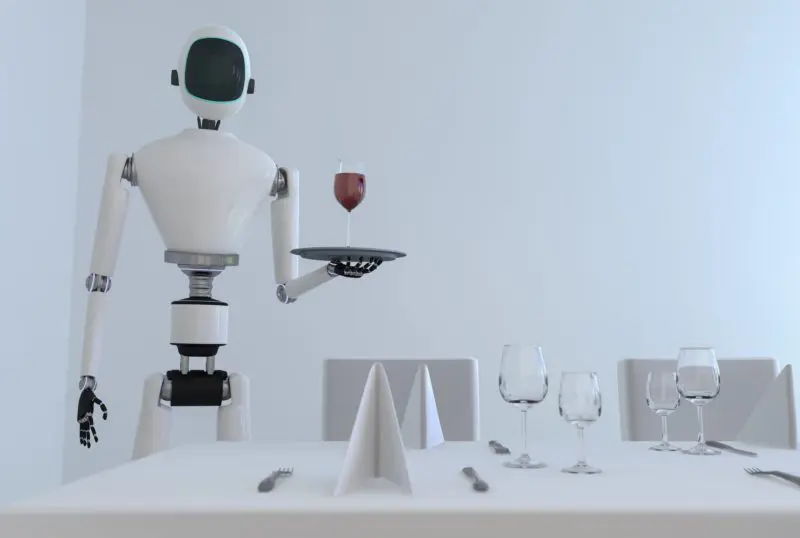
More than half of visits to Pride of Britain’s web site are made using hand held devices, for example. Once inside the building, however, I do feel we should not expect our guests to have to use them to call up services. Hospitality should be about human engagement and at the luxury end of the spectrum there is no substitute for being treated with charm and courtesy by professional individuals. Robots are great but in my view they belong in factories, not hotels.
By Peter Hancock, chief executive of Pride of Britain Hotels. This article first appeared im the August 2018 issue of Hotel Owner