








































Register to get 3 free articles
Register to unlock the article and receive our free newsletter. Join 26,000 other hotel leaders and stay in the know.
Want unlimited access? View Plans
Already have an account? Sign in
“EV Chargers are a requisite for hotels as the popularity for electric vehicles increases. With the ban on sales of petrol cars from 2030 (this has been pushed back to 2035 by Rishi Sunak), we will continue to see more demand for an EV charging point infrastructure and hotels are a great way to build this infrastructure across the UK,” says Danny Pecorelli, managing director of the Exclusive Collection.
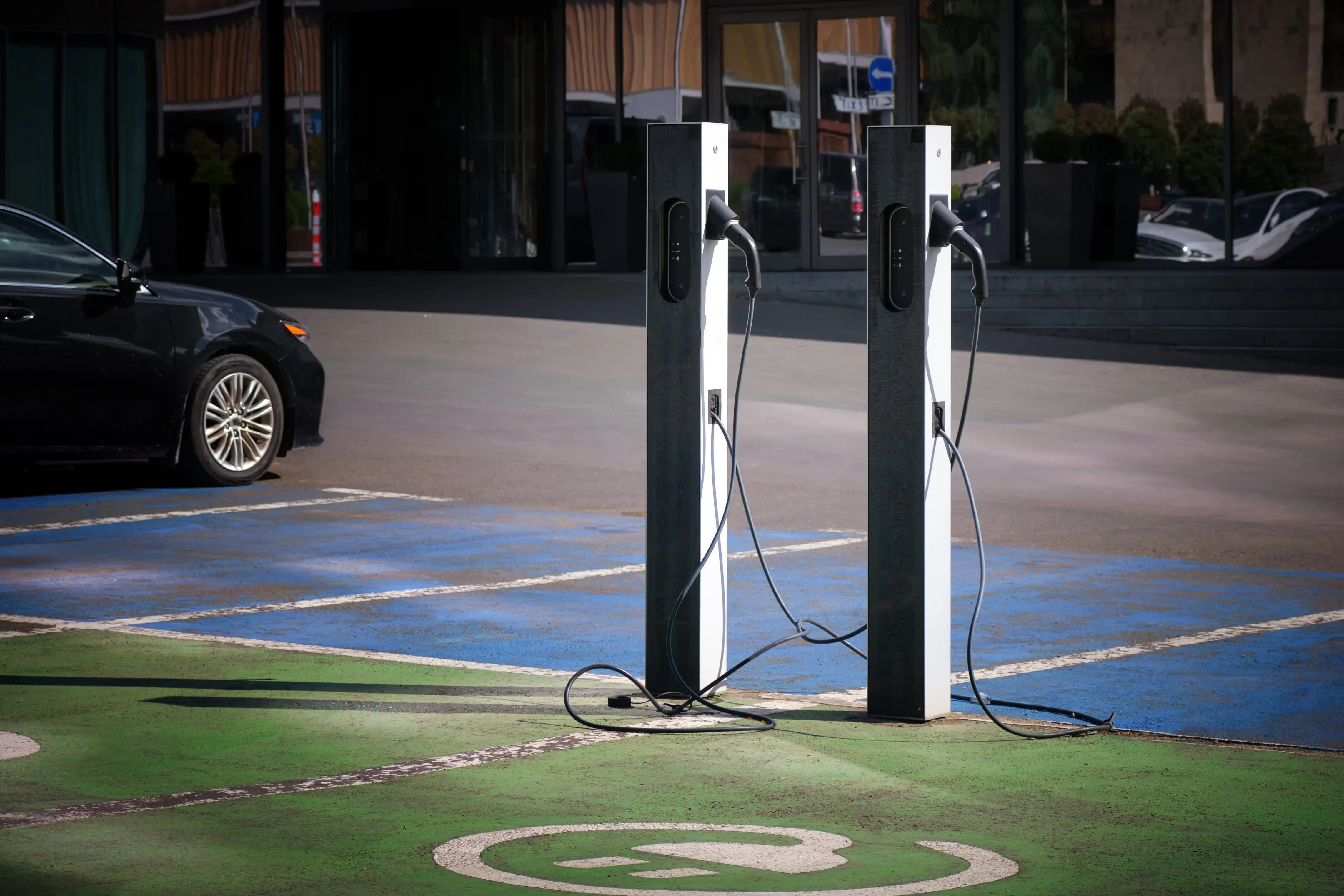
The Exclusive Collection has a portfolio of six hotels across the South East of England and recently installed five 22KwH electric vehicle chargers at its Pennyhill Park Hotel and Spa. Pennyhill Park became the latest hotel from the group to have EV chargers installed with the group having unveiled EV chargers at five venues across the UK, allowing 30 vehicles to charge across the portfolio simultaneously.
The installation of these chargers is part of a wider strategy from Exclusive Collection and from the hotel sector in general to prioritise sustainability. It is also a sign of the company being early adopters of fairly new technology which with it comes pros and cons.
Electric feel
While electric cars and chargers are not a new technology they are still in their infancy and yet to be widely adopted by the general public. This means that some hotels may question why they would be important considering how expensive they are. According to data from The Eco Experts it costs £1,200 on average to install a 22 KwH EV charger.
However, as Pecorelli explains, for a company like Exclusive Collection which sees a lot of custom from business guests, EV chargers are vital.
“EV chargers are an imperative and by having sufficient chargers we offer guests worry-free charging of their cars when they are with us. Many of our business travel guests will now drive an electric vehicle as part of their company travel policy. They will need to charge their vehicle and of course will opt for hotels who have plenty of charging points.
“Importantly, as Exclusive Collection is a B Corp, we are aware of minimising our impact on the planet in every area of the business. Therefore, not only are EV charging points necessary for our customers, but we also have them in our staff car parks for our teams to use,” Pecorelli adds.
For Exclusive Collection the proof is in the pudding. Pecorelli states that since installing the charging points the company has seen its average daily users of the points increase from four users per day to 9nine and its current average charge sits at four hours and six minutes.
But it’s not just hotels like the Exclusive Collection which can benefit from the implementation of EV charging. As Sarah Duncan from HOSPA explains, hotels risk turning away customers if they don’t look to address sustainability, with EV chargers being just one way to do this.
Duncan states: “With the rise in EV owners mirroring more conscious consumerism, it feels crazy not to accommodate this. However, it is not all about electric vehicles, there are other great ways to encourage guests to reach your hotel, perhaps on public transport or if they are local and perhaps coming to the hotel to take advantage of bars and restaurants – might they be encouraged to cycle?”
Getting in early
In a more general sense adopting sustainable technologies early can have big benefits for hospitality venues, but this is especially pertinent for hotels. In what is a very competitive market where consumers often have lots of choice, it is important to offer them things that other hotels do not.
Duncan explains that being early shows to consumers that you are able to “lead the charge” on new technologies and that you are thinking long term which can engender support from consumers.
“Adopting new technologies shows vision, and can definitely be seen as a competitive advantage. In the old days, we used to view the competition through the basic lenses of price, quality and location or convenience, now sustainability initiatives are providing an additional way to stand out and show care and responsibility.”
However, early adoption does not come without its risks. Getting ahead of the competition means that there are few, if any, examples of the right way to go about it and the potential pitfalls. This can mean that the technology is implemented wrong or inefficiently which can come at a monetary cost to the business.
“Being an early adopter often means the process is harder as there are fewer examples to follow. However, the rewards come in more quickly and your reputation is only enhanced for being innovative and experimental,” Duncan notes. “I cannot see the push for more EVs to decline in any way, so no risks to going ahead straight away.”
Overall, sustainability is the biggest issue facing hotels right now. More pertinently hotels are faced with the challenge of showing customers that they are trying to address it while balancing out the need to make a profit. Duncan says that it is a challenge the industry must work through to survive.
“It’s becoming more and more important. All the trends point to leisure travellers wanting more sustainable and responsible options. With increased supply chain scrutiny it is essential for hotels to provide evidence of environmental and social stewardship in order to attract (or even tender for) corporate business.
“Plus, there is the importance of attracting good talent. Most younger employees now place enormous importance on working for responsible businesses. There is also the potential of future legislation – incentivising good behaviour and penalising poor behaviour. There is also the moral obligation of simply doing the right thing!”
She concludes: “It’s a huge challenge, but one that the industry needs to work through. Sustainability initiatives are perceived as being expensive and in many cases, there are of course capex requirements and investment needed. However, all the operators we speak to who have fully embraced it are already reaping the rewards in terms of brand equity, reputation/PR, customer acquisition, and energy efficiency savings.”