



































Register to get 3 free articles
Register to unlock the article and receive our free newsletter. Join 26,000 other hotel leaders and stay in the know.
Want unlimited access? View Plans
Already have an account? Sign in
Despite rising interest rates and squeezed margins, a number of hotels in the UK have invested millions of pounds in their spa facilities in recent years. Last week, The Grand Brighton opened the first phase of its new spa facilities, with over £2m committed to renovating the space. By committing such large sums of money, many of these businesses are placing a big emphasis on wellness. The surge reflects the booming wellness industry, which was estimated to be worth around £171bn in the UK in 2022, according to data from the Global Wellness Institute. Across many different sectors consumers are prioritising health and wellbeing more and more, so hotels are reacting to this by investing in it.
Why are so many businesses investing in spas?
As Robbie Leung, director of wellbeing at Pan Pacific London, explains: “Today’s travellers want more than just a room, a restaurant or a bar, they seek experiences that help them recharge, relax, and maintain their wellness routines even while away from home. A strong spa offering not only attracts new customers but also helps retain existing ones by adding value beyond traditional amenities.”
By adding or investing in a spa, hotels are able to diversify their offering and become less reliant on just offering accommodation. Jonathan Walker, managing director at Bishopstrow Hotel and Spa, states: “Through investment into the spa market hoteliers can tap into this lucrative revenue stream, the spa is no longer an amenity, it’s a highly profitable business with revenues from membership to treatments, from wellness experiences to lucrative day spa packages.”
A spa can also boost occupancy and length of stay as guests who are looking for a full wellness retreat are likely to choose a hotel which prioritises this. “A good spa takes interest in its clientele, is curious to understand who they are and their desired experiences, whilst encouraging them to explore and be curious about their own wellness journey,” says Walker.
It can also generate business opportunities outside of accommodation as many spas can be used for local day usage, wellness groups and events. Hotels with spas may also see an increase in revenue not just through the spa, but also in food and beverage offerings as guests are spending more time around the hotel. If a guest has a good experience in your spa they are also more likely to return and more likely to recommend your business to others, whether that be for a day experience or an overnight stay.
Walker also explains that this increased focus on spas comes as hotels fight back against the competition from lifestyle hotels and short-term rentals. By having a quality spa, traditional hotels are able to stand out against these alternative types of accommodation allowing them to become more of a lifestyle destination.
According to data from consultancy firm McKinsey and Company 795 of UK consumers say that wellness is a “top or important” priority. In the United Kingdom and Germany, for instance, consumers expressed interest in spending on IV drip treatments. Furthermore, nearly 60% of consumers who traveled for health and wellness treatments in 2024 also said they expect to travel for these treatments in the next year.
What makes a good spa?
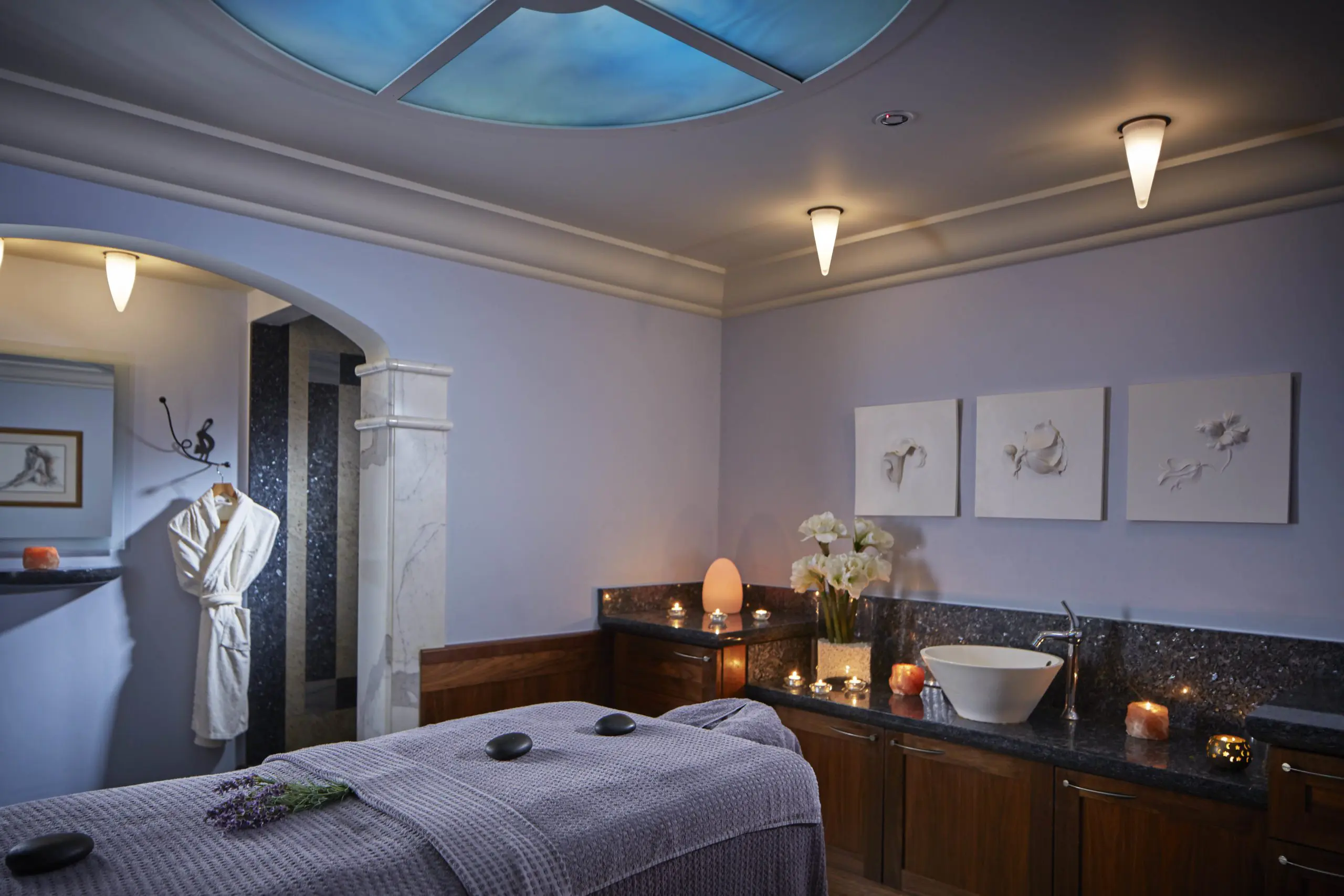
Creating a good spa is a holistic process. The overall feel of the facilities are just as important as the actual practicalities of it. Walker states: “From my experience the best spas create a sense of calm and a seamless journey, and of course an important part of this is design, through lighting, art, scent and music. Attention to detail and highly trained therapists are an integral part of delivering personal care and attention. Guests need to feel as though they have switched off and, in some way, rejuvenated when they leave.”
Practically, Walker believes that design and functionality must go hand in hand. A spa should flow naturally from arrival to relaxation, with clear zoning between wet and dry areas, and attention to colour palettes, lighting, sound, and outdoor integration,” he says. This feeling is echoed by Leung who believes that the design and layout must create a “seamless, memorable experience for guests”. By doing this, both believe you can leave an impression on a guest and increase the chances of repeat business and word of mouth recommendations.
Both men also believe that future proofing a spa is vital. One important facet of future proofing is durability. Any materials used must be able to withstand heavy usage, be safe, and easy to maintain. Walker also explains that recruiting and retaining therapists is challenging and so a good spa should incorporate chargeable “non-touch” wellness experiences – such as mud therapy or infrared treatments, which will help drive profit with minimal staffing.
He also believes that it is very important to have flexible spaces which can be changed and adapted to any new trends. Poor early planning can result in high long-term costs, both in development and daily operations,” he says.
Leung agrees stating: “The spa should be built on a robust long-term business strategy, typically planned over four to five years. This allows the facility to evolve with industry trends and competitor offerings while minimising major reinvestments.”
Any good spa will also need a good spa director or manager to lead the facilities and set the vision for the space. It is the director or manager who will shape the culture and guest experience. Walker believes that the ideal spa director will have a strong grasp on running day to day operations while also being commercially astute and able to drive the marketing function of the spa. “Ultimately, they act as the connection between the commercial objectives, the brand promise and an exceptional, consistent personalised spa journey,” he says.
Anne Golden, VP operations (UK and North America) and general manager at Pan Pacific London concurs that a spa director must be able to balance short term operational needs with a longer term vision. “Beyond executing a commercial strategy, the director must be able to inspire their team and bring the wellness vision to life. Just as important is their ability to build a strong foundation for long-term success, ensuring investments today can be enhanced over time, while keeping the spa concept relevant and compelling for future guests,” she says.
What does this say about the wider hotel space?
The consensus seems to be that increased spa investment is a new way for hotels to maximise revenue which is not a new phenomenon. Previously many hotels invested in their food and beverage facilities as a way to drive outside revenue, so spa facilities are just an extension of the drive from many businesses to be more than just accommodation. It is also indicative of the change in what guests prioritise, alongside the ever-growing wellness industry.
“Guest behaviour is changing fast. The new generations aren’t spending at the bar the way their parents did, they’re investing in wellness, self-care, and experiences that make memories. For hotel investors, this is a clear signal that it’s time to react.
“Wellness is one of the fastest-growing segments of global hospitality. Hotels that fail
to adapt risk leaving significant revenue – and asset value – on the table. Those that
seize the opportunity stand to future-proof their investment while aligning perfectly
with the lifestyle priorities of tomorrow’s guests,” Walker concludes.