







































Register to get 3 free articles
Register to unlock the article and receive our free newsletter. Join 26,000 other hotel leaders and stay in the know.
Want unlimited access? View Plans
Already have an account? Sign in
Sometimes change is sudden and surprising, but sometimes it bubbles away under the surface for decades before making a serious impact, and in today’s roundup I have a few examples of the latter to highlight.
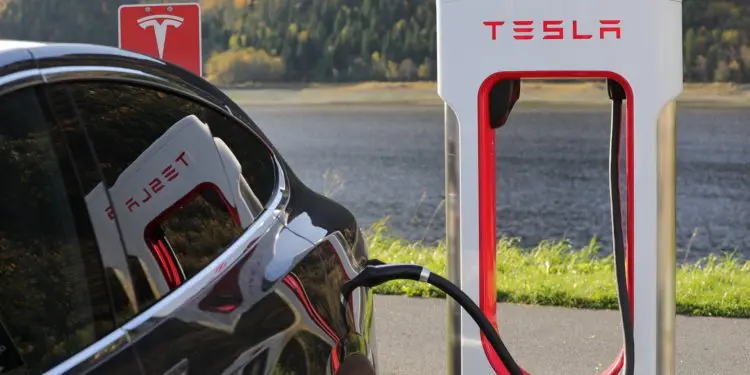
First, there is Tesla. The firm led by billionaire space-AI Elon Musk has long been seen by many investors as a dead end – a too-ambitious project that didn’t stand a chance in the long run against the establishment automakers.
In its 17-year history it has never turned a profit, repeatedly missed production targets, and has the highest proportion of its stock held by short-sellers (traders betting against its success) of any major company. That’s one view.
Another view is that it has had a decade’s head start in the electric vehicle (EV) space, has been quietly developing production infrastructure and car-charging networks of a truly awesome scale, and has a rockstar-businessman frontman who can do things like strap the latest model to a rocket and send it into orbit around the sun. For the initiated – that last bit is not an exaggeration.
Well, the short-sellers had a bad day yesterday, because having announced that it finally made a profit in the last quarter of 2019 (just over $100m), and expects to increase sales by a third in 2020, one analyst apparently with enough clout to move markets sent the stock soaring to unbelievable heights.
Why? He reckons the firm could be at a tipping point after which it simply streaks away from the legacy carmakers and all of its investments and patience pay off in an environment where international governments are moving to outlaw polluting cars altogether.
He specifically predicted that Tesla could by as early as 2024 attain coveted membership of that very small group of companies whose public stock is worth over a trillion dollars. That’s right – trillion, £1trn, £1,000,000,000,000.
The stock rose 40% on the strength of those comments coupled with the upbeat financial reports, and edged Musk further along the way to the biggest executive payout mechanism ever negotiated in corporate history.
When the company was facing more of an uphill struggle, he struck a deal that he will collect a $50bn bonus if the company reaches a market capitalisation (total value) of $650bn by 2028. He is well on course to do this, and it shows that a revolution might yet give him the last laugh in the face of all the philistines who thought it couldn’t be done.
Second, there is Macy’s. Everyone knows about the creeping colonisation of retail by online behemoths over the last 20 years, and while it has always felt significant, it has been a gradual change. Consumers had to change habits, from shopping on high streets physically to simply tapping a computer at home on fast delivery – old habits die hard and that was always going to take time.
But now some of the biggest names not just in British but also American retail are suddenly, violently running out of road. The language has even changed in the coverage: today the Guardian describes Macy’s as a “legacy retailer”, as though it’s one of those 1950s punch-cards that still controls parts of the London Underground’s signalling system.
The iconic American brand is closing 125 stores and axing 2,000 jobs, in what The Guardian describes as a continuation of the “radical reordering of the retail landscape”. Macy’s says it is leaving shopping centres (or malls, to use the vernacular) to focus more on ‘strip malls’ and as smaller premises.
It hopes to save $1.5bn by 2022 thanks to these measures. Sears, Toys R Us, have gone bust and JC Penney has been closing stores to stave off losses. Readers of Retail Sector will know that the UK faces similar problems as we watch the slew of terrible financial reports coming from the high street, while Amazon reports its best ever Christmas trading period. It’s not hard to see how the revolution is entering its final phase.
Finally, just a quick note on organic food. Sales of this segment of the market rose by 4.5% last year, totalling a record £2.45bn. It’s tiny in the grand scheme of the entire food and drink market, but it is significant because analysts believe it is being driven at least partially by rapid growth in the online groceries and home delivery industry.
Ocado can in some ways be seen as the Tesla of the groceries world, in that for years nobody believed it could be made to turn a profit. But a conflagration of consumer concern for the environment, for animal welfare, for personal health and their concomitant desire to avoid the shopping centres, an essentially new market has emerged.
Against that backdrop, it is perhaps unsurprising that the buying profile carries different characteristics too.