





























Register to get 3 free articles
Register to unlock the article and receive our free newsletter. Join 26,000 other hotel leaders and stay in the know.
Want unlimited access? View Plans
Already have an account? Sign in
In a comepetitive market, positioning your hotel as an upscale venue is, for many, a key objective. But what does the term mean, and how can you set about trying to achieve it? By GREGOR RICHIE
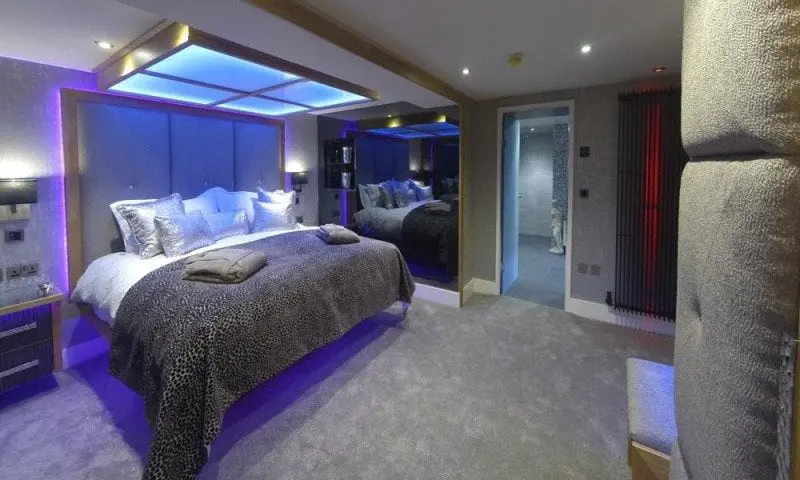
What is interesting about defining what constitutes as an ‘upscale venue’ is that the word itself has so many connotations. Upscale to one hotelier or customer may mean an AA Rosette restaurant or 5* spa, someone else will value opulent rooms featuring four-poster beds and walk in drench showers, while service will hold the key for others.
In my line of work it’s essential to understand how each hotelier defines being upscale and whether this is in line with their target clientele – ultimately this is where I begin when working with someone to upgrade their offering or when starting from scratch.
Of course the type of luxury a hotel offers will always depend on the fabric of the building, both externally and internally. For example, a beautiful country pile will always require something different to a chic city centre location. A stately home will likely require furnishings very different from those of a high-rise hotel, but in both cases appropriate budgets have to be allocated. This must be a particular consideration when dealing with a historic building where continuity with its heritage is required. In this instance where a provision of 4% of the budget for continuous replacement previously sufficed, this may increase to 6-8% of the crucial spend.
Offering great and consistently unfailing service is an essential consideration of being classed by visitors and guests as a high-end venue, but it is an aspect that can be, and is, seen as superficial rather than crucial. When it comes down to it the team running an upscale venue need to understand how to deliver upscale service consistently for the duration of the business. For service to reach a genuinely high level staff, especially anyone front of house, should have an innate awareness of what the customer wants, to the extent that they can almost predict a customer request. The delivery of this service should be seamless and effortless. Someone once said of Claridge’s: ‘If I’d asked for a bath in reception I felt they could and would have delivered this for me.’
Personally I believe luxury also means there should also always be a presence on the floor so no customer needs to lift a muscle – unless they so wish. This means having a concierge, someone to escort customers to their rooms and never allowing the phone to ring more than once.
A great example of luxury service can be found in the Far East. If you visit a 5* hotel in Asia there will be staff in abundance, ready and willing to cater to the requirements of their customers. Hoteliers must remember these locations are within reach of their own customer base, who will note when the service does not meet with their past 5* experiences. When putting together a budget, staff costs are a serious consideration and something to be mindful of as labour costs in the UK are high.
Ultimately achieving upscale and luxury status involves a venue combining all these elements, resulting in a hotel which is not a home from home, but somewhere people feel comfortable and relaxed while in total opulence.
Achieving this comes with many challenges, a key one being the continuity of the high level of service and appearance as many people have a myopic view of quality. A brand I admire is Jaguar Land Rover, which is steaming ahead due to the connectivity between the departments, from engineering to designing, and I believe the hotel industry must learn by looking at other industries.
This is particularly true today when there are a huge number of investors and business folk behind hotels. This can bring great business knowledge, but means for me, as with understanding their perspective, I must also appreciate their motivation. Why do they want to become an upmarket hotel? This will form the basis of their business.
Many customers would regard certain facilities, perhaps a pool, as an essential part of being a luxury venue. I don’t agree with this philosophy. For me it’s dependent on the location of the venue and its purpose. Take Lainston House Hotel, for example, where there are myriad activities within the grounds: falconry, fishing and shooting, not to mention the cookery school. In this particular instance, it is about being ‘at one’ with the countryside and offering country pursuits that guests can tap into. This makes a great hotel for its particular clientele, but the key is that not all locations need to be like this. There are truly beautiful hotels without spas; people travel and stay in different parts of the country for different reasons.
Another consideration naturally, is food, glorious food. It’s annother core ingredient to being successfully upscale, but one which must be cohesive with the offering as well as being viable and suitable to the environment. In the Exclusive Hotels portfolio there is one restaurant with two Michelin stars and two others with 1 Michelin star, but these are situated in environments that can sustain such an offering.
There are a lot of plates to spin both during the move to upscale and while maintaining a high-end offering. But with careful planning and imagination, it is firmly within reach.
[box type=”shadow” align=”” class=”” width=””]
About the Author
Gregor Ritchie, Principal at Optimum Hotel & Leisure Management, Co-founder and Head of Consultancy at Exclusive Hotel Management and member of Hospitality Experts, a new initiative run by marketing company Journey, has a wealth of experience in the world of privately owned, luxury hotels. Having worked his way up through the ranks Gregor has been in the industry for more than 25 years, both across the UK and the Channel Islands, undertaking strategic planning of businesses and the uplifting of 3-star properties to 5-star.
[/box]