



































Register to get 3 free articles
Register to unlock the article and receive our free newsletter. Join 26,000 other hotel leaders and stay in the know.
Want unlimited access? View Plans
Already have an account? Sign in
Chinese travellers brought £231 million in visitor spend to the UK in the first half of 2017, and VisitBritain has ambitions to help it pass the £1 billion mark by 2020. With one job in Britain’s tourism industry said to be created for every 22 visits from China, tourists from the country have the potential to be fundamental to the UK hotel industry’s future. ANDREA GHIZZONI, WeChat director for Europe explains how the Chinese social media app can open British hotels up to this growing market
[divider style=”solid” top=”20″ bottom=”20″]
The post-referendum devaluation of sterling has precipitated an amazing influx of tourist interest in the last 12 months, with the UK welcome a record number of inbound visitors in 2017. This is especially true for those outside of Europe, because although the European continent is still our biggest market for tourists, it was visitors from America and China who drove the record numbers visitor spend this year.
As well as this, Chinese visitors proved to be a huge market for the UK in the first half of 2017 reporting a record-breaking 47% increase in visitors from this part of the world with 115,000 tourists. Due to the devalued pound, in October 2017 the UK was 10% cheaper for visitors from China, compared with October 2015. The visitor spend by Chinese visitors amounted to £231 million, which was up 54% compared to the same period in 2016.
British hotels and tourism organisations have already implemented steps towards welcoming tourists from this part of the world. In September, the Grand Hotel and Spa in York made a commitment to become the ‘most China-friendly hotel in the north of England’, with plans to teach its staff Mandarin and accepting China’s UnionPay. In November, VisitBritain held a three-day trade event in China to promote Britain as a go-to destination, with director Patricia Yates describing the Asian country as the “most valuable outbound tourism market in the world”.
In a digital age and with the continued march of the OTAs, and increasing use of online virtual reality tours, the internet has proven to be an invaluable tool when it comes to connecting with prospective and current customers. However, with restrictive internet usage laws in China it can be difficult for certain businesses to infiltrate and tap into that particular market.
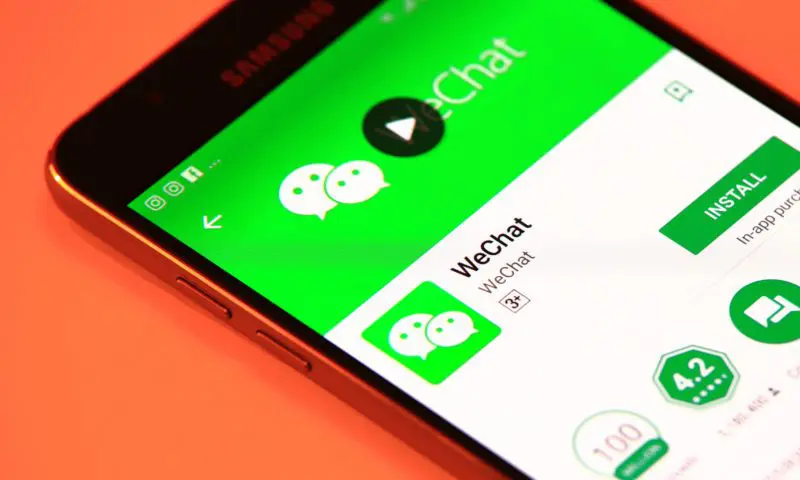
This is where WeChat https://web.wechat.com/ comes in. The incredibly popular app is a Chinese social media platform which recently surpassed Facebook with a market capitalisation of $529.9bn, as compared to Mark Zuckerberg’s $528.5bn. According to Statista, the platform had 963 million users in Q2 of the year – that’s three times the population of the United States, or thereabouts.
Andrea Ghizzoni, WeChat director for Europe, describes the platform as “the closest idea [in China] to what internet is in the western world. It’s a system that starts from a messaging app but then embodies an array of [other] services that we normally enjoy in other parts of the world.”
WeChat essentially acts as the ‘internet of China’: through the service users can access payment services, food delivery, cab hailing, shoping, a news feed, web browser and a phone call service called WeChat Out. This year, its engineers were reported to be developing an augmented reality platform to add to its extensive list of offerings.
The integration of so many services under one umbrealla makes WeChat a one-stop-shop for connecting with consumers on a number of different levels. When compared with other forms of social media which are more recognisable in the western world, Ghizzoni says hotels can “directly engage with [their] target audience, talk to these people and then manage the consumer journey at the point to which they book the room and pay for it”. He continues: “This all happens on the WeChat platform, so they never have to leave it, that’s the main difference.”
For a business such as a hotel to have a presence on WeChat, there are a few ways to set up an account to access this market. Ghizzoni explains: “Either they have a Chinese business license which is not always the case, when talking about small companies or individual hotels, or they can have the official account open and accessible from China if they commit the minimum advertising spend which is currently around €15,000 – 20,000 (£13,239 – £17,643).”
The €20,000 (£17,643) is a one-off fee which then authorises the company to open an official account on WeChat, recognising them as a reputable business and allowing them to build up a customer base. Having an official account is not the only way to attract business on the app, as it is possible to sign up as a regular member for free, an option which may be beneficial to those who want to test the market. “If they only want to display content and manage customer requests,” Ghizzoni says, “they can simply use the WeChat backend. If they want to provide an online booking system, then they have to integrate their existing one within WeChat. This can be simple or complex depending on what they want to do and the infrastructure they have.”
With respect to the country’s restrictions on the web, to be able to make a hotel’s website accessible to a Chinese audience, some checks and balances must be made to ensure it meets the Chinese regulatory requirements. Admitting that the chances of a hotel’s website being rejected by Chinese standards were “high”, Ghizzoni explains that this is only because it may be difficult to understand the rules in advance – meaning it can be difficult to work out what is wrong until the site is rejected and feedback is given. To work around this, Ghizzoni suggests that companies either upload directly on WeChat https://web.wechat.com/ or replicate their sites onto its cloud, thus making it immediately accessible to the Chinese consumer. 
WeChat may help also to reintroduce hoteliers to direct bookings in what is now an OTA-saturated environment. The app itself offers payment services but is not a booking channel, customers will have to be directed to the hotel website if they decide that they want to stay there. As WeChat’s primary purpose is to operate as a form of social media, no commission is taken from any sales made through it, all business is directly in the hands of the hotel. Hotels can set up their WeChat pages to direct customers straight to the official website in order to make a booking.
The social media platform may also be useful in the build up to a guest staying at the hotel, as it can track the interaction with any posts made on there and give feedback with regards to users’ behaviour. Like Facebook, Twitter and any other commonly-used social media in the western world, the performance of anything posted on WeChat can be tracked. Ghizzoni explains: “When brands advertise on WeChat they get real time KPI on the campaign – they can see how many [people it] reached and [how many] engaged. They can have all the data from the people who have been browsing their website. They get all the behaviour from their own analytics so they can see everything.”
Even if WeChat does not immediately bring in custom from this part of the world, the platform’s ability to interact with potential guests makes it possible to predict a person’s interest in a hotel or interest in travelling to a particular part of the UK. Ghizzoni says: “Hotels can start to intercept future travellers, people who are showing an interest or the idea of visiting Europe soon. They can start promoting their destinations and services to these people.”
It can also prove effective in simply making a hotel known to a Chinese audience – not having a presence in the country can lead to an ‘out of sight, out of mind’ situation. Going back to the internet restrictions in the country, Ghizzoni stresses that “in practical terms, if the hotel doesn’t have an official presence on WeChat then in the eyes of a Chinese traveller, this place does not exist. It’s impossible that they’ll find it.”
As well as this, its premise as a social media platform means its users are likely to use it everyday, and businesses can tap into the app’s 768 million active daily users. This makes it possible to keep up the flow of conversation with customers in an unobtrusive manner. Hotels can engage with guests in a seemingly natural way without having to ask them to download an app or sign up to a service that they’ll only use short term. Being able to reach them on a platform which they already use regularly could prove to be a marketing advantage. “They can also trigger upselling by targeting the people they already have as guests. for example: if I’m in your hotel I can receive messages on WeChat to give me discounts at the hotel’s restaurant or something. It’s super local marketing; targeting people who are already guests could be another up selling opportunity.”
Ghizzoni predicts that in the new year, marketing on social media and digital platforms will prove to be increasingly popular as the O-to-O (online to offline) marketing chain grows in effectiveness. “It will be more and more common to look at a hotel or to buy something by accessing the website through a social media page. This is particularly true for China.”
While there still may be a few issues regarding the difficulties that the Chinese face when applying for visas to visit the UK, Ghizzoni’s prediction that Europe will see circa 15 million Chinese visitors next year means that the potential trade from this part of the world is not something to be ignored.