








































Register to get 3 free articles
Register to unlock the article and receive our free newsletter. Join 26,000 other hotel leaders and stay in the know.
Want unlimited access? View Plans
Already have an account? Sign in
The Commonwealth Games, an international multi-sporting event among athletes from the Commonwealth of Nations, took place from 28 July to 8 August, and was streamed by a record-breaking 57.1 million people across the world.
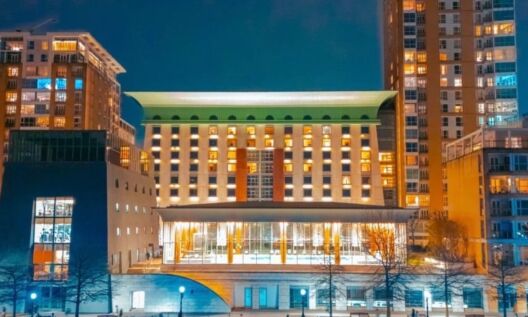
One hotel in Birmingham, the Edgbaston Park Hotel and Conference Centre, was the official house for Team Wales and also hosted Team England, Team Jamaica and Team England Futures. It said it secured record revenues during the 11 days the games were held, as well as its highest average room rate since the hotel opened in 2018. Not only that, it had to hire an additional 30 staff to cope with high demand.
In the past, the Commonwealth Games has benefitted the tourism industry of the host cities. A report by the Commonwealth Games Federation saw that Manchester, the 2002 host, had a 25% increase in tourism the three years after hosting the games.
Neil Rami, chief executive of the West Midlands Growth Company told The Guardian: “I can categorically say this will be the busiest August that Birmingham has ever enjoyed. You just have to see the throngs of people in the streets. We were forecasting about 85% hotel occupancy, but talking to some hotel managers it’s nearer 95% so we’re pretty much full.”
If you think the number of streamers for the Commonwealth Games was impressive, Eurovision reported that 161 million people viewed the music competition this year, laying hope that there will be a large influx of tourism to the UK such as the one experienced by the Commonwealth Games when the event takes place later next year.
The 2018 Eurovision Song Contest was held in Lisbon, Portugal. The IR Group, which is made up of a group of Portuguese companies in and around real estate, the hotel business and services, reported that Eurovision had a “big impact” on hotels, especially.
The Portuguese tourist accommodation sector recorded 2.6 million guests and 6.5 million overnight stays in May 2019, an increase of 7.7% and 3.9%, respectively, according to INE data. The report also found that total revenues increased by 6.2% to €398.9m (£338m), while room income, which reached €295.7m (£250.7m), grew by 5.9%.
But it wasn’t just traditional hotels that saw an increase in customers, Airbnb also reported that the search for accommodation in Lisbon for the week of the Eurovision Song Contest increased by 42% compared with the same period in 2017.
The event it seems then will be a welcome reward for one UK city – but why are hotels relying so heavily on big events post-pandemic to boost revenues? Will this continue to be the case until the industry returns to pre-pandemic levels? Recent data from the Office of National Statistics (ONS) found that consumer spending on hospitality started to increase in May 2021 but remains at less than 70% of pre-pandemic levels.
The report also saw that in May 2020, turnover was just over £1.2bn, compared with £3.4bn in March 2021. This rose further to £6.9bn by May 2021 after Government restrictions were partially eased, the highest figure since August 2020. Although this is still around 25% lower than its 2019 level.
As the big event looms closer, and the location of the event not yet confirmed, bidding has started and is expected to be competitive, with several mayors, councillors and MPs already informally expressing an intention to bid, from Aberdeen, Belfast, Birmingham, Brighton, Bristol, Cardiff, Edinburgh, Glasgow, Manchester, Leeds, Liverpool, London, Newcastle, Nottingham, Sheffield and Wolverhampton.
The host of Eurovision 2022 where Ukraine took the trophy, Turin, Italy, saw in the last three months of 2021, an estimated 70% of searches for trips to Turin had a check-in between 10 and 14 May 2022. In addition, more than 40,000 visitors walked through Turin’s airport over the course of the Eurovisoin week, according to Italian newspaper La Stampa.
This begs the question, once decided on a host city, does preparation for next year need to begin now? How many temporary staff need to be hired, what will room prices be, and how will they ensure that customer service doesn’t take an impact? Looking forward, as the hotel sector slowly continues its recovery, it is hopeful that the industry may not have to rely on large scale events such as Eurovision to give a much needed boost to their bottom lines, but for the meantime i’m sure many hoteliers will be crossing their fingers that their city will be chosen as the lucky destination.