



















Register to get 3 free articles
Register to unlock the article and receive our free newsletter. Join 26,000 other hotel leaders and stay in the know.
Want unlimited access? View Plans
Already have an account? Sign in
The UK hospitality industry is in an interesting post-pandemic period at the moment; after such an unprecedented time, we’re finally seeing the hospitality sector open up. This is evident from the holiday season in particular, with occupancy rates significantly rising and reflecting pre-pandemic levels.
However, with the cost-of-living crisis raging across the UK and Europe, hoteliers feel a strong need to offer rooms that match an all-round quality experience. To me, this shows the hospitality sector is starting to get its swagger back.
I feel that in-house technology can make a positive impact, and there’s often some oversight when it comes to the way AV equipment is used for promotion and engaging guests – especially in terms of entertainment. Samsung’s Kiosk for instance, which is already used successfully in a ‘fast food’ restaurant capacity for ordering, could also be used to speed up processes for checking in hotel guests.
Likewise, with Large Format Displays (LFD) for both outdoor and semi-outdoor spaces, hoteliers can cleverly promote simple marketing drives like ‘happy hour’ at your venue’s restaurant. They draw in the attention of potential customers, who might otherwise pass by, even if it’s just for a short break as opposed to something longer like a business meeting.
With the pandemic, the industry has had to adapt and learn new ways of working, especially when it comes to direct contact or automation with customer service. The LFD signage displays present a new way of delivering targeted and specific messaging created by the venue’s management.
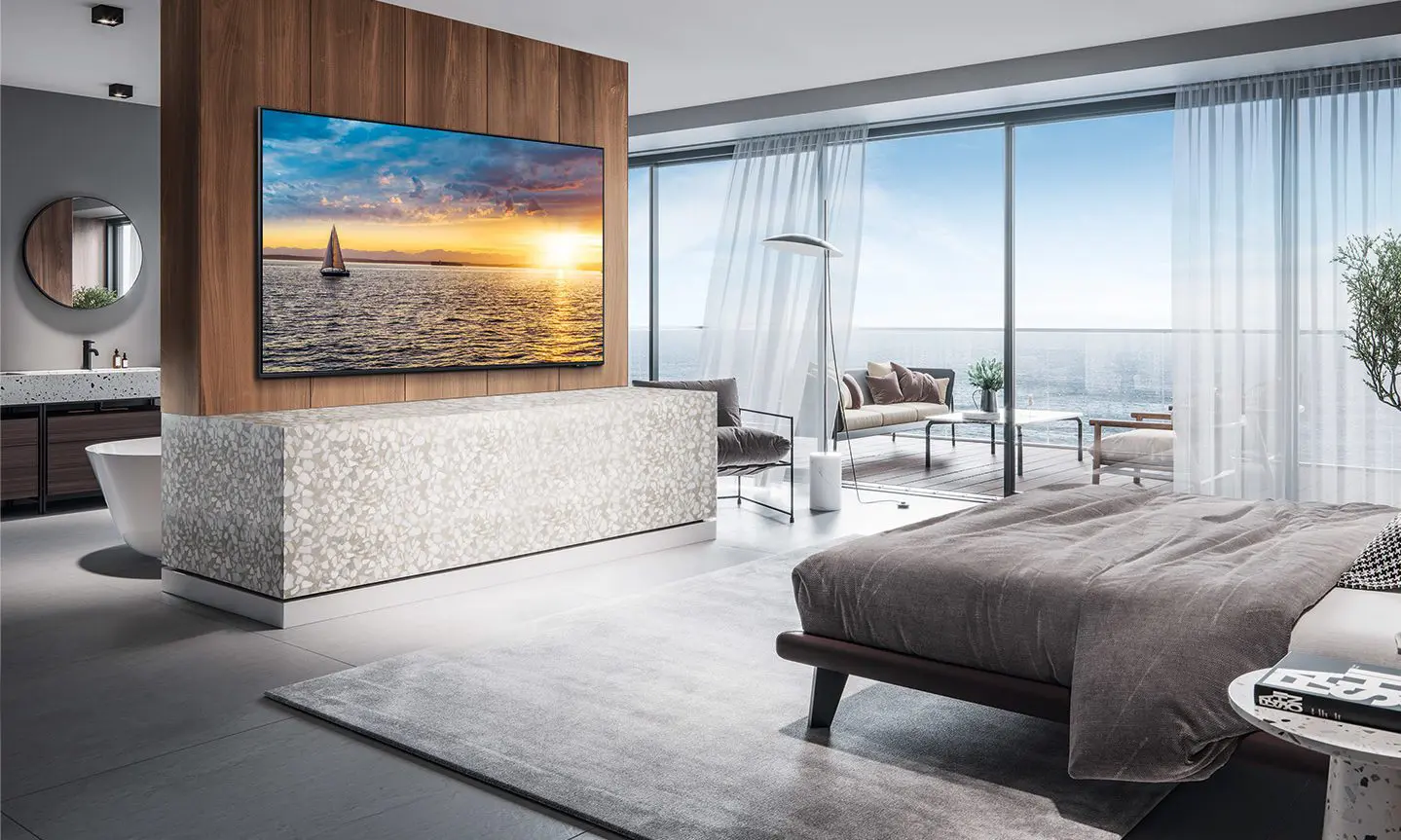
In order to engage with guests and increase sales of local facilities, we have digital promotions or facility materials and when these are shared on TV displays in hotel rooms, it presents a way of saving costs on promotional materials and is actually flexible in making it simple to update and change these promotions. There are also benefits in terms of sustainability by significantly reducing the amount of printed materials, which need replacing as soon as the information is out of date.
Trends we’ve noticed in the industry that will continue to grow
It’s exciting to see hospitality venues exploring new tech and utilising it to improve business systems. At present, we’re seeing the shift from ‘on-premise’ to ‘cloud base’ solutions, allowing venues to expand their capabilities when it comes to TV systems, PMS or even payroll.
As hospitality venues explore cloud-based TV solutions, we’re keen to ensure new and existing Samsung customers can enjoy the most up to date technology, so we’ve prepared a smooth transition path for all Samsung HTV systems installed in the field towards LYNK Cloud.
We expect to see more people leaning towards this cloud method throughout 2022 and beyond, as remote working continues. The ease of use when it comes to sharing and syncing is invaluable to businesses across the board.
Popular products among professionals in the sector
Hospitality owners, particularly hoteliers, understand the customer’s desires to be constantly connected in the easiest way possible. They want their home comforts even when away from home, so we’ve seen a rise in popularity for hotel TV’s that are armed with OTT app functionality, such as Netflix or YouTube for guests to stream their own content anytime.
While certain Samsung Hotel TV models are capable of playing apps like Netflix directly, there are other options for those who are looking to upgrade without replacing the entire device. Chromecast technology, where connectivity is provided externally through a dongle, is a way to provide seamless streaming functionality and increase IT security levels. Both options allow businesses to adapt and meet modern customer demands.
Generating revenue through AV products for business owners
As previously highlighted, we think LYNK Cloud is one of the most valuable tools for hospitality owners at present, both for larger chains and smaller individual premises because it allows owners to seamlessly control their central management sales and marketing revenue streams, while also being time-management friendly and revenue-positive.
Some of the key ways LYNK Cloud can add value to a business include generating central and scheduled actions, improving loyalty programs and centralising promotions such as videoclips and playing promotional content for each TV, in each room and each business at the same time. This homogenised approach not only saves time and effort, but encourages that sense of uniformity across hospitality venues.
Securing a cohesive message and feel, even just through rooms of an individual venue, is key to establishing a strong brand identity which in turn develops customer loyalty and revenue in the long-term.
A digitally-led future and adapting hospitality trends in this field
The digital world is here, our digital footprint is already significant, and we see the hospitality industry evolving into a digital space already.
While moves are being made to adopt more technology in spaces across venues, there’s an underestimation in the power of LED walls to deliver content and capture an audience. They can be built in any shape and any size, providing unique flexibility to cover an entire surface and create an unmissable statement.
Personally, I think the quality of a MicroLED picture is phenomenal; it combines best-in-class picture quality with reliable design and energises businesses to reach the next level. They also provide a sense of luxury within a space, creating a high-end experience for those viewing any type of content. This is the space to watch when it comes to adapting and incorporating upcoming digital trends.