
































Register to get 3 free articles
Register to unlock the article and receive our free newsletter. Join 26,000 other hotel leaders and stay in the know.
Want unlimited access? View Plans
Already have an account? Sign in
There was once a time when the weary traveller would simply ask for a room, and should there be one spare, that is what they got. A simple transaction, done and dusted. Nowadays, the more discerning hotel guest – or just one who has done some reading – might will ask any of a whole host of trickier questions.
How do you reduce your energy/water consumption? What chemicals do you use in your cleaning products? What materials were used in the build/refurbishment? Where do you source your produce? Sure, few guests will conduct such a barrage, but it is true to say given any two hotels priced similarly in the same area, the one that can show its green credentials has a distinct advantage over the other when it comes to attracting footfall. This is the new reality of business.
According to the latest annual Ethical Consumer Markets Report from the Co-operative, markets for ethical goods and services have remained resilient throughout the economic downturn: that is to say when consumers are educated about ethical issues, they have not abandoned their stance on them simply because of tightened belts. Since the onset of the recession the total value of ethical markets has risen by roughly a third. This continuing trend should be embraced as an opportunity to portray your company as one that cares about its customers and the environment.
It is easy to be put off of the idea off the idea of going green because of a common misunderstanding that it means something literal such as putting guests into log cabins, yurts or tree-houses. Or that it will involve buying from a stable of more expensive suppliers. True, some green products can be more expensive than the ones you are used to, but the added costs can be more than offset by other savings to be made. An obvious advantage to ‘going green’, particularly salient to hotels, is that it can reduce your running costs. Two glaring examples of this are a more efficient approach to electricity usage and to heating. With minimal changes hotels can reduce their carbon footprint while at the same time drastically reducing their bills.
The Federation of Small Businesses (FSB) points out: “Greening your business, as well as helping to protect future generations, will also help you improve your competitiveness”. This message is as valid for hotels as it is for any other consumer-facing business, but it’s got to be done with sincerity. Doing no more than telling guests to re-use towels will mark you out as a cost-cutter, not a professional hotelier with a commitment to CSR. Consumers have a nose for ‘greenwash’, and can smell the whiff of compromised integrity. The key is to do what you can, do what you think is right and to do it with conviction and consistency.
CASE STUDY 1: The Green HouseBournemouth

The Green House is a luxury four-star boutique located in the heart of Bournemouth. Although only opened in 2010 it has already won a host of awards, including Considerate Hotel of the Year, in 2013. Its sumptuousness belies the rigorous ethical ethos that drives every decision made about the infrastructure and running of the hotel.
Olivia O’Sullivan, general manager of the hotel explains how its directors had a goal of proving that you could create a truly eco-friendly hotel that was luxurious at the same time. This wasn’t the easiest of tasks. For a start, the building is listed, which presents its own set of problems when trying to incorporate environmentally-friendly features into a renovation. To make matters worse, during the renovation there was a fire, forcing management to scrap the project’s progress and start from scratch. “At that point,” admits O’Sullivan, “I would have forgiven them if they had simply decided to get the building up and start trading again as quickly as possible just to make back our losses. But they stuck to their guns and principles and fought through the whole way.”
The question of principles before profit, running hand in hand with the notion of caring, are central to O’Sullivan’s vision of a successful green hotel. For anybody thinking about going down this route her first piece of advice, surprisingly, is not about eco-friendly gadgets and gizmos. It’s more about a state of mind: “The biggest change you have to make to create a green hotel is that you have to live and breathe the culture of running [one]. You have to train the staff and show them that you care about them so that they care about you and about the guests.
“You have to get everybody on board. If one person doesn’t believe in the culture you are opening yourself up to criticism. You have to get your team engaged and get them to feed you new ideas and pull you up when you are wrong. As long as you have a caring team you can achieve anything.”
CASE STUDY 2: The Lovat Hotel, Loch Ness
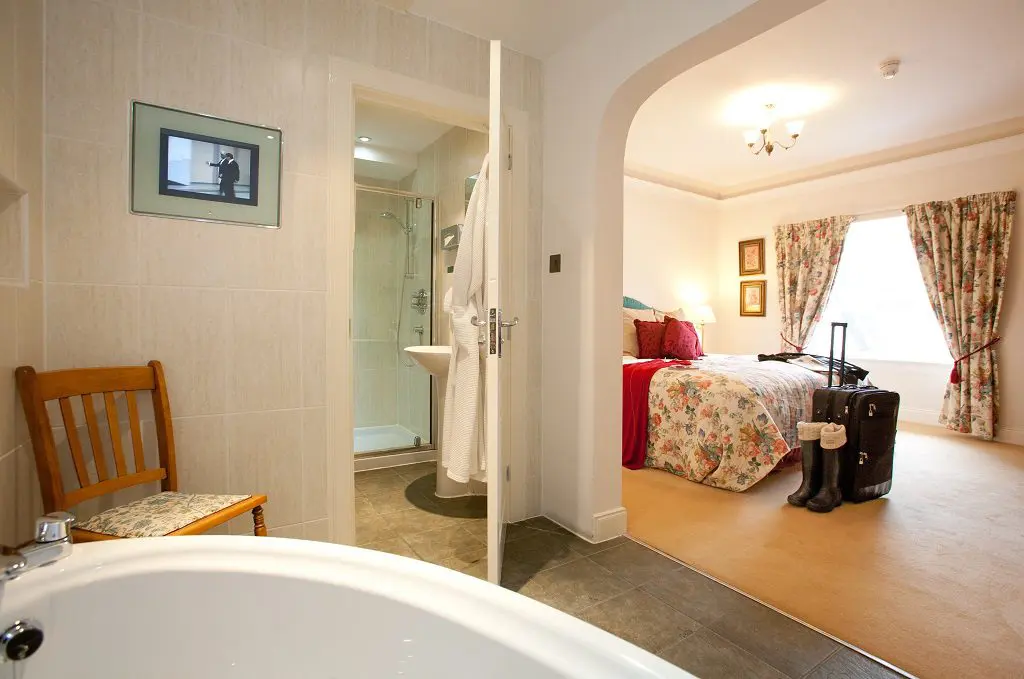
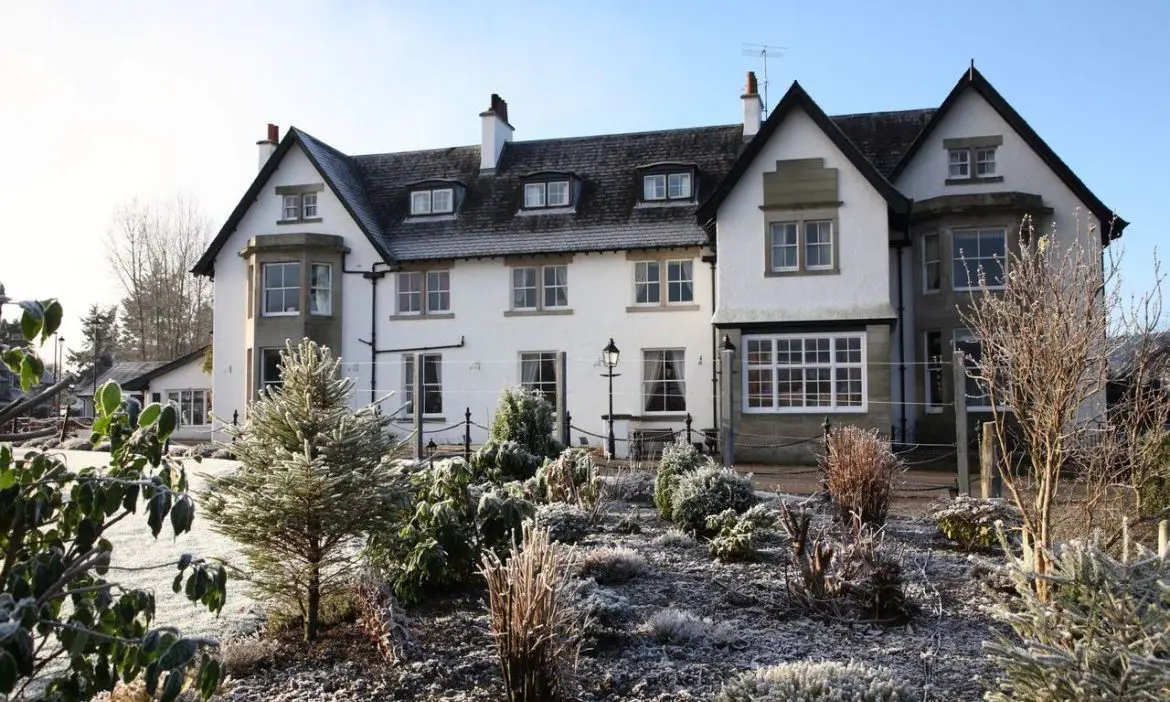
Situated in the Scottish Highlands, the three-star Lovat Hotel offers luxury in a Victorian building, an award-winning restaurant and an eco-conscious experience for visitors wanting to discover the beauty and mysteries of Loch Ness and its surroundings.
Caroline Gregory, managing partner of the hotel, explains that being green is something that has developed alongside the business since it launched 10 years ago. Initially it was a question of efficiency, dealing with things like fixing the windows to reduce heating costs “because I hate waste – that can be wasting money, wasting food, wasting time, wasting energy”. This pragmatic view spiralled into a green approach as Gregory saw the benefits – both commercially and personally – of taking the environment into consideration when making decisions.
A big turning point, she says, came when they installed a biomass boiler at a cost of around £100,000 in total. A big outlay indeed, but she is quick to point out that the payback amounts to £25,000 each year, and thus it will have paid for itself and be benefitting the hotel within four years.
Nowadays, Gregory insists on using the term ‘eco-conscious’ to describe the hotel’s approach, which means that it is more a philosophy that involves permanent re-assessment, learning and change than a static template. “We make a conscious decision to be as environmentally conscious as we can be,” she says. “It’s a philosophy but it’s within our business plan. Don’t get me wrong, we don’t have halos over our heads, there’s still more that we can do. But we do get a lot of very positive comments from customers, which is great, and I believe that our approach does filter through the customer.
“I like to think that when they go home there will be something that they’ve changed or picked up while they’ve been here. But in the end the hotel is still a service, it’s still a product and it still has quality, but it’s done with a bit more thought.”
For those bitten by the green bug Gregory’s pragmatism is invaluable: “You don’t have to do everything at once – what we have achieved has developed over a nine-year period. You just have to take it chunk by chunk because otherwise it is quite insurmountable.”
This feature first appeared in the July 2014 issue of Hotel Owner.