















Register to get 3 free articles
Register to unlock the article and receive our free newsletter. Join 26,000 other hotel leaders and stay in the know.
Want unlimited access? View Plans
Already have an account? Sign in
Tell us about your background and how you came to own the Maytime Inn.
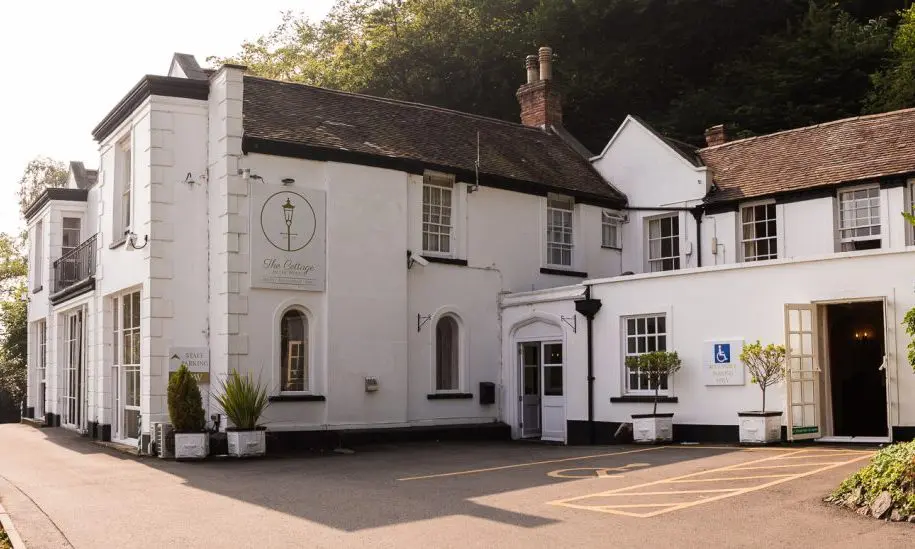
I have always worked in pubs from as soon as I was old enough to do so. The opportunity came up for me to get my hands on the Maytime just after I left university. I was originally looking with a friend – who had a much better financial backing than me – at buying an old manor house and converting it into a country house hotel. Unfortunately that didn’t happen, but I still wanted to go it alone and decided to go after the Maytime. I went and created all the business plans and got the bank loan approved as long as I could come up with 50% of the money, which I couldn’t. I was working for Greene King at the time as an assistant manager and not earning anywhere near enough for that. Fortunately I have a great family who agreed to give me the financial backing and actually cut the banks out, but do the deal on the same rate. That was very lucky. Maytime was actually the first place I found on Google – I knew I wanted a place in the Cotswolds and this was the first property that came up.
What was it that particularly drew you to the Maytime?
I wanted something that could be a project. When I saw it I thought the property had fantastic potential, but it wasn’t being used. It was owned by a couple who had owned it for about 40 years and not a lot had changed during that time. I thought that it was something that I could take over and really have the opportunity to put my mark on.
You renovated the inn when you first bought it, what changes did you make?
When I took it on it needed quite a lot of work doing to it. It had been flooded in 2007 and the previous owners had refurbished it afterwards, but they hadn’t really fixed any of the damage properly. There was still quite a few issues electrically, plumbing wise, and a lot of areas with damp in the walls. We stripped everything back and repainted, resealed, re-did large parts of the electric in the building and reinstalled and modernised a lot of the building’s plumbing work. During the first stage we changed all of the windows and doors, we took out the old carpet in the raised restaurant area and put wooden flooring down, as well as changing all the furniture. We changed the bar and we refurbished the toilets as well.
What were the biggest challenges you encountered during that process?
I had never done it before. I had come from being an assistant manager in a Greene King-managed house to being the owner of a property, so I wasn’t only being the general manager I was also taking on the role of owner, which has its own set of challenges. You become a lot more responsible for the business. General managers always have the option to walk away, but as the owner it is your life and you have absolutely no choice but to get it done and make the business work. I had pretty much come straight out of university and I had never studied hospitality – I did an undergraduate degree in city and regional planning and a masters in construction project management, so I got to use those skills. It was all about juggling everything, in the beginning that was quite hard work really.
You were just 23 when you bought the property, was it hard at such a young age?
I remember sitting down on one of my first days that I moved and thinking, ‘right I’m here now, what do I do?’. I just sat there thinking about everything that needed doing and I just had no idea where to start. One of the first things I did was take a sledgehammer to the old bar, just so I could see the space and work out what we could do with it.
What did the second stage include?
After the first stage we opened and we traded for the rest of the summer, and then just after Christmas in the first full-year that I was here we shut the kitchen down for a couple of weeks and completely refurbished that. At the same time we were completely refurbishing the bedrooms, which took a couple of months.
How did the second stage compare with the first?
In hindsight I think we rushed the first stage a little bit. I wanted to get in the property and open it to make the most of summer. From me finding the property, moving in, making the plans and getting them executed and then opening for business, that whole process was about a month and a half. It really was a quick turnaround.
Tell us about the bedroom designs.
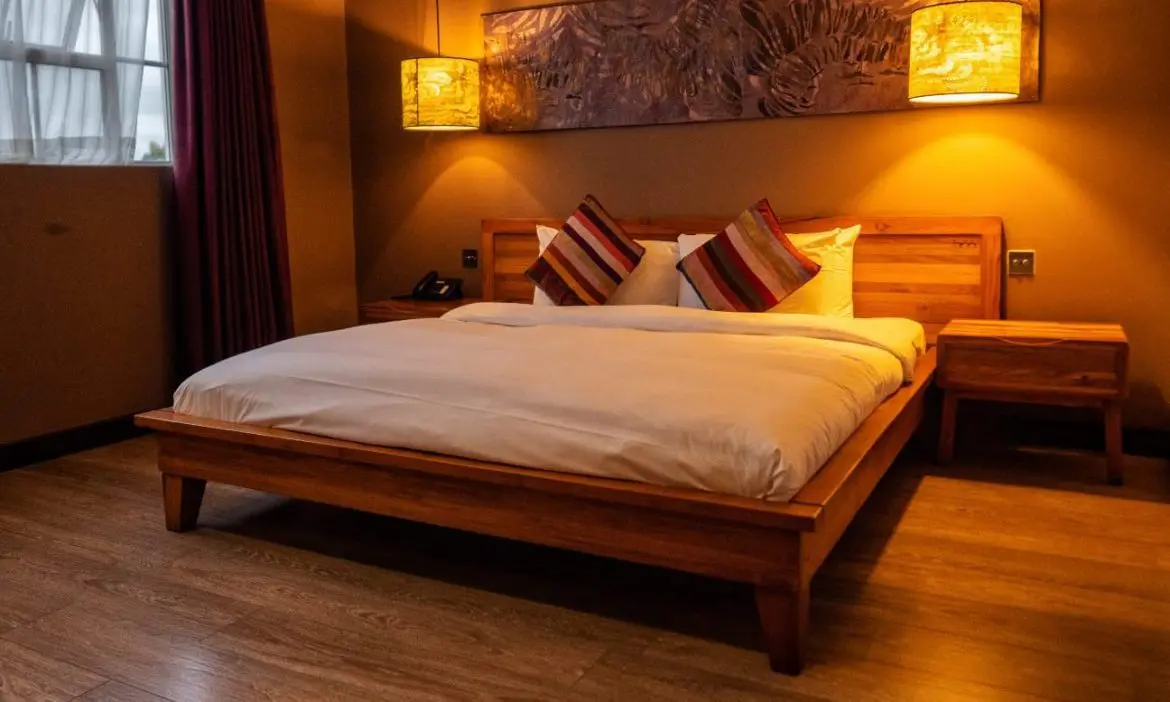
We based the concept on the pub’s old name, which was the Three Horseshoes. Pubs are part of the UK’s heritage so I think it’s important to remember the heritage of the pub, it would be a shame to forget that and there’s too many pubs that are becoming standardised. It’s called the Maytime as the old owners were called May and Tim, and I thought that was a nice touch so we kept the name. Before that it was called the Three Horseshoes so we based the bedrooms on that theme. We have the Hunting room; Sadlers room; Tack room; Farriers room; Boot room; and the Yard and Groom room.
Maytime is an inn, how would you say it differs from a hotel?
We are a pub that’s also an inn. We are in the middle of nowhere so the room trade is very important to us and we need to make sure they are full, but people will only come and visit us if the food is nice and the drinks offering is where it needs to be. We have a 70-cover restaurant and only six rooms, so if I don’t have that food and drink offering at where it needs to be I will not be able to survive on just those bedrooms. That’s where we differ to a boutique hotel as a lot of them won’t have restaurant space and if they do it’s certainly not as large as ours.
You have a passion for gin and the bar stocks more than 70 different brands, does that give the property a niche?
It’s actually 85 brands of gin now. We are a freehouse and we can buy whatever we want from whoever we want, without restriction. That gives us the freedom to have a much more diverse range. It gives guests the ability to just have a play – the idea of a bar is that it’s supposed to be a fun place to visit and that’s what we do. We have books that we have written at the bar, and they are all about the gins with distillery details, what the gin is about, how it is made, what botanicals are involved and for each gin we have our own recommended ‘perfect pour’.
You also have a selection of fine wines?
We have fine wines by the glass, and that’s proven very popular. We are a drive-to destination for most people so many guests will just want a glass of wine. We have a range of very fine wines, but by 125ml glasses. These are wines that you would never normally find by the glass. We have a system that allows us to get the wine out of the bottle without actually opening it – it replaces the empty space with argon gas, which is neutral so it stops the wine from going off. That means we can do as many wines as we wanted to by the glass without any risk of wastage.
You are located in the Cotswolds, an Area of Outstanding Natural Beauty, does that help attract guests?
The Cotswolds is definitely a tourist destination, so that helps to draw people in. We are on the edge of the Cotswolds but we are quite well placed for people coming from London, so we are perfectly situated for people that fancy that weekend escape to the countryside. Internationally it helps a lot as well because people want to come and experience the British countryside, and by staying in an inn they get a unique experience as well as an historical feel.
What has been your favourite aspect of the whole experience so far?
I think watching it grow, it’s almost like having a child. You take something on and you keep building on it. When we first opened nobody in a 10-mile radius had ever heard of the Maytime. We now have a much better reputation locally and are also better known further afield. It means a lot to me that the business has grown to that extent.
What are your future plans for the Maytime Inn?
We have renovated the garden in 2015, and we came third in the best beer garden in the UK competition by SME Insurance. That was our last major project and it really extended the garden – we put in an outdoor bar and extended the seating from about 20 to 120 people. I have just moved out of the pub and we are now in the process of turning the space upstairs, where I used to live, into staff accommodation. That’s the next expansion because due to our location we really struggle to get staff in and keep them. The Cotswolds is an expensive place to live and people that live around here generally don’t want to work in hospitality. We have to provide the accommodation to get the good staff. As we get busier and busier we can’t survive on that core management team anymore, we have to expand on our staff. After that we will see, but we are running out of space now.
Perhaps a second property then?
It’s on the cards. That’s another reason for me moving out, to make sure that this place can continue to run as well as it is now without me being here seven days a week. Say six or twelve months down the line, and I’m happy that it is managing, then perhaps we could start looking at pub number two.