
















Register to get 3 free articles
Register to unlock the article and receive our free newsletter. Join 26,000 other hotel leaders and stay in the know.
Want unlimited access? View Plans
Already have an account? Sign in
What made you want to join the hotel industry in the first place?
I kind of fell into it, since our family business has been thriving for 50 years. I have worked in the business since I left university in 2011 and worked with the company from the lower ranks all the way up to managing director.
How would you describe your management style?
We have a business which is growing and the people here are growing all the time. So I try to keep a pretty flat structure, it’s relaxed and quite informal. We want to try and encourage the creatives from the team, so we haven’t got a corporate hierarchy and we try to resist a lot of the rules bigger organisation might have. But my personal way of dealing with things, especially with very sensitive or very particular design elements of the hotel, is being involved with it in every single tiny detail.
How did you come up with the idea for the ‘hometel’ concept?
We saw an opportunity with aparthotels as a sector in the UK, which I feel is a long way behind Europe and north America. We recognised that there are a lot of frankly plain, soulless accomodations in serviced apartments which are just flat in their design. They might look nice but they don’t have much character or personality. In the hotel sector there are a lots of really cool independent boutique brands opening up and giving a whole different experience. For me, being quite young, I was very interested in actually creating a new brand that would be unique.
We wanted to combine the security, comfort and predictability that you can get with a hotel and combine that with the best bits of Airbnb, which is often the character and personality of staying in someone else’s home, embedded in a local community. Taking the best bits of those two pieces, we believed there was space in the middle to let the idea thrive.
We were looking at various brand strategies, and an opportunity to go further than what our competitors were doing with aparthotels. We wanted to deliver more detail in the design of the property and the overall experience, and aimed to break the mold as much as possible, and didn’t want to just compete alongside apart-hotels. We were trying to create a much more informal and relaxed hotel stay, which included a kitchen inside the room, giving guests a lot more of those home benefits.
We don’t have a lot of these corporate rules, such as breakfast-time cutoffs. We have got a 24-hour stay policy, so a guest can check in check in at 2pm and then can check out 2pm the following day.
Why was it important to have a hotel that feels more like a home?
I think there is a huge need for it. When we stay at hotel and are away from our homes our eating habits and daily routines are disrupted. This is especially true for corporate guests, since being away from home takes that away from you and that can compromise your ability to be on top form. It was our aim to create a much more relaxed environment.
What else does the property offer for its guests?
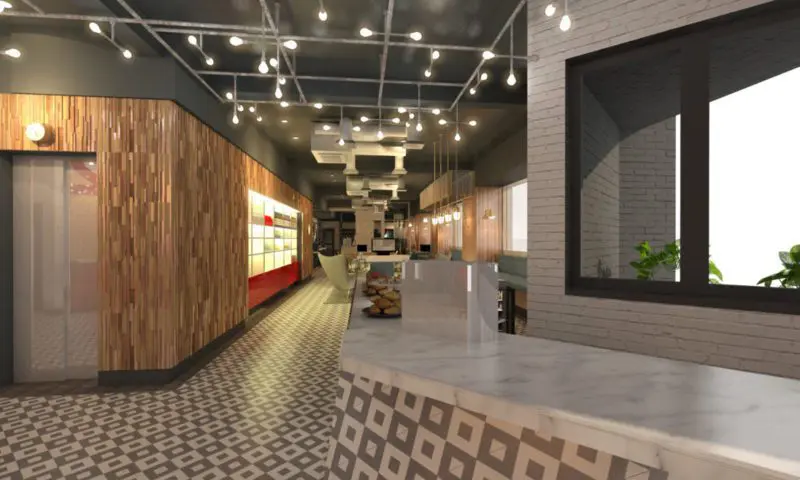
We have a got a main ‘living room’, which we felt was important since the lounge is pretty much the heart of every home. In that space we have a coffee bar, which also serves as our reception. The hotel offers lots of flexible seating, so people can use for whatever they need it for, whether that is a formal meeting or relaxing with the family.
We also offer a gym/studio room for guests to use. We offer a larder in the basement area which offers a few products that guests can take to cook in their rooms. It all serves to let the guests choose how they they want to make the most of their stay.
What do you think the guests will think?
Everyone has their own connotations for what home means to them, it isn’t a prescribed, defined item in people’s minds. So the whole basis of our concept has really have clicked with our guests and resonated with them – it has been received really well.
How long did the property take to construct?
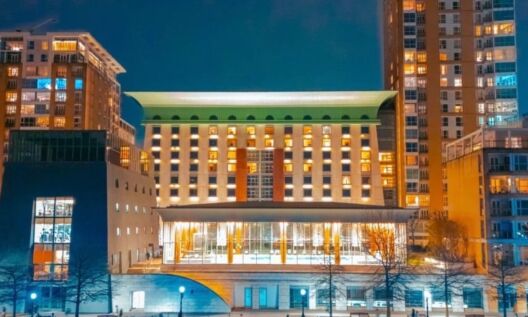
Architecture and interior design studio Project Orange came on board and they designed a very cool space in Southampton, which took around 45 weeks.
Tell me a bit about the styles of the room designs?
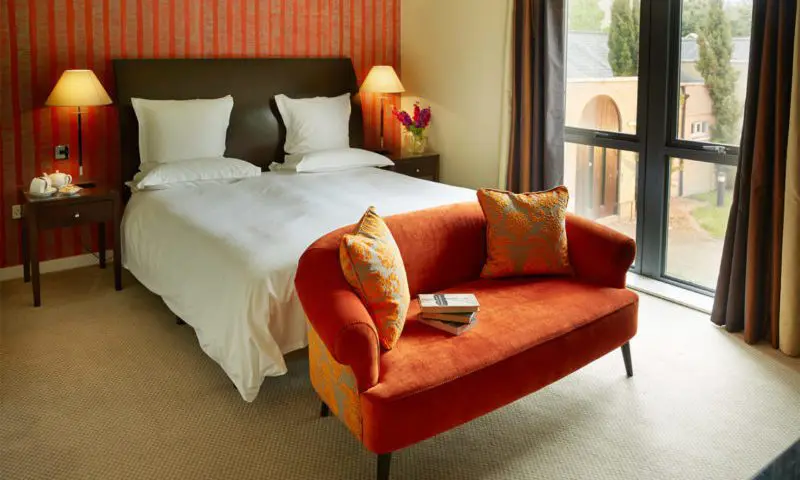
Room2 from the offset was not going to be just a typical cookie-cutter hotel, each building will have its own design but would fit in within the larger character and personality of the franchise. Each location after the Southhampton launch will be designed around the local area. For Room2 in Southampton the brief for the architects was to reference the ‘golden age’ of cruise liners. There were nautical cruise references in the rooms such as steel banisters and portholes. The colours are fresh and fun and I feel it really stands out.
What does the surrounding area have to offer guests?
Southampton is a nautical city, so it’s got a huge cruise market. There are a lot yachting opportunities, a wide variety of parks and forests just north of the property and the hotel is just five minutes away from the town centre, which offers a lot of eating options.
What kind of guests do you expect to see?
It’s definitely going to be a huge mix. I think during the midweek we are hoping to attract more corporate guests. But during the weekends it’ll be more family oriented, with young and old workers and couples.
How many ‘hometels’ to you plan to launch over the coming years?
We want to have created around 1,000 units by 2025, as part of our ‘committed pipeline’. We are up to around 300 at the moment. My mission, off the back of launching our first larger property, is to showcase the proof of model and efficiently roll out this type of building across the country.
Have you encountered any difficulties so far?
There hasn’t been anything really substantial that has tripped us up so far.
What’s your plan for the next five years.
My goal for the next five years is to prove that this Southampton property is viable. We have got future hometels in the pipeline, so we are keen to attract the support of investors and landlords. So I am hoping that through this project we should be able to scale the rest a lot quicker.
What are your personal goals for 2018?
I am planning on rowing across the Atlantic Ocean in 2020, which is my personal goal. As for business goals it’s to focus on refining this Room2 in Southampton and working on future properties.