









Register to get free articles
Want unlimited access? View Plans
Already have an account? Sign in
Although hotels are excluded from most of the Building Safety Act 2022 (“BSA”), a new High Court judgment shows how lease provisions can be relied on to ensure fire safety risks are remedied. The June 2026 decision in Essendi UK Hotels 2 Ltd v. London Property Company Ltd [2026] increases the likelihood that landlords, rather than operators, will be legally responsible for cladding remediation costs. It confirms that combustible cladding creates an intolerable risk that cannot be justified by interim mitigation and strengthens the link between statutory fire safety obligations and commercial leases. It also provides strong reassurance that precautionary operational decisions, such as closing a hotel, will be treated as reasonable if based on credible expert advice and risk to life.
Overview
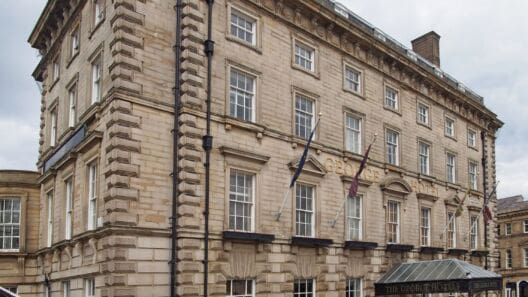
A 16-storey Ibis hotel in Wembley was found to contain combustible ACM cladding, the same present in Grenfell. Experts advised the risk was “intolerable” and that replacement was necessary. The tenant claimed the landlord was responsible for the repairs but the landlord disagreed. Prior to the landlord granting a new lease, the tenant who had previously been the hotel’s landlord, had commissioning the works that resulted in the ACM cladding being installed. The tenant argued the landlord was responsible due to the following obligations in the new lease :
- To keep the exterior of the hotel in good condition, and/or
- To comply with all legal obligations (including the landlords obligations under the Regulatory Reform (Fire Safety) Order 2005 (“FSO”)),
The Court had to consider whether the landlord’s good condition covenant made them responsible for remedying an inherent fire safety defect in the absence of physical deterioration. While the Court acknowledged that a good condition covenant does not generally include an obligation to remedy inherent defects not in disrepair, that presumption could be displaced on the facts. The Court emphasised the post-Grenfell context, the nature of a hotel as a building where people reside and sleep, and the absence of any service charge mechanism through which the landlord could recover the repair costs.
The Court also held that the landlord was required to replace the cladding to comply with its legal obligations under the FSO. This is a law that places a legal duty on the responsible person for non-domestic premises to assess, manage, and reduce fire risks to protect occupants. The landlord was the FSO responsible person and the cladding constituted a “dangerous substance”. Therefore, the lease imposed a contractual obligation on the landlord to carry out the works required by the FSO.
The Court ordered the landlord to remove and replace the unsafe cladding. It also found that the tenant had acted reasonably in closing the hotel from mid-2025 and was entitled to recover damages for the resulting losses. In concluding it was reasonable to close the hotel, the Court relied on expert fire safety evidence, the absence of any realistic remediation plans from the landlord, and the potential criminal and reputational risks faced by the tenant.
Implications for Hotel Owners
The judgement highlights several important considerations for hotel owners:
- Hotel owners should not assume that just because hotels sit outside most of the BSA, there is no obligation to repair unsafe external cladding or any route to ensure its repair. Where the BSA does not apply, the Courts appear willing to use existing legal frameworks to achieve similar outcomes to those that may have been available under the BSA.
- Hotel owners can no longer assume that standard “good condition” covenants are limited to repairing parts of the building in disrepair. Such clauses may extend to addressing inherent serious fire safety risks, even where there is no physical deterioration. Those subject to good condition covenants may be subject to increased pressure to address fire safety defects proactively, even in the absence of BSA obligations.
- The judgement underscores the importance of careful lease drafting. In particular, the absence of mechanisms to recover costs (such as via service charges) may influence how Courts interpret leases. This could leave landlords bearing the full burden of expensive safety repair works.
- The financial consequences of this judgment could be far reaching and highlights how liability may extend beyond repair costs. Landlords responsible for repairs could face substantial business interruption claims, including tenant operator losses from precautionary closures. Equally, tenant operators may now become emboldened to close hotels in the absence of meaningful repair proposals from responsible landlords.
Landlords and tenant operators are advised to check their leases to assess responsibility for repairing fire safety defects and associated losses.
- Barry Hembling (BHembling@wfw.com), Jamie Bell (jamiebell@wfw.com), and Rufus Hart (RHart@wfw.com) are members of the construction team at international law firm Watson, Farley & Williams LLP