


































Register to get 3 free articles
Register to unlock the article and receive our free newsletter. Join 26,000 other hotel leaders and stay in the know.
Want unlimited access? View Plans
Already have an account? Sign in
There are so many aspects of our business that have changed with the Internet age. Before, when a traveller called a hotel, that guest was basically yours to lose. Now when a traveller visits a hotel website, there needs to be an incentive to compel the guest to make the booking; until that guest-engagement process begins, the hotel hasn’t won a thing.
Today’s hotel marketers are realising that they need to provide website visitors with as many customisation and personalisation options as possible if they are going to hook potential customers and earn their loyalty. The key is not promising something that can’t be delivered. When a guest arrives at a hotel, check-in must be a quick and pleasant experience; the room type, size and location must be available and delivered; and loyalty status must be recognised.
Historically, the booking agent would look at the reservation rack and block a specific room number for that specific guest. The features of the blocked room would be described in detail, and the guest could then ask for a change or relay specific features or amenities desired, like a shower rather than a bathtub. The agent would then pick a different available room and confirm the requested features and amenities, along with the room number, room rate, check-in date and length of stay. When the reservations process became automated and property management systems came on the scene, hoteliers began to see that as certain dates became denser, fewer reservations were being made, and reservations agents were left with fragmented inventory.
To combat the fragmentaton issue, reservation agents shifted from selling individual rooms to selling room categories. As a result, occupancies climbed upwards of 80% or higher. This strategy worked well, as long as the room categories were essentially the same. Even when a hotel promoted 30 or more different categories, it greatly simplified the reservation task. Then came the internet and the digitizing of the reservation process. Converting web lookers to bookers became an instant headache.
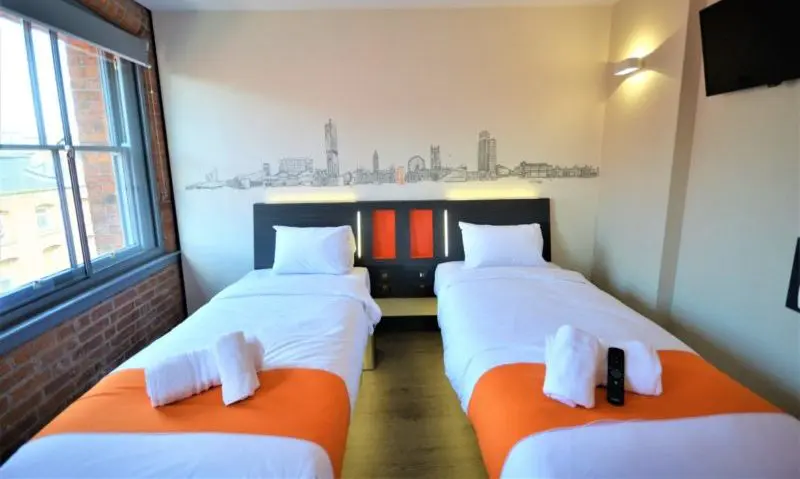
Room types needed to be grouped into larger selling categories; although rooms sold at the same price, their features were dissimilar, such as bed types, views, and proximity to amenities (such as the pool or meeting space). Delivering on room-type requests that were made at booking during the check-in process is critical to meeting guest expectations and ensuring satisfaction. A guest booking a specific room type for a 10th anniversary would not be pleased with a twin bed configuration for example.
To increase satisfaction and secure loyalty, hoteliers need to not only promise a personalised booking experience, but they need to deliver on expectations. Here’s the problem: a guest may request a room on a high floor, with a bathtub, and far from any lifts or ice machine, but it is impossible to know at the time of booking how many such combinations will actually be available for the dates booked or available by the time the guest arrives at the hotel. The only solution is to post a big disclaimer stating: ‘Room Requests Not Guaranteed, Subject to Availability on the Day of Arrival’.
The three most common online guest complaints stem from:
1) Slow check in / long lines at check in
2) Room type I received was not the room type I booked
3) Loyalty status was not recognized upon arrival.
For one and two-star hotels, these leading complaint categories represent 70% of all negative online reviews; the remainder of complaints are split between room cleanliness, cost of services (like internet connectivity), and food quality.
Slow check-in
How is it even possible that slow check-in is a complaint in this technology age? Shouldn’t today’s solutions speed up the service process?
In the good ol’ days, check-in used to consist of collecting the guest’s personal information, obtaining a signature, and saying: “Have an excellent stay.” Today, the process is far more complex; the exact room, based on specific requirements at the time of booking, must be found. But what happens when the room that was pre-assigned prior to the guest’s arrival is not ready when the guest arrives? Worse yet, what happens if no room was pre-assigned at all? The front desk agent needs to scramble and find an available room that meets the guests’ requirements. Aha! Now the long lines are beginning to make sense. The agent’s welcoming smile quickly turns into a long stare, void of any expression as they navigate the PMS in search not of just any room – but the right room – to assign.
Room assigned is not what was booked
If you think this doesn’t happen offen, think again. Go to TripAdvisor and search ‘Room is not what I booked’. What you will find is a large number of feature requests that were never granted. More and more travellers are seeing that hotels claiming to offer personalisation are really just offering empty promises. If you are going to ask a guest what he or she wants in a stay experience, and the guest takes the time to tell you – whether its through a pre-stay survey or at the time of booking — you must deliver on their expectations. If you can’t, you must be ready to respond to bad reviews.
Loyalty status was not recognised
Many loyalty programs incorporate complimentary upgrades based on availability at check in. When a loyalty guest checks in, he or she generally accepts whatever room they’re given on the assumption that they are receiving the best possible room available. Once inside the room, if the guest feels the accommodations are not commensurate with the expected upgrade, they will often check the hotel’s website for availability of better rooms. If the guest finds better availability, look out! Once a loyalty member realises that he or she was not granted the upgrade they were entitled to, the person, now seriously annoyed, will return to the front desk and demand a better room. If the guest doesn’t have time for that, it’s off to TripAdvisor to post a negative review.
Take all of this together and a very different picture emerges – one that implies that the systems that agents use cannot solve what has been incorrectly sold or promised at the time of booking. The people taking the heat for these inacuracies are the agents, the room controllers, and the general manager.
The room assignment dilemma
Room assignment is one of the most complex tasks in the entire lodging process, and there are no mathematical algorithms that can solve it. Front desk agents can make assumptions that enable them to hone in on subsets of requested room categories to find a match, but typically overbooking of some categories arises and fragmentation still occurs. There is no way for an agent to be fully aware of all pending reservation requests or guest requirements when making these decisions. Worse yet, any room assignment decision they make will directly impact that day’s arrivals – or even tomorrow’s arrivals. In the end, specific features, amenities or room types requested by the guest won’t be fulfilled.
Mobile check-in initiatives also add to – or even amplify – room assignment challenges; when speaking to front-office staff, mobile check in does nothing to make their jobs easier. Someone still needs to find and assign the ‘right’ room to each mobile guest who prefers using a mobile phone as a room key and bypassing the check in process altogether; rooms may or may not be ready at the time of check in or they may still be stuck in queue. Efficient mobile check in can only happen if there is smart room assignment. We’re not there yet – but it’s coming very soon.
What can be done?
One of the first things that hoteliers can do to address the room assignment dilemna is eliminate irrelevant and duplicate room feature codes. Out of the 30 to 50 categories or codes present, statistics show that fewer than 10 are being requested by guests. Determine which categories count; generally the most requested are “Views,” “Bed types,” “Floor” and “Balconies.” Always add ADA requirements and (non) proximity to noise from lifts or ice machines. Anything else is just in the way of room search. For example, you cannot search simultaneously for rooms that have king beds (KB) and box spring king beds (BK). Every room has one or the other, but never both. Whether the bed is box spring or framed is really not important to the guest. If you need the information for other purposes, then keep it elsewhere.
Once you have re-organised the feature codes, make sure that every room has an indication of “View,” “Bed type” and “Balcony” if appropriate. If a code exists and the room corresponds to it, the feature must be configured. Relying on the room category code for that type of information saves time when configuring the system, but will ultimately cost you time every day – time that is precious to the guest and scarce for the agent. It may also decrease some training time for new employees.
Finally, set a clear hierarchy of features. What is most important to guests? Here again, simple request statistics will help. At a resort, it may be “Views” and “Balconies” over “Bed Types,” whereas in city hotels “Floor,” “Noise” and “Bed Types” may trump the views. Make sure the features are shown in that sequence of importance, as it will make it easier for the agent to proceed by elimination, without removing some of the most important features first.
About Pierre Boettner
Pierre Boettner is the CEO for hospitalityPulse, a company designed by hotel technology and operations veterans tackling the task of room assignment. The patent-pending hospitalityPulse optimisation mathematical modeling process, combined with an intuitive user interface, is helping hoteliers assign the most optimal room for every guest, every time, with consistent efficiency. Using the multi-dimensional roomPulse inventory engine, hoteliers can automate room assignments to streamline check-in. roomPulse dynamically optimises each room assignment in real time, all the time. Visit www.hospitalitypulse.com to find out more
This article first appeared in the March 2016 issue of Hotel Owner