





































Register to get 3 free articles
Register to unlock the article and receive our free newsletter. Join 26,000 other hotel leaders and stay in the know.
Want unlimited access? View Plans
Already have an account? Sign in
Britain’s heritage has always been an attraction to visitors from the Far East. But what aspects of our history and how we reflect this in our hospitality offering do visitors from this market most enjoy? By CHESTER KING
It can often be said that we here in Britain take our rich history for granted, forgetting to enjoy the heritage that surrounds us. This is not so true for the hospitality industry, in which historic properties exploit their own background and utilise stories of the past to their advantage while embracing traditional British ideals. In fact it is a key draw to the international tourism market, visitors from which love to explore and learn what hotel properties hold in the past.
As someone who is both behind a property with its own history – Stoke Park dates back more than 900 years and still combines the traditional feeling of a country club with contemporary facilities – and as a consultant working extensively with the Chinese market, I feel confident in saying it is these traditions which they are learning from and trying to adopt.
Professional service with personality
It is easy to get caught up in the factual history of a property, and this is of course a draw which we will discuss. However, it is important to remember our traditions and eccentricity as a country are also part of this heritage.
This comes across well in our service, and is something the Chinese are keen to emulate in their delivery of hospitality. Of course professionalism is always key, but what we learnt in the UK is to the have the confidence to show our personality.
Staff in the UK are allowed to share their own character with the customer during their periods of interaction, and are encouraged to do so. When we approach a table it is vital here to obtain a level of engagement from the guest and create a sense of familiarity, whilst always maintaining high quality service.
This behaviour works well to create a bond that can deliver long-standing relationships and therefore repeat business. We often hear people commenting on the great service they received from a particular staff member and this is what hotel and hospitality businesses should always be aiming for of course.
Such levels of engagement are an aspect of what we offer that the Far Eastern market is keen to master. They want to encourage this friendship between customer and employee that goes over and above the normal relationship, because it is part of the character of British service and hospitality that keeps people coming back to a property.
Immaculate presentation and uniform
The high quality appearance of staff in the UK is another key value the Chinese and Far East enjoy about our service. Again there is some element of character in how we dress. For example we may embrace a tradition such as countryside dress, but at a high level establishment our staff will be looking tip-top.
The first point of contact at many a high-end hotel is the concierge. It is essential they are well turned-out and at their best at all times. We often see their role as one of assistance but it is also the first impression guests receive of the property whey they are to be staying. Historic hotels will often embrace the typical uniform of head butler for this position and in London we definitely see a steer towards the most formal doorman complete with cane, top hat and tails.
Most customers will expect immaculate presentation from all staff, at all times, but while reflecting the heritage and character of the business – and again this is something the Chinese are keen to echo.
Efficient Standard Operating Procedures
The regulated level of service in the UK is important to the Chinese model for the future. Having set Standard Operating Procedures (SOPs) in our businesses we understand the need for people to receive an expected level of service consistently. No one wants to enjoy a drink served perfectly to the table one moment and the following day have to purchase this drink at the bar. Consistency is key and this is achieved by setting in place these logistics and systems.
Central to this is the need to ensure excellent customer service. Staff are informed what is expected of them and they then achieve that at a base level, more often going over and above that. As hoteliers we know this consists of contact points, how to react in certain situations, and so on, and this uniformity and clarity is something the Chinese are putting in place across their hospitality businesses.
Heritage
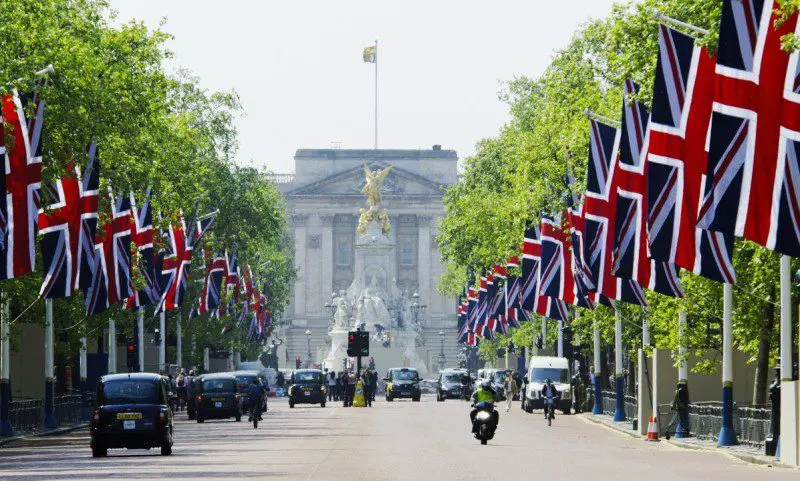
Being from the UK many of us are very proud of our royal family who, as we all know, are a huge draw when it comes to international tourism. With them we enjoy a rich heritage and ancestry, which we use to our advantage.
In terms of hospitality the draw is clear. But what the Far East and Chinese particularly enjoy about the royal family is the pomp and ceremony that surrounds it all. This is where we can share our ability to create exciting celebrations that are enjoyed nationwide. We perform with style these events, yet incorporate everyone into the celebration creating inclusivity rather than exclusivity.
We see this also in the Far East but with a far more military feel. This is impressive, but what we share with them through consultancy is the way we relate these events to the hospitality industry in traditional ways, from gathering around one screen to enjoy an announcement to sharing a celebration by having bespoke events.
History
We cannot overlook the importance of history and the incorporation of that into our delivery of service and hospitality. In the UK we do really well at embracing our past in terms of traditional afternoon teas being available and styling the décor of our properties in keeping with what they may have been or been part of in the past.
Prime examples of places that do this exceptionally are former country or stately homes. We see many aspects of hospitality as an occasion also returning, with afternoon tea being a hugely popular event. In this way international guests enjoy being a part of the history, not simply a bystander. They take part in what they know is a traditional past time and feel connected to the history individually.
Managing to draw these aspects of the past into the current day and future of a business is key in the Far East, whether they look to reflect their own history or utilise that of another and that is what we do so well.
About the author
Chester King has more than 22 years experience of senior management across leisure industries, as well as in advertising and marketing. He is responsible for the creating, marketing, operating and selling of a number of clubs, including The Bobby Moore Club for Wembley National Stadium and Zhejiang Circuit opening in China in 2016. Currently he is Chief Executive of Stoke Park, an AA 5 Red Star Hotel, where he hosts The Boodles Tennis Challenge. He is also a member of Hospitality Experts, a consortium of specialists created by hotel marketing firm Journey.