

































Register to get 3 free articles
Register to unlock the article and receive our free newsletter. Join 26,000 other hotel leaders and stay in the know.
Want unlimited access? View Plans
Already have an account? Sign in
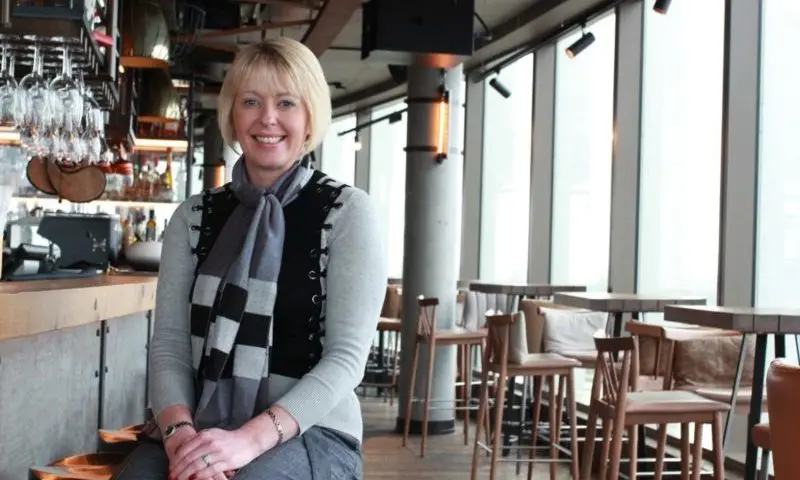
“Robots probably have a place in other industries,” says Jacqui McMillan, general manager of Novotel Canary Wharf, “but I think that we need to look at the word hospitality. It’s not about robots or technology, hospitality is about looking after our guests.”
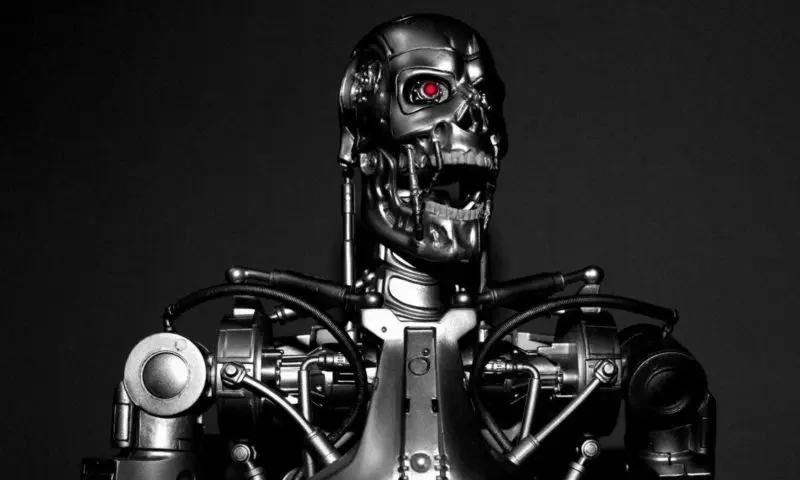
Last month Adam Kushner, founder of robotics distribution firm Robots of London, said that in the next 20-30 years 80% of roles currently performed by humans in hotels could instead be carried out by robots. In what seems like a clear move away from this cold and mechanical future, AccorHotels has undergone a new ‘cultural transformation’ that centres around empowering staff to go off script, and actively encourages them to create personal, heartfelt moments for their guests. It is currently being rolled out across its Mercure, Novotel and Ibis hotels in the UK.
“We used to work in the world of a script,” says McMillan, “where you would have to tick all these boxes when guests checked in, and we ended being just like robots. So we have told the staff to rip up the scripts and checklists and to just be yourself. Do what you think is right.” McMillan, who was recently appointed as GM of Novotel Canary Wharf, has been in charge of that transformation across 238 hotels, and says she has focussed on “delivering heart felt and human interactions to guests and bucking the industry trend of increased automation”.
McMillan has was in charge of staff training, as part of a core team of around 10 employees from AccorHotels, taken from the general manager community, head office and talent and culture departments, who have all led the transformation through training and mentoring.
McMillan began her career with AccorHotels as a rooms division manager at Novotel Glasgow in 2000 and has also held general manager positions at Ibis Glasgow City, Novotel Glasgow, Novotel Bristol and Novotel Reading. Most recently as general manager of Novotel London Blackfriars. McMillan says the way people travel and the demands they have in 2018 are completely different from what they were 20 years ago. “When we used to book a holiday,” she says, “we would go down to the travel agents, they would book it and process us and that would be it. In 2018 we want so much more. What guest actually want is an experience.”
While she does agree that technology is “really important”, she says guests fundamentally do not want to deal with robots – even humans acting like them. “Time is more precious today then it has ever been. We want that time to be special, real humans are the only ones that can engage with us in this way.”
WIDER IMPACTS
Is it possible to measure the benefit of such a scheme to the hotel industry and its guests? Emma Kenny, a professional psychologist, says that this kind of approach to guest interaction goes beyond simply improving their day. She explains that studies in psychology, anthropology and sociology research has found that humans who have positive social interactions every single day have the potential to live longer. “So actually the idea of being around people and having solid and positive interactions regularly enhances lifetime chronology,” she says.
Kenny has over 20 years experience working within her field, working with private clients and groups alike. She is BACP registered and holds all relevant qualifications to practice including an advanced diploma in counselling, a masters in counselling and a degree in psychology. She says that one of greatest achievements of Accorhotels is its focus on emotional intelligence, since “[that] is what makes both staff and guests happy”. She adds that through this scheme the staff “were able to get to grips with who they are as human beings” and were able to “really focus on what makes them happy and then extend that to individuals who are coming into their hotels”.
In this way she believes that scheme has been transformative for the staff as well as the customers. “That’s so unusual these days to have an actual programme where it’s all about ‘being human’, so that you don’t just feel like you’re just following a set of corporate guidelines, or be fearful of stepping outside of them.”
The benefits it has had on the workforce is what really counts. “It’s not just about the public,” she says, “but it’s actually about the mental health and well being for those in the incredibly pressured and stressful hospitality sector.”
WHY IS THIS IMPORTANT?
“I think it’s pretty brave for people in the corporate sector to start talking about feelings”, says Kenny, “because there has always been centralised approach to a business regarding profits.” Kenny argues that this is an important shift in attitude. “That’s what’s really exciting about this, because that’s the complete fusion of making hospitality still be profitable, but it has also created a profit of personality as well.”
She recalls how a business guest arrived at an Accor hotel one night and a staff member who knew him quite well, said: “Mr Mccormick you weren’t usual bubbly self when you walked in today”, and he responded by saying: “It’s me and my wife’s 20th anniversary tomorrow and I can’t be with her even though it’s a special day”.
Without being prompted the staff member went onto his Facebook and found and printed a picture that his wife had posted of their wedding, got him an anniversary card and had it signed by all the staff. They then put the picture in his room and gave him a bottle of champagne to take home and said to him: “Happy anniversary, I know you want to be at home, but we wanted to make you feel like you are in the hotel.”
THE ROLE OF TECHNOLOGY
Kenny says that it “doesn’t matter how wonderful AI becomes, since it will never be able to replicate the cues that human beings receive simply from being around around human beings”. It all comes down to the way human beings smell, eye contact, their mannerisms and the ways in which they gesture. “Even if you were able to make a clone of a human being it would still not be authentic because it’s not an actual living, breathing human,” she adds.
However, McMillan says that the way they utilise digital technology is to “further support and allow us to spend much more quality time with our guests”. She says that Accorhotels uses a system called ‘ACDC’ which is a digital card which is able to store a guest’s interests. “When that guest goes to another hotel and uses that to card to check-in the staff can see this and will have all the relevant information to surprise that person. Without impacting data protection of course,” she says.
THE RESULTS
London is a very competitive market on Tripadvisor, and McMillan says a good example of the effects of the transformation has been with Novotel London Blackfriars. The hotel moved from being ranked 202 to 116 on Tripadvisor in around 10 months.
“It came down to the experience the guests had. That was the only thing that changed during that time, improving the way our staff interact with the guests,” says McMillan, “we didn’t upgrade the bedrooms, we didn’t change the restaurant and we did nothing to the building, we just transformed the ‘talent’.” As a result the hotel saw a 3.5 points increase in RPS, as well as a 27% increase in employee engagement from the previous year. “The staff really feel like they own this,” she concludes.
This article first appeared in the May issue of Hotel Owner