




































Register to get 3 free articles
Register to unlock the article and receive our free newsletter. Join 26,000 other hotel leaders and stay in the know.
Want unlimited access? View Plans
Already have an account? Sign in
When opening or renovating a restaurant, whether independent or within a hotel, it is sometimes confusing as to which type and identity to go with. Of course, some future owners and operators know what they want to open, but is their choice viable, and will it live up to the profit and ROI expectations?
The following are some rules that it would be wise to follow given that investors plough substantial sums of money into these food operations, and they expect a decent return. The decision that is made will affect the facility for years, and will impact the design of the kitchens and interiors.
Since innovative and creative hotel restaurants are moving back into ‘mainstream’ choices of dining for many, the right decision can be a serious source of revenue for the operator.
So what is behind a ‘solid’ decision on what to open?
The first step might be to achieve an in depth study of the surrounding market. What is popular, and which restaurants are doing well? Try and ascertain why they are enjoying success. Among the many ‘ingredients’ for success are good food and beverage, service, pricing, the experience, interior designs, hygiene and maintenance, creativity, ambience, the dining experience, glassware, china and cutlery and more.
Those that keep a great level of consistency in the above will gain a great reputation which will enhance business. A good restaurant does not need to be ‘high level’ to be successful. Take a look at some around us: McDonalds are successful for their consistency, pricing and speed of service. There are many diners that are neighborhood hubs for their communities and serve fresh, square meals at a good price.There is room for all types of restaurants in the market, and you must choose the right standard for your establishment.
In today’s market there many different culinary experiences available due to the shrinking world and different cultures and foods being discovered across the planet. Every other day there seems to be some new food fashion cuisine that opens up.
Yet when opening or renovating you do not want to get locked into an identity that will make any new and creative initiatives for the restaurant more difficult in the future. The interior of the restaurant can be designed in such a way as to have hints at the culinary offerings and yet allow for a change of direction without too much investment if necessary.
The kitchen however is a different story. The design must be clever and the equipment chosen should be able to meet the needs of different types of cuisine. With the considerable advances in technology the equipment available today is not only more compact but also multifunctional.
A well planned and designed kitchen can last years and allow for maximum flexibility of different cuisines and types of food.
So, once the identity of the new or renovated facility is decided, it is time to plan the operations. Thought must be invested in the ergonomics to allow for maximum efficiencies in the work environment. All health regulations must be respected and paths of raw product deliveries to the kitchens and stores must be meticulously planned along with service paths.
The Chef chosen must produce an innovative and great tasting menu that will be costed and priced for business. His brigade will be trained in all aspects of the dishes and ingredients that feature on the menu, and all service staff will be trained in the ingredients, tastes, prep time and presentation. Further, the service staff will be trained in the table settings, location of the service stations and their content, and in the details of attentive but not irritating service. Wines, drinks and other beverages will be second nature to the service staff. Uniforms must reflect the hygiene and ambience desired.
Once installed, all furniture and machinery must be maintained at a high level to allow for smooth, trouble free service to the paying guest. There is nothing worse than a table that is ‘rickety’ and necessitates placing a paper napkin under a leg to stabilise it, or refusing a guest order of fries because the deep fryer is on the blin…not helpful to the reputation, which takes months and years to build but a very short time to destroy.
Operational controls should be set up to ensure that there is no over procurement in terms of quantities, standards and prices, no overproduction and that produce is stored correctly and used correctly. In as far as possible, products should be locally sourced as this means involvement in the community. Menu costings must be effected regularly (computers will do it for you) to make sure that pricing is right.
If you follow the above, market your venture cleverly and make sure that consistency is your password, then you will develop a good reputation over time, and success will follow both in terms of profits and enjoyment.
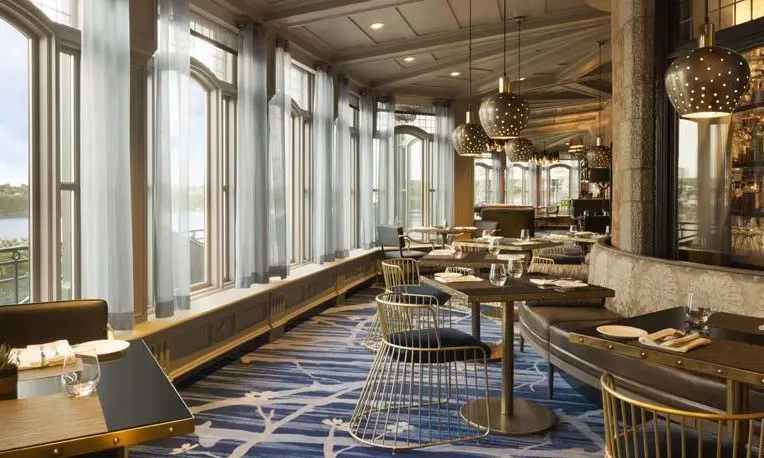
I was fortunate to be deeply involved, as Director of asset management for the Fairmont Chateau Frontenac in Quebec City, in the renovations of their whole food and beverage department facilities. The one facility I am most proud of is the Le Sam bistro https://www.fairmont.com/frontenac-quebec/dining/bistro-le-sam/
We overhauled the concept and created a magnificent bistro with an open kitchen featuring an open oven with a flexible menu that can be produced quickly from the small but well appointed kitchen. If you ever visit Quebec City, do make time for a drink or meal at the Le Sam, it has not only great food but a location overlooking the promenade and the magnificent St Lawrence river.
Lastly, and as an interesting trend, I have seen a new development in the restaurant and food industry. With the advent and prolific rise in the food delivery companies (Foodora, Ubereats, Skip the dishes, grubhub to name a few), there is more and more demand for home delivered restaurant meals. I have read about one restaurateur here in Toronto Canada that decided to try and cater ONLY to the home delivery market, and closed his restaurant guest service down. He is now on a 24 hour round the clock service using these delivery companies and his business is booming along with profitability. He has no service staff to pay.
In fact he is now transforming more of his restaurants to cater solely to the home deliveries and it is paying off. We will, I believe, see a proliferation of restaurants that are just kitchens, run solely by cooks, closed to the public and producing meals only for home (and office) deliveries.
I bring this up as you may also want to include a good part of your kitchen to providing these delivery companies with easy access to your food as this will enhance profitability. I believe that the large hotels might want to consider setting up a kitchen dedicated to home delivery, not instead of your in house facility but as a new way to create revenue stream with less payroll.
By Stephen Ayers. This article first appeared in the October 2018 issue of Hotel Owner