





























Register to get 3 free articles
Register to unlock the article and receive our free newsletter. Join 26,000 other hotel leaders and stay in the know.
Want unlimited access? View Plans
Already have an account? Sign in
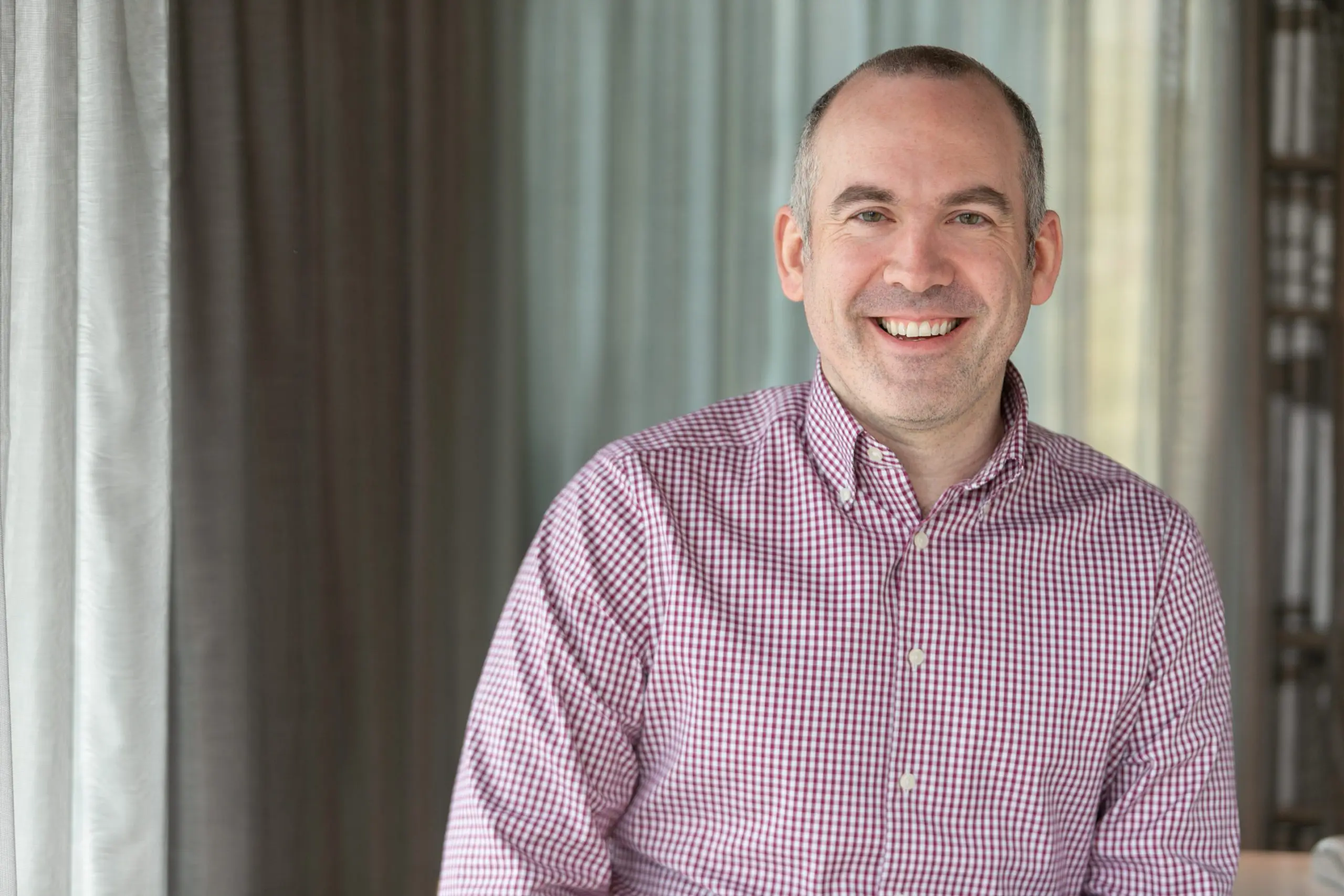
“It’s a crowded marketplace for the level of demand that exists. We have hotels all over England, Scotland, Northern Ireland and Wales, so we weren’t financially stuck as the economy was recovering,” says David Hart, CEO of RBH Management. As a UK-based hotel management company, RBH Management operates over 45 hotels across the UK and Northern Ireland, from luxury hotels with leisure and spa to extensive F&B. With a central team of over 90 people, the company supports all of its hotels across all functions, including operations, sales, and management, central revenue management and central marketing.
Despite operating through a debilitating trading season in the fourth quarter (Q4) of 2021, RBH came out on top with an occupancy rate upward of 75%. Hart reveals there are several factors leading to this feat. Firstly, he attributes the success to RBH’s “flexible” and “nimble” decision-making over the last year by treating each hotel individually. “No two hotels are the same and no two locations are the same, so what we can’t do is have a blanket approach to how we manage all the hotels commercially,” he asserts.
As a result, RBH’s central sales team focused on each hotel business individually by tapping into new markets which the company hadn’t specifically targeted before, including the sports, government and construction industries. Due to the travel restrictions implemented in the UK throughout the year, corporate travel had reached a minimum with businesses working from home. “That would have been a significant part of the base business in a lot of our hotels and it’s basically vanished. Our sales and commercial teams had to do everything to try and replace that business,” Hart explains.
He reveals that RBH’s central sales team had “restructured the business” to focus on these markets because “there’s been a lot of business going around there off the back of the pandemic”. In particular, sports teams became a “specific focus” as one of the “main industries” that started back up after restrictions were lifted was professional sports. Hart says: “teams were playing and travelling, so we had some really good success in that area.”
Secondly, he credits the company’s Q4 success to Britain’s historic staycation boom. “The staycation business started to ramp back up as people started to travel a bit more. People were desperate to go anywhere; it was really quite something to see as the bookings picked up,” he recounts. Notably, the hotels that were most successful for RBH last year were those near the coast, and even hotels that were on the way to these locations were “very successful”.
Namely, RBH’s hotels in Blackpool were “exceptionally high performing”, including the Lyndene Hotel and the Imperial Hotel Blackpool. Additionally, the Holiday Inn Express Southampton and the Holiday Inn Express Barrow-in-Furness, which is just outside the Lake District, were “rammed with business once the restrictions opened up”. The Holiday Inn Express Bridgwater, along with the Hilton Garden Inn Stoke-on-Trent, also did “exceptionally well once the leisure market was permitted to open back up in the back half of the year”, particularly as Bridgewater was on the way to the south coast for the people that were travelling for staycations.
But by how much did RBH Management exceed both its target performance, as well as its pre-pandemic performance levels? Overall, almost half of the hotels under RBH’s management were “more profitable” in the second half of the year than they were in 2019 for the same period. According to Hart, RBH had two thirds of its hotels performing “ahead of their budgets” for the 2021 calendar year. “That tells you the extent of which the business came back. It’s not like we’re seeing good performance relative to the last year and a half or two years, those hotels were really good relative to normal times, which is really a fantastic place to be,” Hart affirms.
Looking at the company’s revenue generating index (RGI), the measure of how well a hotel is doing against its competitors, RBH obtained levels of 103-104% prior to the pandemic. Hart explains that if a hotel scores 100% on the metric, “you are getting your fair share of business”. Ultimately, this means that prior to the pandemic, RBH Management’s hotels were doing 3-4% “better than competitors” in the markets, on average.
Currently, RBH has been sitting consistently at a 110% RGI rate as the business has “stabilised” coming out of the pandemic. “This means at a revenue level we are on average 10% better than our competitors in the hotels that we operate. We feel a really huge achievement for where we are and where we were trying to get to,” Hart shares. Previously, RBH was targeting an average index of 105%, so the company performed 5% ahead of its expectation.
Hart continues: “As we come away from the peak of the pandemic, I think it really shows that our business is in a great place relative to everything else that’s out there. We’re performing on revenue, we are performing on profit, and we’re performing on guest satisfaction, which are just some of the absolute key metrics for the financial success in the business.”
Last year also saw the openings of four new hotels: Pocotel Glasgow, The Gantry London, The Corner London City and The Westin London City. Hart relays that these sites had “taken off incredibly well”; in particular, the Westin hotel had “rocketed to a tremendous performance almost straight away in November”. Meanwhile, the Pocotel Glasgow was “full within a couple of weeks of opening” due to the COP26 conference in Glasgow.
Nevertheless, that’s not to say there haven’t been challenges. RBH has hotels located in bigger cities, such as London, Edinburgh, and Glasgow, as well as airport hotels, that struggled more. Hart declares: “There was an element of struggling within those markets before the pandemic hit. There was an oversupply of hotels into those areas relative to demand, so this is a continuation of that.”
Inevitably, along with the rest of the industry, RBH was subject to trading difficulties in December due to the emergence of Omicron. With Christmas parties and events getting cancelled, December sales “took a hit” from where it was expecting to be. As a result of the “depressed trading”, Hart states that it was difficult to plan anything with a degree of certainty, therefore RBH had to constantly forecast cash flow. Meanwhile, with an increase in last minute bookings, this led to challenges in managing adequate staffing levels and supplies of food and beverages, creating a “difficult environment to operate”.
How did RBH Management cope with these inevitable challenges posed by Covid? A key factor Hart draws on is implementing a multi-skilling process within the hotels under RBH, including the teams that worked in the restaurants, at the front desk, and the admin team. “The process was to get people able to do far more things, and part of that was the difficulties we had in staffing. The hope was that the staff would really see the benefits themselves and prove their own individual development, what they were capable of, and demonstrate what they had an understanding of in the business,” he explains.
Moreover, RBH introduced a new social platform through its HR system to connect every member of staff within the hotels, as well as the management company itself, within one platform, and the company took regular feedback to uncover “any concerns that weren’t being addressed because things were changing all the time” and to “keep on top of people’s thoughts”.
Looking to maintain this momentum in 2022, Hart reveals that RBH has another three hotels in the works, which the company is hoping to announce in the next month. Furthermore, Hart plans to continue focusing on staff retention because “making them want to stay and making us a good place to work is absolutely key”.
Additionally, RBH will also focus on the the owners and partners of the hotels RBH runs, by ensuring it “delivers for them, finds solutions when they need them, and helps in avenues we wouldn’t ordinarily during normal times, such as helping with cash flow planning,” Hart asserts. Last but not least, he aims to keep communication up: “We provided a lot of extra support over the last year or so, and we want to make sure we keep all the good parts of that going and continue to enhance that.”