





































Register to get 3 free articles
Register to unlock the article and receive our free newsletter. Join 26,000 other hotel leaders and stay in the know.
Want unlimited access? View Plans
Already have an account? Sign in
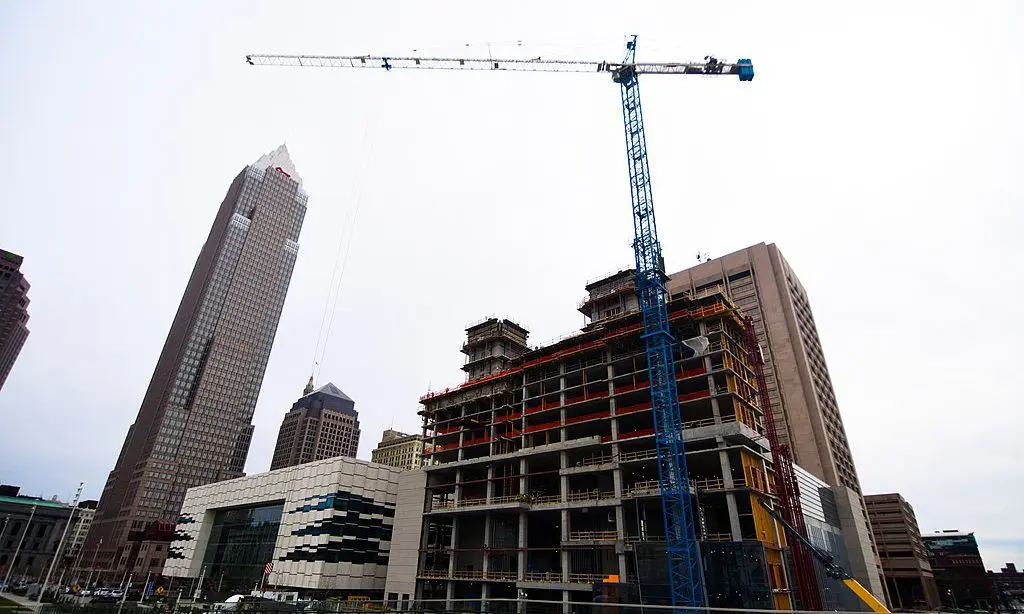
Recent data from CoStar has found that the construction of hotels in the UK has slowed but is still being propped up by projects which were delayed by the pandemic. The UK currently has around 22,500 hotel rooms under construction and expected to enter the market by the end of 2026, with most due to open next year.
However, Costar expects that once these delayed projects are completed the market will see a decline as there is a lack of confidence from investors. That being said, there are still opportunities for new developments, especially conversions, and many areas of the UK remain attractive for investors.
The current situation
The current market for hotel construction is like many markets in Britain at the present moment. It has slowed down as a result of high interest rates making borrowing more expensive which has caused investors to be more cautious.
Not only has acquiring the land or building become more expensive but the actual materials used in the building process have risen in price adding yet more costs to an already squeezed budget, that is before labour costs and shortages are considered.
However, as Cristina Balekjian, director of Hospitality Analytics, UK at CoStar explains, there are still opportunities for developers and investors, particularly when it comes to converting already existing buildings into hotels.
She says: “Given the challenges around financing for new developments, the higher interest rate environment, and there’s a lot more risk associated with development. So for that reason, new builds are just not happening. But there is opportunity in terms of conversions.”
“There are opportunities for conversions, we’ve seen some acquisitions around Office, some offices being turned with potential to return into hotels. As well, there’s opportunity from the independent sector, there’s a lot of independent hotels that could offer potential opportunities for rebranding or redevelopment,” she adds.
The pandemic
The main reason why construction in the sector has not completely fallen off a cliff is the pandemic. Any projects that were due to start or were underway during 2020 and early 2021 were delayed as lockdowns and social distancing restrictions were put in place.Alongside this, many companies, especially hotels, suddenly saw their demand completely dry up and had to focus purely on survival over expansion.
All this means that while there is currently a steady stream of construction activity it has all effectively been pre-paid for, and at much more favourable interest rates. As Balekjian says, this means future projects are less likely to happen as a result of the aforementioned macro-economic challenges.
“So we expect that to slow considerably given the challenges and once things start to improve and from a macroeconomic perspective and lenders feel more comfortable with lending against developments, because it’s a better environment, then we’ll see that rate of new development because. I guess, longer term new builds could also see a lower rate of growth in terms of new development because of sustainability requirements.”
What types of construction is there?
As previously mentioned, just because construction has slowed does not mean it has completely stopped, and also as previously mentioned many companies are preferring conversions over new builds.
Balekjian explains that there are numerous reasons behind this. First of all, conversions require less work. Developers are dealing with a building that already exists and this can keep costs down. Furthermore, with the current state of the UK planning system it is much easier for developers to deal with conversions than trying to get a completely new building approved by a local authority.
It is not just for these reasons though. Balekjian also points out that there is a sustainability consideration in this. Converting an existing building into a hotel is a much greener solution than building an entirely new building and sustainability is something that is at the forefront of the thinking of many businesses these days.
When it comes to the types of new hotels being built, according to Balekjian there is a wide range of them. She believes that there is no clear winner between the number of budget hotels and luxury hotels being built. She does point out that there has been an increase in the number of lifestyle hotels being built. These can be things such as aparthotels.
“It is difficult to define what a lifestyle hotel is these days, and that word gets thrown around a lot but in some cases, it might be more efficient to run because it doesn’t have as many full service amenities. But it’s just going through customer preference and lifestyle, meaning that you get more experiences out of the hotel product,” says Balekjian.
What do investors want?
If the market has become very tricky for investors but hotel construction is still happening then what is it that investors are looking for when considering whether to part with their cash?
According to Balekijan it is three things, location, demand generators and what room rates can be achieved. She believes that location is the biggest of these three factors, evidenced by the fact that London remains so popular.
In terms of demand generators, Balekjian defines these as big events, like big conferences or concerts, things to attract tourists like museums or big monuments or even things like whether the potential hotel will be near an airport or major road network.
All of this is what continues to make the UK an attractive proposition for investors. Alongside this, the UK sits in a unique position as an English speaking country in Europe. This makes it attractive as a gateway to doing business in Europe while still feeling comfortable for investors, especially those from America.
Furthermore, the fact that the UK and London especially is already a well known market for hoteliers counts in its favour as there are people who already know how to conduct business there meaning investors can feel safer about their investments.