





































Register to get 3 free articles
Register to unlock the article and receive our free newsletter. Join 26,000 other hotel leaders and stay in the know.
Want unlimited access? View Plans
Already have an account? Sign in
There is a popular saying in business that ‘volume is vanity, profit is sanity’. Swap ‘revenue’ for ‘volume’ and the expression rings equally true for hospitality. As hoteliers, we are in the business of delivering profit; and sitting at the centre of this effort should be the revenue manager and their team. I always say to my students that we got the name wrong when we first defined the revenue manager; they should be called profit managers, because it is profitability that counts to owners, investors and shareholders. And by this I mean gross operating profit. How the business is funded, and the cost of that funding, is a decision for the owners.
So, how do we go about making our hotel more profitable? The answer is by using the ‘right’ data to drive smart decision-making, then having the communication and leadership skills to get each department to carry through the optimisation strategies that we have decided on based on the forecasted demand.
The specific actions and tactics on a departmental base should be left to the various department heads, as they are the experts and the ones responsible for their departments. As such, they should serve as a catalyst of the proposed strategy and take ownership of their activities. The whole process can yield the desirable outcome only if it is a team effort, and achieving that necessitates an investment in human capital, in the form of educating each department in the mechanics of profit maximisation.
The segmentation challenge
The current challenge for most hotels – whether independent or chain – is to advance and help populate a more sophisticated, data-driven segment profitability model regardless of how they create rate fences.
In doing so, data is our king, and the good news is that accessing data is becoming easier and more efficient as technology develops. At the same time, I believe we need to re-engineer the whole process of collecting quality, relevant and raw data from scratch. We need the current Property Management System (PMS) architecture to evolve away from being focused on reporting in accordance with accounting principles (GAAP and/or USALI) in order to evaluate department heads and pay taxes. Instead, the focus should shift more towards producing segmented information that we can use to maximise profitability.
To help crunch the numbers, we will deploy advanced technologies and AI, such as machine learning. This will enable us to detect patterns in customers’ purchasing behaviour and allow for quicker adaption to current trends, enabling us to put a price tag on every segment in real time with two-way data streams. In a nutshell: Revenue Management 2.0 systems.
Understanding your costs
In today’s competitive environment, product prices might be dictated by market dynamics, which are beyond the scope and direct influence of the marketer. Hence the focus should be on management controlled decision-making related to product and system efficiencies. As such, operating costs management is the key. PMSs should be able to perform activity-based costing and allocate undistributed operating expenses based on the specific recipient, whether it is a product or a customer segment.
In addition, such tools should be able to use financial or statistical formulae and models approved by mathematician data analysts to determine the degree of operating leverage (DOL) of the establishment at various forecasted occupancy levels. The level of granularity of such information should begin with the property as a whole, then broken down to its various operating departments and their sub-departments, all the way to the ‘work package’ level on project management terms. For example, it is vital to know the DOL score of the F&B department as a whole, then the DOL of the individual restaurants and bars, and finally the score of the various products sold in each of them. The 100% rule when applying reverse decomposition should equal to the DOL of the establishment.
By having such information regarding the flow through rate from revenue to operating profit in conjunction with reliable expected demand estimations, revenue managers will possess the necessary knowledge to develop strategies in order to magnify gross operating income and produce more than ‘normal’ results on high seasons or minimise the ‘damage’ during off seasons. Hotstats and STR reports are both good sources of profitability information.
Segmentation and price optimisation
As data harvesting improves, we can also start to look in a granular way at our guests – and ultimately – track their individual spending habits and profitability. This delivers pure gold from a revenue management perspective. For instance, we might charge someone a high rate for their room, but on analysing the data we find they do not spend anything in F&B, nor do they use the spa. Thus what appears a valuable guest from a rooms’ revenue perspective actually falls down to a third or fourth ranked target when we look at the bigger picture. As such, we learn a lesson and do a better marketing budget allocation next time around. This is why the accuracy of data used to calculate KPIs, such as TrePAR and GOPPAR, is more important than ever.
Another piece of the revenue management jigsaw is upselling and cross-selling – here also, technology can be our friend. International hotel chains developed their own upselling and cross-selling systems, but independent hotels can also join the party. There are several third-party providers that build equally good technology to manage upselling and cross-selling.
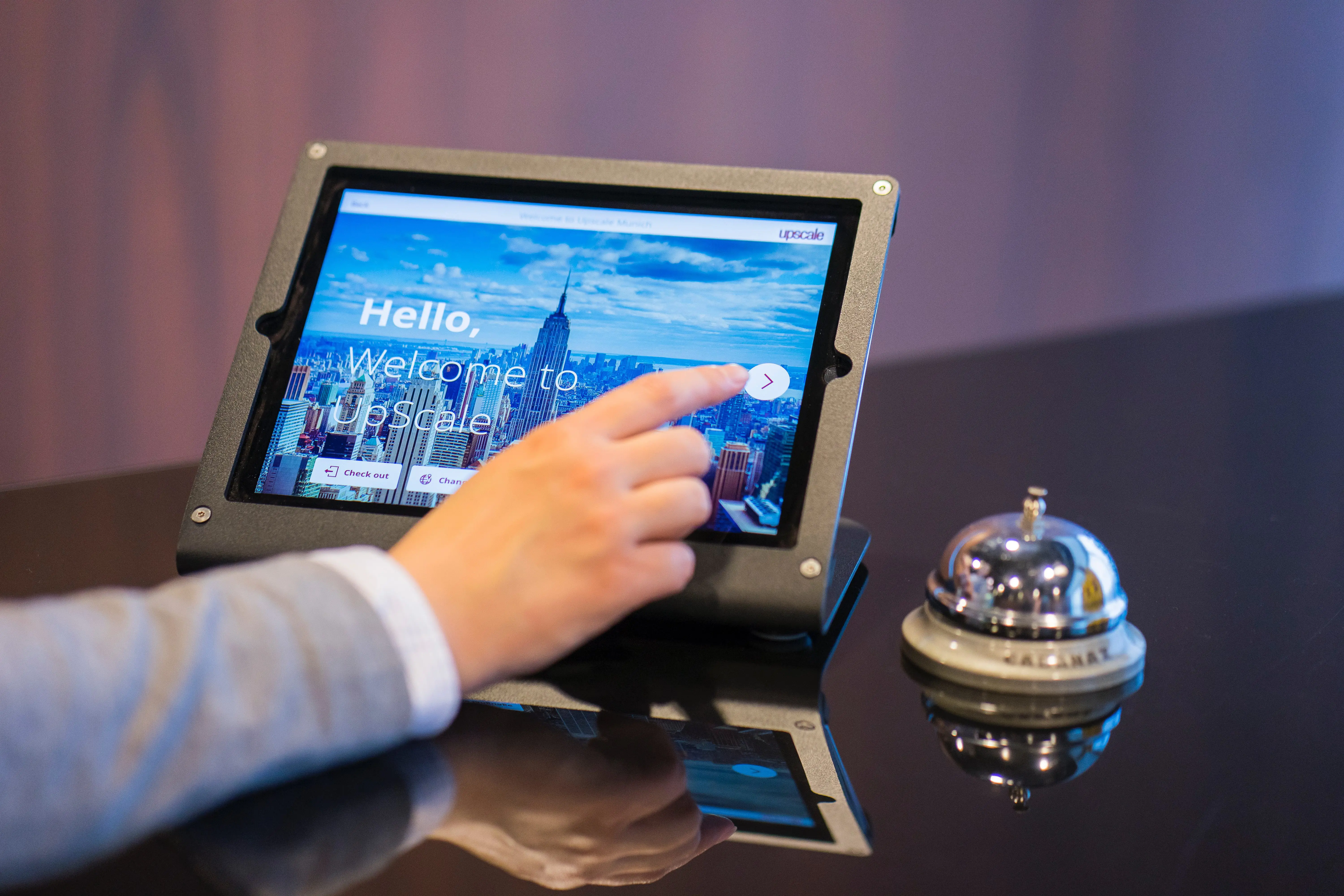
These online platforms can present upselling and cross-selling offers to customers at any touch point, from the booking to the post-stay, and especially during the customer’s time within the hotel.
Pricing tactics
Another technology that is advancing quickly relates to automated revenue pricing solutions. These have been around for more than a decade, and they were initially based on fairly simple dynamic pricing – as certain percentage occupancy thresholds were reached, so room rates went up.
Now these systems are getting more granular, with other inputs being fed in automatically and each having a set percentage by which it influences the pricing decision algorithm. These inputs can include changes among the competitive set – has a new hotel opened locally? Is a competitor closed for refurbishment? They could also comprise factors influencing market demand: is there a new event, such as a festival, taking place in the area? Have any airlines serving our destination increased their scheduled flights? Are we experiencing an ‘unusual’ pick-up from a particular geographical destination? Even the weather forecast can have an impact. By adding these and other data inputs to the pricing algorithm, a revenue manager can align prices to future demand with much greater accuracy and granularity.
There are a plethora of good systems providers which can supply hardware and software or iCloud services to suit any size of hotel and budget. For example, Duetto, IDeaS, RoomPriceGenie, Pace, Infinito Solutions, ROOMDEX, Dot.Cy and Atomize to name a few.
Conclusion
To summarise, the future for this discipline rests in creating more digital touch points within the hotel, collecting more customer data which can then be segmented to an individual customer or product level, while also being supplemented by automated real-time updates on a host of external factors in order to personalise our products and services towards our customers and adapt to their ever-changing needs and wants.
By bringing this all together, we can also allow for fully informed decision-making on demand forecasting, costing, pricing and capacity allocation through a shared vision on how to maximise the potential operating profit. A truly smart approach to the business of hospitality.