




















Register to get 3 free articles
Register to unlock the article and receive our free newsletter. Join 26,000 other hotel leaders and stay in the know.
Want unlimited access? View Plans
Already have an account? Sign in
IHG Hotels and Resorts (IHG) has driven significant growth across the UK and Ireland (UK&I) market, signing eight hotels that add over 900 rooms in key locations like Leeds, London, and Reading in 2025.
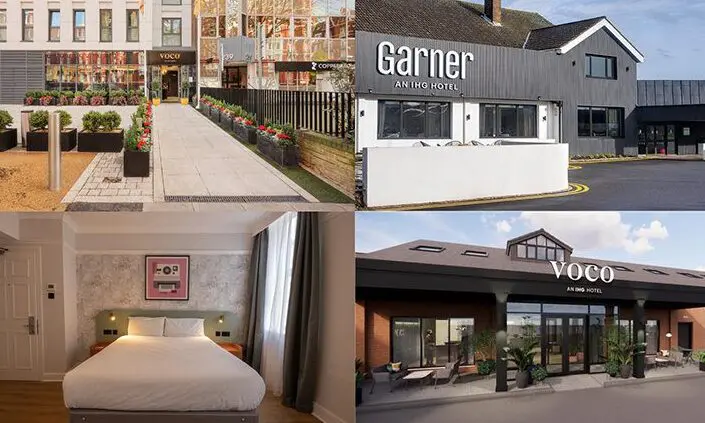
The hotels span brands such as Hotel Indigo in IHG’s Luxury and Lifestyle portfolio and Crowne Plaza in its Premium space, to the market’s first signings for IHG’s Garner hotels, which launched 18 months ago as part of the group’s Essentials collection.
The latest signings significantly expand IHG’s presence in the UK&I, where it currently operates 362 hotels with 25 more in the pipeline. For the year ended 31 December 2024, the group also reported a 10% increase in operating profits to $1.12bn (£888.1m), and its revenues were up 7% to $2.31bn (£1.83bn).
When asked to describe this performance Joanna Kurowska, managing director, UK and Ireland summarises it as simply “tremendous”. She says: “2024 was a truly exciting year for growth across our UK&I portfolio, where high demand for our brands led to growth across all our brand segments together with our trusted partners.”
IHG boss, Elie Maalouf, echoes Kurowska’s sentiment, emphasising strong growth and important progress against a clear strategy that is unlocking the business’ full potential for all stakeholders.
So, what factors are driving IHG’s growth, and does its expanding portfolio indicate that the UK hotel sector is thriving with potential for further demand and development.
To answer this, Kurowska says that it’s important to look beyond press releases and numbers, and look at what truly powers our momentum in the UK market and sets the group apart from competitors.
“At the core of our strategy is our reputation. We take pride in being known as a company that is great to do business with. Reputation matters deeply —not just personally, but also for the company we represent. We are committed to maintaining a strong market presence and ensuring that our reputation remains highly valued,” she explains
“Our focus starts with performance. We are mindful of the trust placed in us by hotel owners, with 362 open hotels in the UK alone. These partnerships support livelihoods, and their success lays the foundation for future growth—whether through new brands or new hotels. Our growth is powered by both performance and reputation. Selling hotels effectively depends on delivering results, and we can’t attract new franchise partners without demonstrating innovation, expansion, and market presence,” she adds.
She points out that while some might view the UK and Ireland as a smaller market, it actually represents 40% of IHG’s European business, making it the largest region in Europe and the third most significant globally, after the US and Greater China.
She states that its performance is critical to the overall success of IHG. “Additionally, being headquartered in Windsor, right in front of the castle, reinforces our strong British heritage while reflecting our global reach and diversity.”
At the heart of it all Kurowska says is Matt Walton’s, head of development, UK and Ireland, favourite word: “consistency—staying aligned, executing our strategy, and delivering on our commitments”.
Building on what Kurowska mentions, Walton highlights that some key areas of growth are the group’s ambitions, and the strong momentum it has seen in the UK and Ireland. He states that over the past few years, the hotel sector has continued to thrive, not just for IHG but across the industry.
“Our signing performance has been particularly strong, with two exceptional years of deal signings in the UK and Ireland, reinforcing our position as the largest global hotel operator in this market. Looking ahead, our robust pipeline for 2024 and 2025 reflects this confidence, “ he says.
Last year, IHG opened over 12 hotels, Walton says that its growth strategy remains unchanged, but like any successful business, the hotel brand continuously refines its approach based on feedback from owners. He says: “We actively listen to their insights to enhance our support and ways of working, which has been key to maintaining our strong signing performance.”
He also adds that the UK remains a “highly branded and conversion-led market, with significant opportunities in this space”. A prime example is Voco, which has grown rapidly with 16 open hotels and 10 more in the pipeline—”remarkable progress for a brand launched just six years ago,” he exclaims.
Innovation is another driving force behind IHG’s success, with recent initiatives like the launch of Garner and the acquisition of Ruby bolstering the brand’s conversion capabilities, Walton claims.
He states that IHG’s competitive edge lies in its “powerful commercial engine and enterprise platform”, backed by 145 million loyalty members. He says: “This ecosystem seamlessly integrates across our hotel operations, offering a compelling value proposition for owners, whether they operate a single property or a multi-hotel portfolio across global markets.”
However, according to Kurowska, innovation goes beyond technology. She explains: “When considering the future, I prefer the term thoughtful growth—growth that coexists with our existing estate. With over 360 hotels in the UK and Ireland, we aim to expand sustainably while honouring long-term franchise agreements and supporting both new and experienced owners.”
IHG is seeing growth across all its segments. New signings include: Hotel Indigo Leeds, Voco London – Marylebone, Voco Corby, Crowne Plaza East Midlands Airport, Garner Hotel Preston Samlesbury, Garner Hotel Reading, Garner Hotel Nottingham and Holiday Inn Express London – Woolwich.
Walton says: “In terms of brand segments, our luxury and lifestyle portfolio is transforming, with milestones such as the UK’s first Vignette Collection hotel in Liverpool and continued expansion of Hotel Indigo in key cities like London, Leeds, and Gloucester. Meanwhile, our premium segment, led by Voco, remains highly attractive for conversions, while our essentials portfolio, including the Holiday Inn brand family, continues to dominate, making up 75% of our UK and Ireland estate. The addition of Garner further strengthens our ability to capture more market opportunities.”
Additionally, Kurowska points out that people travel for both business and leisure, and as long as there’s demand for travel, infrastructure that supports it, and people who can afford to travel, the industry will thrive.
She explains that these fundamentals apply globally, in Europe, and especially in the UK. “More people are able and willing to travel, and infrastructure improvements, like transportation, make travel easier. This is why hospitality and hotels continue to grow. It’s not just us; if you look at results from other major companies, like Marriott or Hilton, you’ll see the same trend, the industry continues to expand,” she adds.
Despite the competitive landscape with major players like Accor, Marriott, and Hyatt, who may offer similar propositions on the surface, Kurowska states that IHG stands out in several key ways that make it a compelling choice for investors. Beyond strong owner relationships, she believes that the brand’s differentiation lies in “measurable performance, scalability, and the strength of our brand portfolio”.
She explains: “Investors trust IHG because our brands consistently deliver strong results across measurable metrics such as Market share performance (RGI), which demonstrates our competitive strength, Guest Love Index, which reflects guest satisfaction and willingness to spend more and our loyalty program impact, which shows the revenue and nights generated through our 145M+ loyalty members. These numbers are readily available for comparison and showcase our competitive standing.”
According to Kurowska investors also continue to choose IHG because beyond metrics, IHG’s technology stack and commercial engine are proven to drive performance. “With 362 hotels across the UK and Ireland, we are the largest global hotel operator in the region. Our scale allows us to deliver consistent results across a broad portfolio, offering investors stability, growth potential, and a trusted operational model. Additionally, we have a strong reputation for being easy to do business with, which is a key factor for owners and investors when choosing a long-term partner,” she adds.
Talking about IHG being the compelling choice of investor, along with the surge in its profits and revenues it also announced the acquisition of Ruby Hotels. Kurowska points out that while considering this deal, they had several options: creating a brand, acquiring one, or forming a partnership.
She says: “ We are deliberate in adding brands where we see gaps, and Ruby fills a crucial space in the urban micro-lifestyle segment.When considering this segment, we had several options: After evaluating the market, we identified Ruby as the perfect fit. Established in 2013, Ruby has built a strong reputation across major European cities, with 20 open hotels and 10 more in the pipeline.
“The impressive pipeline-to-open ratio highlights its growth potential and successful operations. For IHG, this acquisition is a strategic win. Ruby complements our portfolio without cannibalising existing brands and strengthens our presence in high-barrier-to-entry markets.”
Walton also highlights that the acquisition reflects the group’s commitment to innovation and continuous portfolio enhancement.
Since IHG doesn’t own hotels but instead operates through a business model based on managing or franchising properties for owners, understanding the key challenges landlords face, such as evolving building regulations, sustainability requirements, and advancements in technology and AI, becomes even more important. In light of these changes, Kurowska talks about how IHG supports its owners and landlords.
She explains that the business model that IHG has means it provides branded solutions for asset owners. Regarding compliance and sustainability, the team ensures that the brand standards “align with current regulations and are future-proofed for upcoming changes”. For example, the recent Voco Zeal Exeter project demonstrates how its partnership with the owner led to a “unique approach to construction, making it one of the most innovative projects in the UK, if not Europe,” she says.
Walton adds: “We take a tailored approach to each project, considering individual assets and brand requirements. While some standards are non-negotiable, such as fire and safety, we focus on adding value to both the guest experience and the asset itself. As a franchisor, we don’t own hotels, but we work closely with owners and use in-house specialists like engineers and architects to optimise every project. This flexibility, especially in conversions or adaptive reuse projects, allows us to approach each development creatively.”
In addition to the challenges that landlords face around sustainability, hotel brands will soon have to navigate upcoming tax increases, prompting some to explore growth beyond the UK. However, Kurowska states that while it is relevant, the economic and external environment “will continue to evolve, whether locally or globally”.
“My approach to handling these changes is to accept that they are inevitable. The role of a good franchise or manager, like the one here, is to anticipate these changes and prepare for them. As Matt mentioned regarding flexibility in brand standards and sustainability, this philosophy also applies here. As the world changes, our service and brand standards must adapt, and that’s a responsibility we take seriously.”
Similarly, while Walton acknowledges the ongoing changes and challenges in the industry, he states: “Ultimately, our commitment to the UK and Ireland remains as strong as ever. The momentum we’ve built, both in signings and openings, positions us for continued success in 2025 and beyond.
“With a diverse and expanding brand portfolio, cutting-edge technology, and industry-leading franchise support, IHG is well-equipped to strengthen its presence across all segments, i.e. luxury, lifestyle, premium, and essential, ensuring sustainable growth in the region.”