





























Register to get 3 free articles
Register to unlock the article and receive our free newsletter. Join 26,000 other hotel leaders and stay in the know.
Want unlimited access? View Plans
Already have an account? Sign in
In the last year alone, our industry has been put under scrutiny for everything from #MeToo sexual assault cases, to fire, legionnaire’s disease, food poisoning and even the question of value when there’s so much sharing economy choice. It almost seems as though the industry is destined to fail, yet it has never been bigger or seen more rapid growth. So is it possible to be a responsible, ethical business, and one that succeeds too?
At the beginning of my career, the industry was a very different place. Business-side, it was much more contained, news travelled much slower and everything was certainly less public; while client-side it was almost exclusively customer-service focussed. Pretty much anything that happened in the hotel environment stayed in the hotel environment, and if clients complained about the noise or the choice of breakfast for example, it was handled by an internal complaints procedure and the client was invariably, immediately appeased. Now, with a few clicks of the button, it’s simple to see who’s doing well and who isn’t; who offers a five-star experience and who doesn’t. The industry has shifted and is at the mercy of keyboard warriors, all the while stomaching rising costs and prices and increased competition. Front of house staff are expected to morph between customer service roles, social media experts and online marketing gurus in a bid to stay ahead of the competition.
So can you be ethical and still succeed?
At one point in my career, I ran Dartington Hall, which was a social enterprise hotel. Being part of a charity, the time spent ensuring the business was ethical and sustainable was phenomenal and the creativity and enthusiasm around this topic was vast. At the time, it was an unusual approach (and largely still is), arising from the fact that the hotel was charity-first, commercial-second. There were so many initiatives, but perhaps my favourite was our laundry relationship with the local prison, who laundered everything for the hotel, an initiative that we won numerous awards for.
Increasingly, my assessors return from conducting an independent quality assessment, raving about businesses that ‘go the extra mile’ and make outstanding commitments to their staff, the environment, their suppliers; basically any aspect of the business where they can be better. So often, these stories were low-key, led by passionate managers or owners who want to do better or be better, but don’t really promote their commitments or even do them for commercial gain; yet, these are exactly the kind of aspirational, experiential differentiators that the modern guest is on the hunt for. I have been astounded many times by the lengths that a business will go to, to be carbon-neutral, or to be an outstanding employer for example, just because it is ethically right or more sustainable. I was inspired, and I started to see a side to hospitality that is future-focussed and responsible in a way we have not seen before. I wanted to recognise this; the businesses doing well financially, but also doing what they do, well, just because they should.
For the past nine months, my team has been working on defining and developing independent assessment criteria for our new scheme, REST, which stands for ‘Responsible, Ethical, Sustainable Tourism’. It is a quality marque that recognises a business’ social, moral and ethical compass in everything that it does, providing a benchmarking tool against basic, appropriate and aspirational standards, at the same time providing expert support to businesses to build on what they are already doing. Importantly, it is financially sound, with best practice information being used to demonstrate for example how the up-front addition of a renewable energy source can support significant medium-term savings, making it a financial and ethical decision too.
Having newly launched in March, the rationale for this scheme was to recognise the businesses that are not only ‘doing well’, but are also ‘doing business well’. Highlighting the businesses where commerciality is a component of their business, but is not the only component of their business. Every business has the opportunity to be better, and we’re setting out to recognise that, but also to support businesses in improving and prioritising their long-term sustainability, and the long-term industry future. Existing schemes didn’t recognise the ‘non-standard’ features of a business (they are designed to credibly benchmark of course), but in doing so, lose much of the individuality of the businesses being assessed.
During the development of these criteria, we have engaged with more than 50 businesses that flourish financially, but do so without compromising their social, ethical or environmental responsibilities. In fact many of the individual stories we have been told seem unprecedented in the market. One hotel replanted its garden as a wildflower meadow, before installing and maintaining a series of bees hives to help pollinate; it had no commercial value initially, but now guests benefit from bee-related produce on the menu, in a gift-shop, and with beekeeping events and days. A small and simple change driven by an owner with a passion for pollinators, but a change which has supported the local environment to flourish and prosper. We’ve seen everything from a hotelier that has worked with suppliers to ensure 100% plastic free deliveries, to a self-sustaining energy programme that has taken the hotel off the grid. Natural swimming pools which double as wildlife ponds, worm farms, employee bonus schemes that link community support to the opportunity for bonuses; the stories have been endless and inspiring, and certainly an area of the industry where one size does not fit all.
What is considered responsible, ethical and sustainable?
There is a huge range of considerations that fall under this banner, and it is important to recognise that businesses can excel in one area, without being strong in another. Yet all it takes to improve is passion and a strategic approach to getting it done. Researching the issues at the forefront of consumer minds, statistics show that 50% of consumers say energy usage is an important decision-making factor when booking a hotel, one third want providers to be judged on sustainability, one in five are more likely to stay somewhere that is considered ‘sustainable’, three in five believe ethical issues are important when selecting a hotel, and 48% of consumers consider employee relations when determining whether the business is ethical or not.
We’ve seen waves of positive PR stories in recent months, from banning plastic straws or committing to a closing gender pay gap, to steps preventing human trafficking and the exploitation of workers within supply chains. These are all admirable and should be recognised on their merits, but there is still a significant shift to be made from being a single-issue pioneer, to being a responsible, ethical, sustainable business across the board.
To simplify and consolidate the challenge, there are four core ‘pillars’ that businesses can and should turn their attention to. These are:
- Environmental and economic management, including everything from waste and pollution, to energy and water consumption and energy generation tactics. Any step towards being material and energy-neutral is a step in the right direction, and changes can be simple, such as switching to an energy supplier which uses renewable sources, to installing your own, on-site energy production and storage.
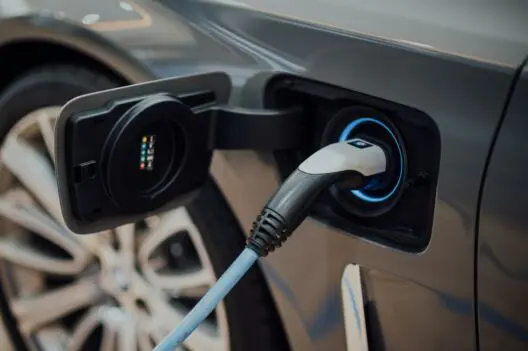
- Corporate social responsibility considering your business relationship with charity, the local community and local people. This is perhaps the easiest pillar to implement, and one of the hardest to maximise, as there is so much which can be done. I’ve seen hotels which encourage you to leave your car key and walk, cycle (on hire bikes provided) or use public transport to get around the town. Others which have electric cars for hire on site (a big capital investment, but great for areas where there is heavy congestion and pollution), to the inclusion of locally sourced crafts and gifts within gift shops, particularly fundraising ones. Policies of priority employment of people within a set radius of the hotel, work to support and restore natural habitats locally, information packs on the best local restaurants with the lowest combined food miles. This is perhaps the most imaginative aspect for your business, and the best place to start is by asking your staff what they are passionate about, and what they can help to design and implement.
- HR and Ethical Employment with a focus on going beyond mandated employment laws, to look at proactive staff retention strategies, training and development programmes, creating a safe working environment (sexual harassment free for example), and even how staff view you as an employer. It’s about more than being just an equal opportunities employer as is expected and about being an employer who nurtures staff and helps them to succeed.
- Supplier practices and business compliance considering not just how you operate as a business, but how you source suppliers who match your ethics. Can you really be an ethical business just because you look after your staff and reduce your energy usage, if in reality your suppliers are busy employing trafficked individuals, or acting unethically? This will prove the biggest challenge to quantify, but it is possible with stringent supplier sourcing questionnaires and charters, and ultimately, there may be significant benefits to the business to change or improve your supplier sourcing and roster.
If you do have to focus on the commerciality of all changes, it is naturally hard to quantify the potential value many of these changes will have, and so we always encourage both a cost-benefit analysis, and a risk assessment before making any changes. It is important however that these changes are not viewed exclusively in the financial sense, as many of the benefits will be less tangible; improved customer satisfaction, long-term increase in occupancy rates, even improved footfall from local communities. All are benefits that can be reaped, but none will be easy to quantify in a directly relational sense.