






































Register to get 3 free articles
Register to unlock the article and receive our free newsletter. Join 26,000 other hotel leaders and stay in the know.
Want unlimited access? View Plans
Already have an account? Sign in
A popular coolant used in hotel air conditioning systems has been phased out across Europe. Hotel owners and managers are advised to take action now to check if they are affected, says KEN STRONG of Cool-Therm
Whatever the weather outside, people have come to expect a comfortable environment while staying in a hotel. Air conditioning has become commonplace in recent years, and increasingly not just at the premium end of the market.
If your hotel has air conditioning, however, you need to be aware of important new laws on refrigerants (the coolant gases used in air conditioning) that will impact air conditioning systems across the UK – indeed across Europe.
Under the EU directive (The EC Ozone Regulation No. 1005/2009), one of the most popular refrigerants used in air conditioning has been phased out. The gas in question is R22, which is known to damage the ozone layer.
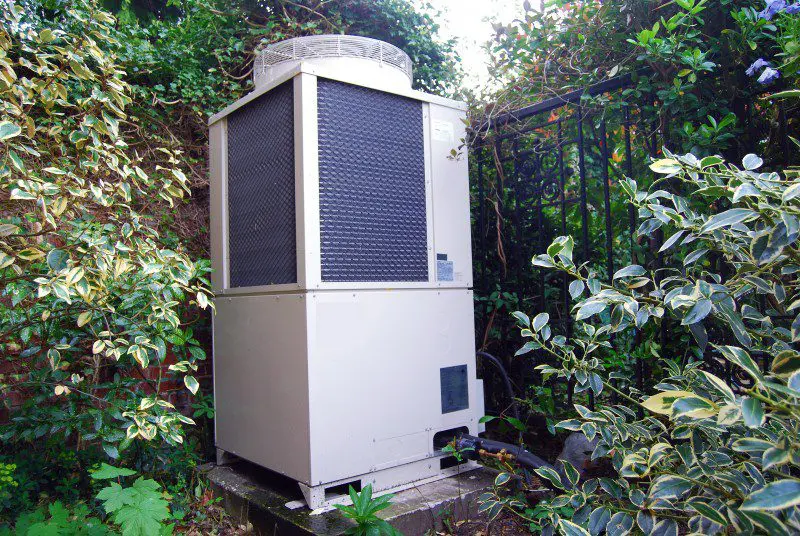 From the beginning of 2015, it became illegal to use R22 refrigerant for servicing or topping up air conditioning systems. This is necessary from time to time, as systems may gradually lose their refrigerant charge – as a result of slow leakage or accidental release. Hence the reason for the ban.
This has important implications for hotel owners whose air conditioning systems still operate on this banned refrigerant.
How common are R22-based systems?
No one knows for sure how many systems are still operating on R22 in the UK. Estimates range from 100,000 up to as many as 500,000. This includes air conditioning across all building types, such as offices, shops and restaurants. However, a significant number of hotels will be affected.
Air conditioned buildings built during the booms of the Eighties and Nineties will more than likely have R22 refrigerant in their equipment. Likewise, existing hotels installed with air conditioning during the same period, and up to about two or three years ago, may also be reliant on R22.
Under the Directive, it is not illegal to continue operating equipment containing R22 refrigerant, provided the system is completely gas-tight and not subject to leaks. There is also no obligation to remove the R22.
However, it is illegal to carry out maintenance or servicing work on an air conditioning system that involves breaking into a R22 circuit – to prevent accidental release of the refrigerant to the atmosphere. If it becomes necessary to top up a system or break into a circuit, the R22 refrigerant must be replaced with a non-ozone depleting alternative.
This may or may not be possible or advisable, depending on the nature of the equipment, its age and cost considerations. It may be worth retro-fitting to operate equipment on one of the new non-ozone depleting alternatives. However, they can be expensive and equipment modifications may be necessary to ensure compatibility, which adds additional cost. In nearly all cases, the efficiency of the equipment will be affected.
If equipment is older, perhaps more than seven or eight years old, retro-fitting may simply not make economic sense. This is because it only has a few more years working life left, and the cost of replacing R22 with one of the new generation of refrigerants can’t be justified.
Taking these factors into consideration may often sway the decision in favour of a new system, particularly if existing equipment has limited working life remaining.
In assessing whether to replace equipment, another factor to take into account is whether your existing system is suitable for your current needs. Due to changes in building use over time (occupancy levels, heat load due to new IT equipment, changes in internal structure and so on), your existing air conditioning may no longer fully meet the hotel’s cooling and heating needs.
Replacing equipment offers an opportunity to increase cooling capacity to meet the new situation, resulting in a more comfortable environment for guests and staff.
Due to the lead time on both retrofit and replacement projects, it is important that work is planned well in advance. The worst case scenario is a breakdown of air conditioning in high summer, resulting in failure of cooling when your hotel is fully booked.
During the warm months, air conditioning suppliers and contractors are likely to be at full stretch, and you may find it difficult to secure the help you need to solve the problem quickly. This could prove expensive and may affect the reputation of your hotel. We are all aware of the potential impact of a few negative reviews on Trip Advisor, particularly from hot and ill-tempered guests.
Therefore, it is important to take action now. The first thing to do is assess if your air conditioning is still reliant on R22. Your specialist contractor will be able to help with this. My own company offers a free air conditioning site survey, by an engineer who will carry out a survey to check a building’s exposure and risk.
Once the nature and scale of any R22 problem has been identified, an action plan is then drawn up. This shows the options available and related costs. Budgets can then be allocated and work planned, before a crisis arises – and red-faced guests are queuing at reception to complain about rising temperatures.
The positive side to the R22 phase-out is that, if you do decide to install a new system, your cooling and heating energy costs can be dramatically reduced – by up to a half. These savings can sometimes cover your capital outlay in two years or less.
After that, the savings continue to accrue year-on-year, while keeping your guests and staff cool and happy.

About the Author
Ken Strong is managing director of Cool-Therm, an air conditioning specialist which operates from six locations across the UK, providing nationwide coverage. For more details, or to book your free R22 Air Conditioning Survey, call 0303 030 0003.